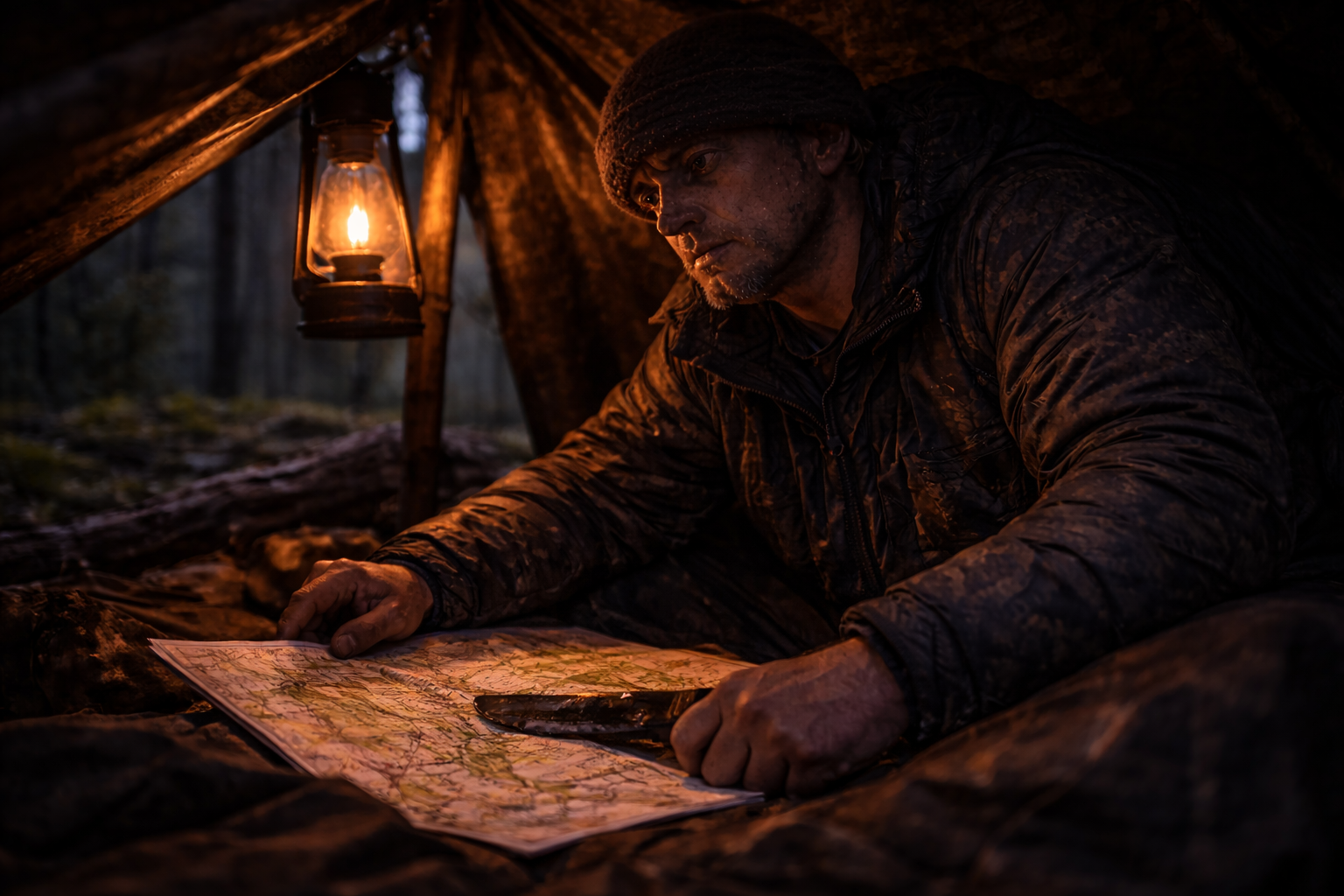

The most dangerous moment in survival is not the first night.
It’s the moment you relax.
People imagine survival as a constant fight — hunger, cold, predators.
In reality, many don’t die because conditions get worse.
They die because conditions feel good enough.
A dry place.
Some water.
A fire that works.
The brain shifts gears.
Once basic needs are met, the survival alarm turns off. The mind stops scanning. Movements slow down. Decisions become lazy. Risk starts to feel distant — almost theoretical.
This is where the trap closes.
Comfort doesn’t mean safety.
Comfort means you stop adapting.
Survivors who fail often do the same things:
- They stop improving shelter because “this will do for now.”
- They delay gathering resources because tomorrow feels guaranteed.
- They repeat routines instead of reassessing danger.
- They ignore subtle changes — wind, sound, smell, light.
Nature doesn’t punish panic.
It punishes complacency.
Early humans understood this instinctively. Comfort was temporary. Every camp was assumed to fail eventually. Fire would go out. Water would dry. Predators would notice patterns.
Modern humans don’t think this way.
We are wired to treat comfort as a finish line.
In survival, it’s the starting point of decline.
The rule that keeps people alive is brutal and simple:
The moment you feel safe is the moment you should start preparing for failure.
Because the wild doesn’t care how stable today feels.
It only waits for the day you stop paying attention.