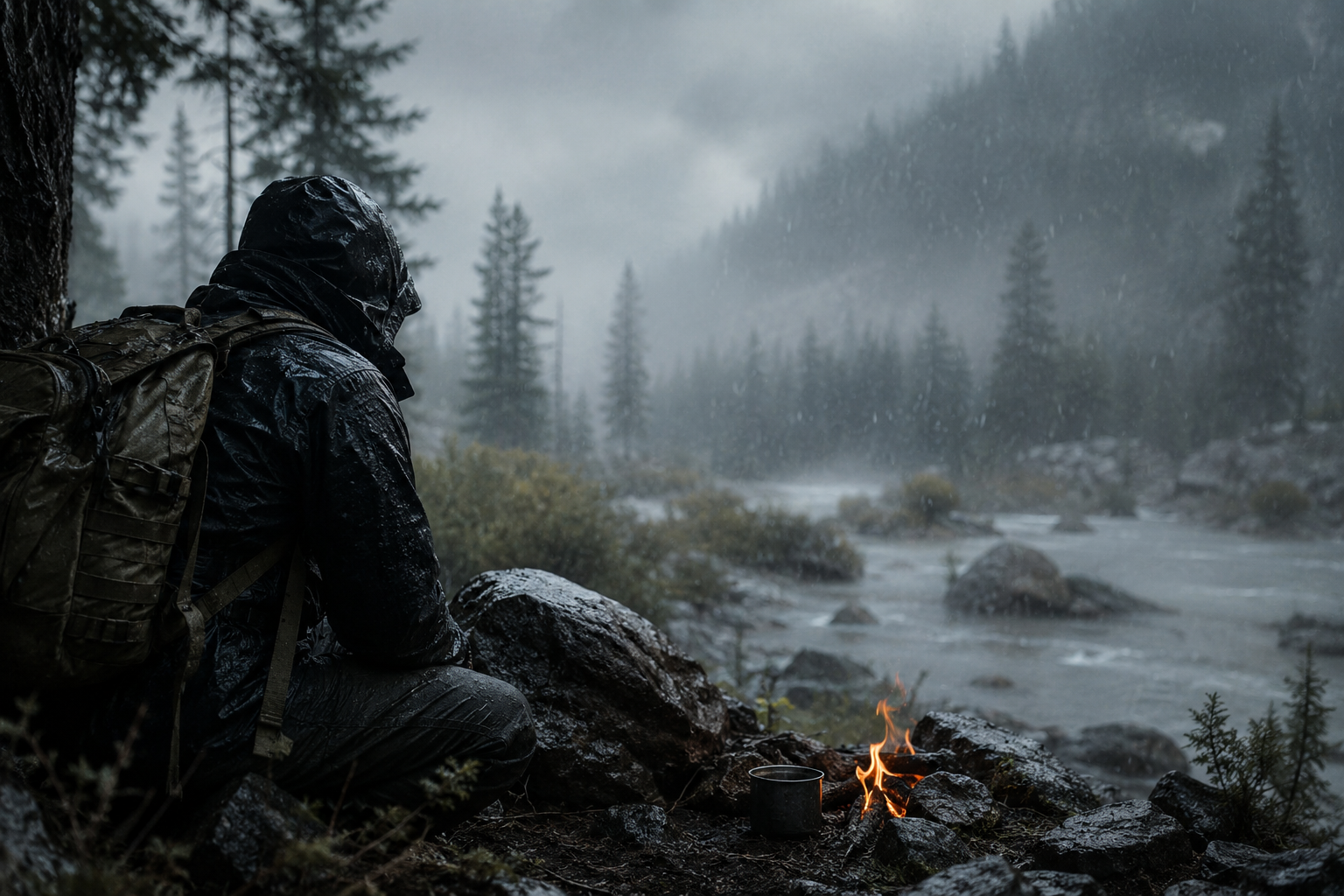
Most people think bad weather makes everyone equally vulnerable.It does not.
Storms expose the people who panic.
The moment visibility drops, human behavior changes almost immediately. Movement becomes rushed. Decisions become emotional. People stop observing their surroundings and start focusing only on discomfort.
Cold.
Rain.
Wet gear.
Limited vision.
The fear of getting lost.
And that is exactly why dangerous conditions can become an advantage for someone who stays calm.
In heavy fog, distance becomes meaningless.
Shapes appear and disappear without warning. Sound travels strangely. You hear movement but cannot judge direction properly. Even familiar terrain starts feeling unfamiliar.
Most people respond by moving faster.
That is the mistake.
Fast movement inside low visibility usually creates more noise, more exhaustion, and worse navigation decisions. Experienced survivors understand that storms force the environment itself to slow down.
So they slow down with it.
Rain changes the wilderness in ways people rarely notice.
Water softens the ground.
Tracks become clearer at first — then disappear completely once rainfall intensifies. Clothing becomes heavier. Body heat drops faster. Small mistakes compound quietly.
And during all of this, awareness collapses.
People stop scanning terrain.
Stop checking behind them.
Stop listening carefully.
They become focused only on reaching shelter.
Wind creates another problem.
Strong wind constantly overloads human hearing. Trees move in every direction. Branches snap randomly. Forests become chaotic and unpredictable. Under those conditions, even experienced people struggle to separate real danger from environmental noise.
This is why bad weather has always changed the balance between hunter and hunted.
The wilderness does not care whether you are comfortable.
It only reacts to preparation.
A storm punishes people who rely on routine.
But it protects people who understand adaptation.
Because survival is rarely about controlling the environment.
It is usually about understanding how the environment changes everyone else before it changes you.