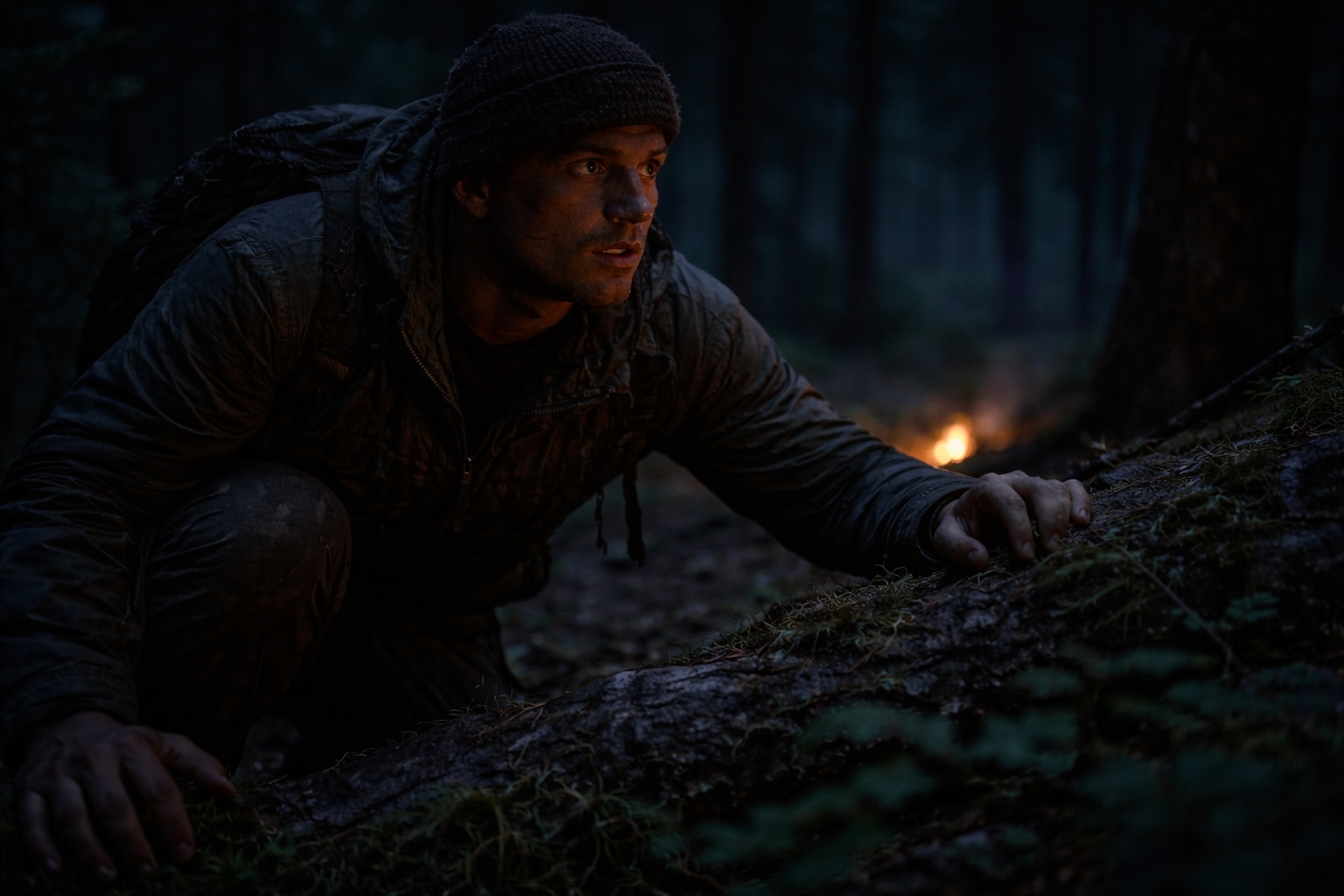
The Biggest Myth: “I Must Keep Moving”
Darkness distorts distance, sound, and judgment.
People move not because it’s smart — but because standing still feels scary.
That instinct kills.
Survivors understand one rule:
Night punishes unnecessary motion.
When Staying Still Is the Smartest Move
Staying put isn’t weakness. It’s control.
You should stay still when:
- You don’t know your exact direction
- Terrain is unfamiliar or uneven
- You hear movement but can’t identify it
- You’re mentally tired or emotionally overloaded
Stillness lets your senses recalibrate.
Your ears adjust. Your eyes adapt. Your mind slows.
Predators notice panic.
Calm blends into the environment.
When Moving Is Necessary — and How Survivors Do It
Sometimes movement is unavoidable. But it must be intentional, not emotional.
Survivors move:
- Slowly, never at full stride
- In short segments, stopping often to listen
- Along natural cover, not open silhouettes
- Downhill or along contours, never blindly upward
They don’t rush.
They don’t chase “safe-looking” lights or sounds.
They move like they expect consequences.
The Deadliest Movement Patterns
These actions get people hurt or killed at night:
- Running without visual confirmation
- Moving toward unknown sounds
- Crossing open areas quickly
- Changing direction repeatedly in panic
Fast movement creates noise.
Noise creates attention.
Attention creates danger.
The Real Survival Skill: Decision Discipline
Night survival isn’t about bravery.
It’s about restraint.
The best survivors don’t ask:
“Can I move?”
They ask:
“What happens if I do?”