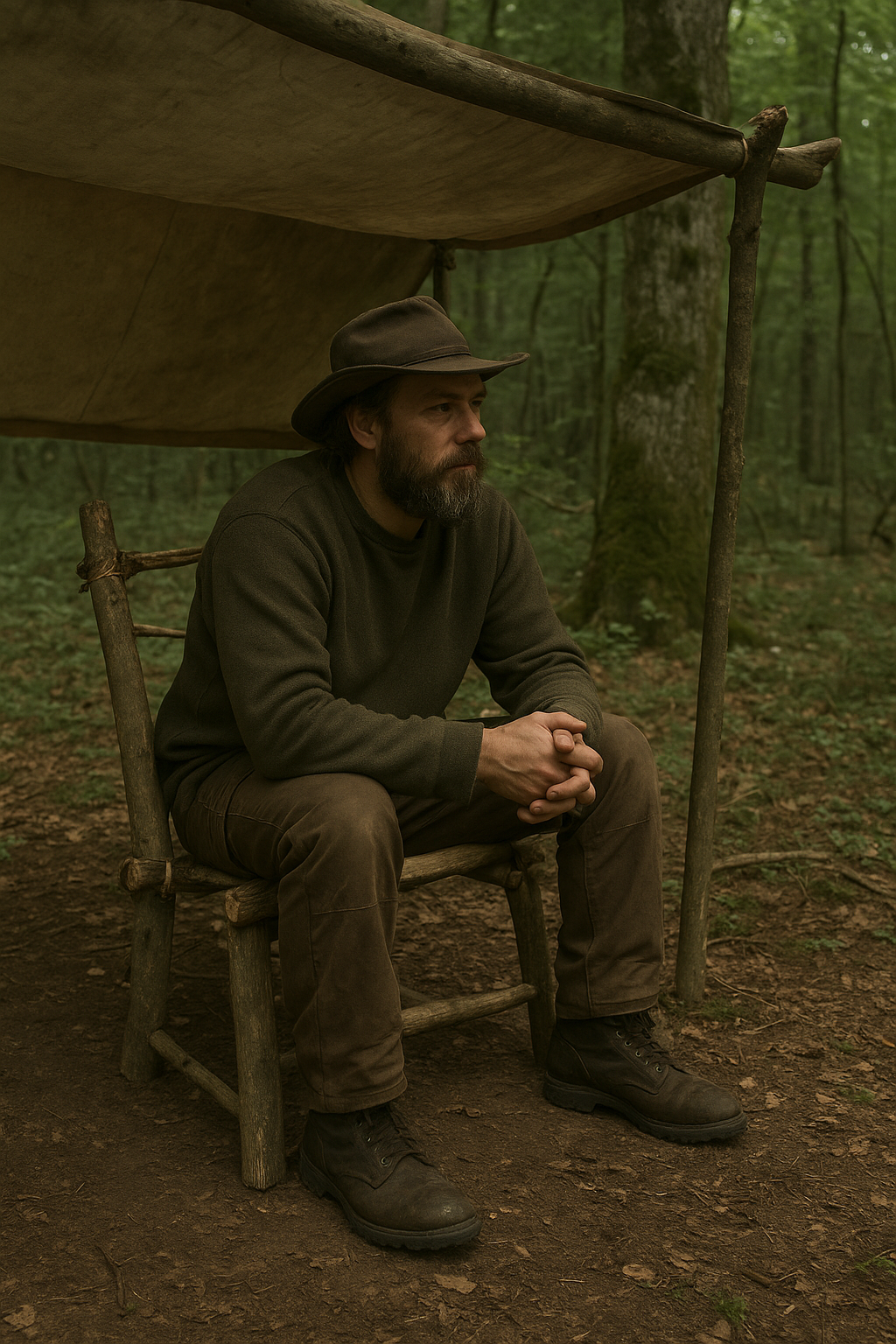

Why Bushcraft Furniture Matters in Survival
Many beginners think furniture is a luxury. In reality, it’s a tool for survival:
✔ Comfort = Energy Conservation
A proper seat, raised bed, or work table reduces fatigue and allows the body to recover faster.
✔ Elevation = Safety
A raised bed keeps you off damp soil, insects, and cold ground.
✔ Organization = Efficiency
Tables, racks, and stands help you store tools and food safely.
✔ Skill Integration
Building furniture uses every bushcraft skill:
-
Knot tying
-
Wood selection
-
Cutting techniques
-
Bush engineering
-
Load-bearing design
It’s the perfect “upgrade path” for learning advanced wilderness living.
Choosing the Right Wood (The Secret to Long-Lasting Furniture)
Picking the correct wood determines whether your furniture lasts a few hours or several months.
Best Woods for Bushcraft Builds
-
Hazel – flexible and excellent for frames
-
Birch – lightweight and strong
-
Oak – extremely durable for heavy structures
-
Pine – easy to carve and widely available
-
Willow – ideal for weaving, lashing, and curved supports
Wood that should be avoided
-
Rotten wood (crushes under load)
-
Extremely green wood (warps as it dries)
-
Wet or soft wood (invites mold and pests)
Always choose straight, solid, knot-free branches for load-bearing pieces.
Essential Joints & Bindings Every Builder Must Know
Your furniture won’t use screws or nails — it relies on primitive joinery.
Here are the three joints every bushcrafter must master:
1. The Notched Joint
A simple 90° cut with a notch—perfect for bed frames and tables.
2. The Saddle Joint
A rounded depression carved to fit another branch. Extremely strong.
3. The Split-Stake Clamp
A green branch split at one end that grips another piece like a clamp.
Bonus: Natural Cordage
Use:
-
Spruce roots
-
Bark strips
-
Ivy vines
-
Willow fibers
-
Homemade cordage from nettles
Strong lashings make your furniture rock-solid.
Simple First Project: The Bushcraft Camp Seat
One of the most beginner-friendly builds:
Materials Needed:
-
3 thick branches (legs)
-
1 wide plank-like piece or woven seat
-
Cordage
Steps:
-
Create a tripod frame.
-
Lash the top tightly.
-
Add a horizontal crossbar for stability.
-
Lay a woven seat or flat board across the top.
This small project introduces you to balancing load, tension, and stability — fundamentals for bigger builds.