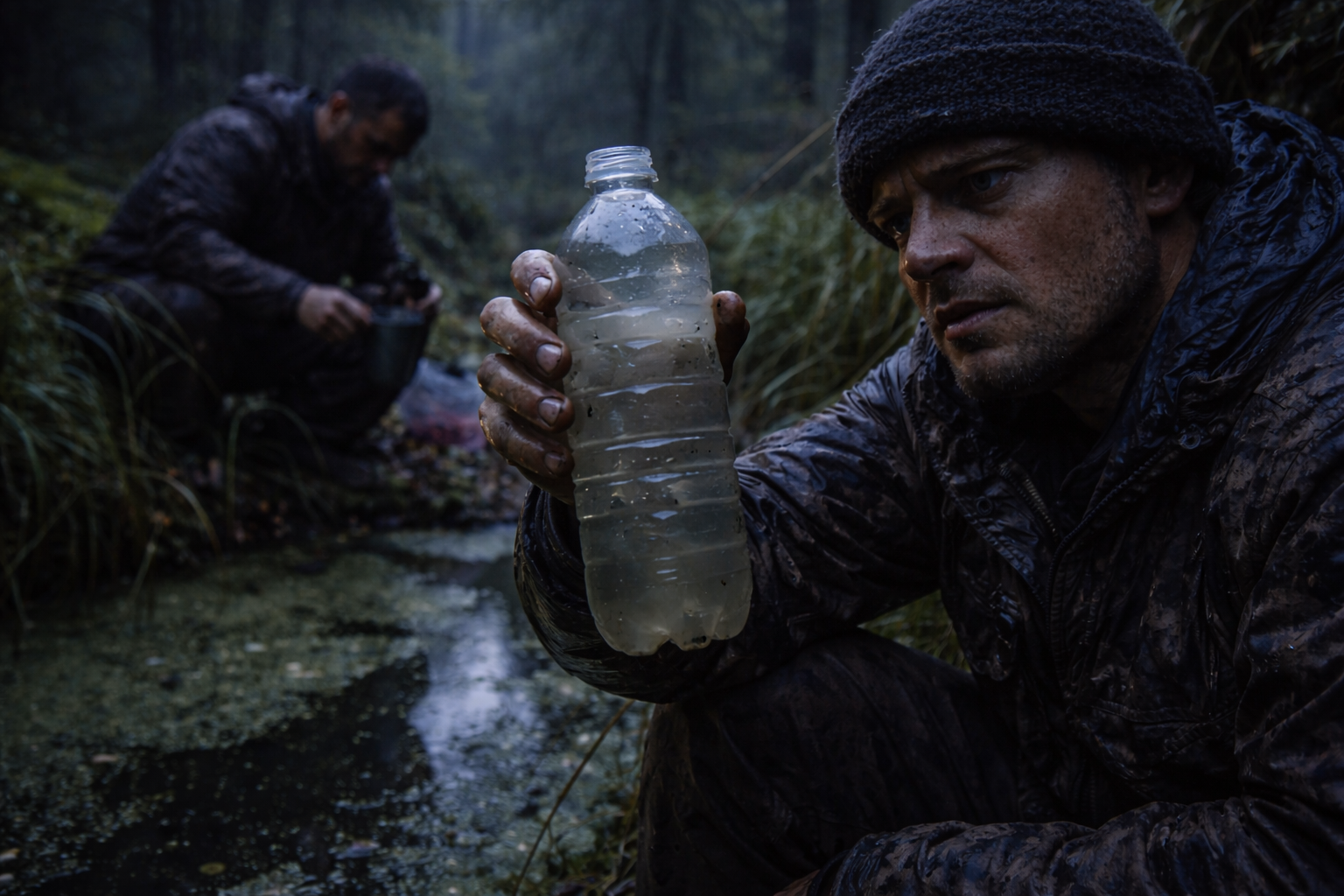
Finding water feels like winning the survival lottery. Thirst drives panic, and panic convinces people that any water is good water. This is where many survival stories quietly turn fatal.
In real survival scenarios, water found too early often creates false confidence. People stop moving, stop signaling, and stop thinking strategically. They settle near the first stream, puddle, or swamp—without understanding where it leads, what lives upstream, or how contaminated it may be.
Early humans learned this the hard way.
Natural water sources can carry parasites, bacteria, and chemical runoff from miles away. Drinking immediately may solve thirst for an hour—then destroy strength for days. Diarrhea, vomiting, and fever dehydrate faster than thirst ever could.
Smart survivors follow a rule older than civilization:
Secure safety first, then water, then food.
Before drinking, ask:
-
Is this water flowing or stagnant?
-
Is there animal traffic upstream?
-
Can I boil, filter, or solar-purify it?
-
Does staying here improve rescue chances—or trap me?
Ancient survival wasn’t about comfort. It was about delayed gratification and long-term thinking. The humans who survived weren’t the fastest drinkers—they were the most patient observers.