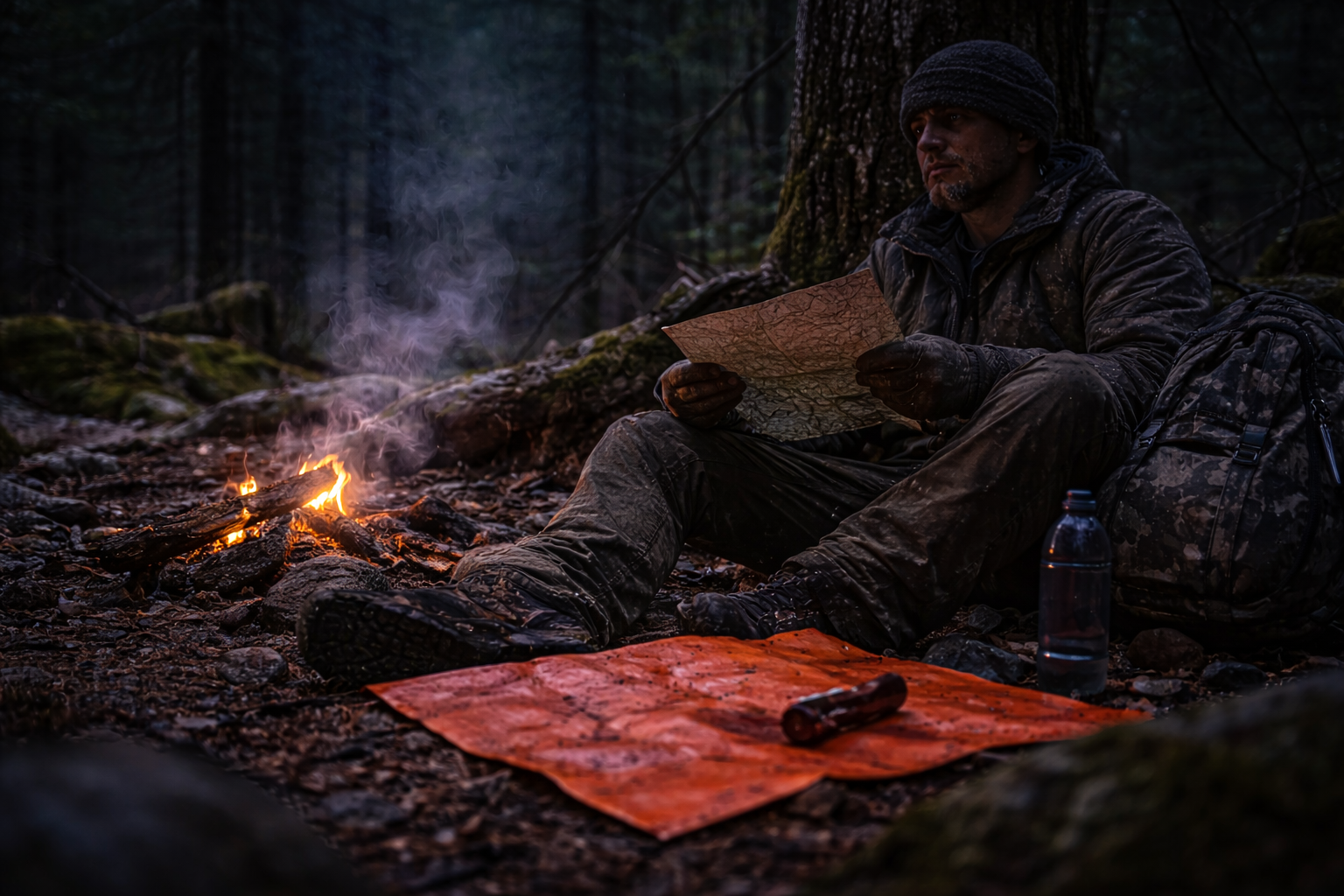

When people imagine survival, they picture constant motion — walking, searching, pushing forward no matter what. Movies and stories have taught us that action equals survival. But in real life, one of the most powerful decisions you can make is often the opposite:
Stop. Stay put. Think.
Getting lost or facing an unexpected situation triggers panic. Your brain wants to “do something” immediately — to walk in a direction, to search for a way out, to fix the discomfort fast. Unfortunately, this instinct can lead you deeper into trouble, especially in unfamiliar terrain.
🧠 Why Staying Put Saves Lives
Search and rescue teams consistently report that people who remain near their last known location are found faster and in better condition. Moving without a clear plan burns calories, increases dehydration, and raises the risk of injury.
By staying put, you:
- Conserve energy
- Make yourself easier to locate
- Reduce exposure to unknown hazards
- Give yourself time to think clearly
🪵 What To Do Instead of Wandering
If you realize you’re lost or stranded, switch into “camp mindset”:
- Find or create shelter — even a simple windbreak can prevent hypothermia.
- Signal your location — bright items, fire, reflective surfaces, or ground markers.
- Secure water — dehydration impairs judgment quickly.
- Stay visible — avoid hiding in dense cover unless necessary for safety.
⚠️ The Psychological Battle
The hardest part isn’t the environment — it’s resisting the urge to wander. Survival is often about discipline, not heroics. Accept the situation, slow your breathing, and focus on small, practical steps.
🌲 A Simple Rule to Remember
Survival instructors teach a principle sometimes called STOP:
- Stop
- Think
- Observe
- Plan
It sounds simple, but it can mean the difference between a short rescue and a long ordeal.