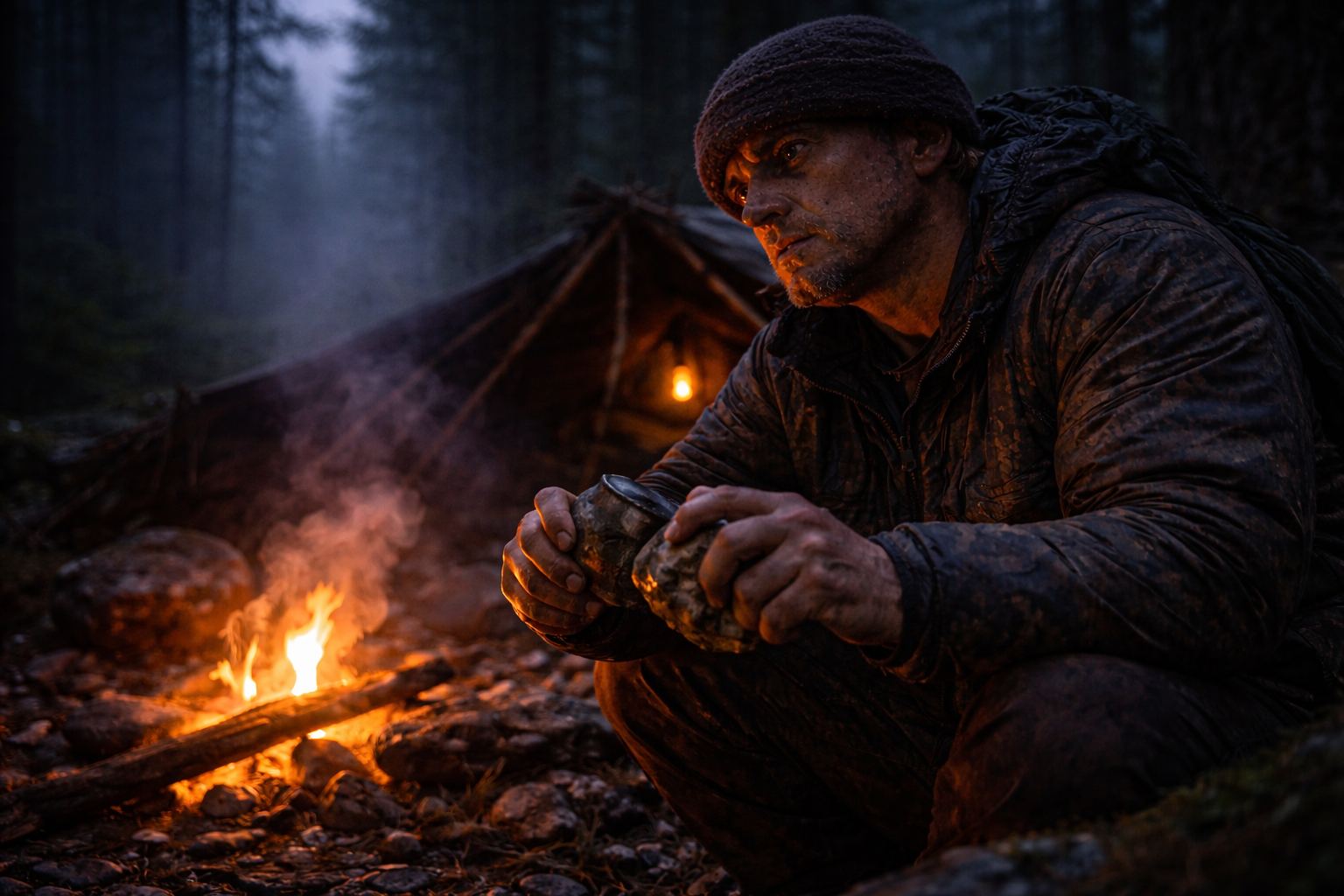
In survival stories, silence is often portrayed as safety. Stay quiet. Don’t draw attention. Don’t move.
But in the real world, silence can be one of the deadliest mistakes a survivor makes.
When Silence Becomes a Threat
Complete silence shuts down feedback. You stop hearing changes in wind, animals, water movement, or distant human activity. Your brain loses reference points — and panic grows quietly.
Many lost hikers didn’t die because of predators or hunger.
They died because they waited too long… listening to nothing.
The Psychological Effect
Silence amplifies fear. Every thought gets louder. Time stretches. Small decisions feel impossible. Survivors who break this cycle — by controlled movement, small tasks, or even low-level noise — stay mentally stable longer.
Early humans rarely survived in silence.
They hummed. They worked. They created rhythm.
Smart Noise vs Dangerous Noise
This isn’t about shouting or lighting signal fires at the wrong time.
It’s about intentional sound:
- Knocking stones together to test echoes
- Controlled fire crackle
- Slow, steady movement through terrain
Sound gives your brain proof that you’re still in control.
The Rule Survivors Follow
If everything around you is silent — you shouldn’t be.
Stillness is a tool. Silence is a weapon.
Know the difference.