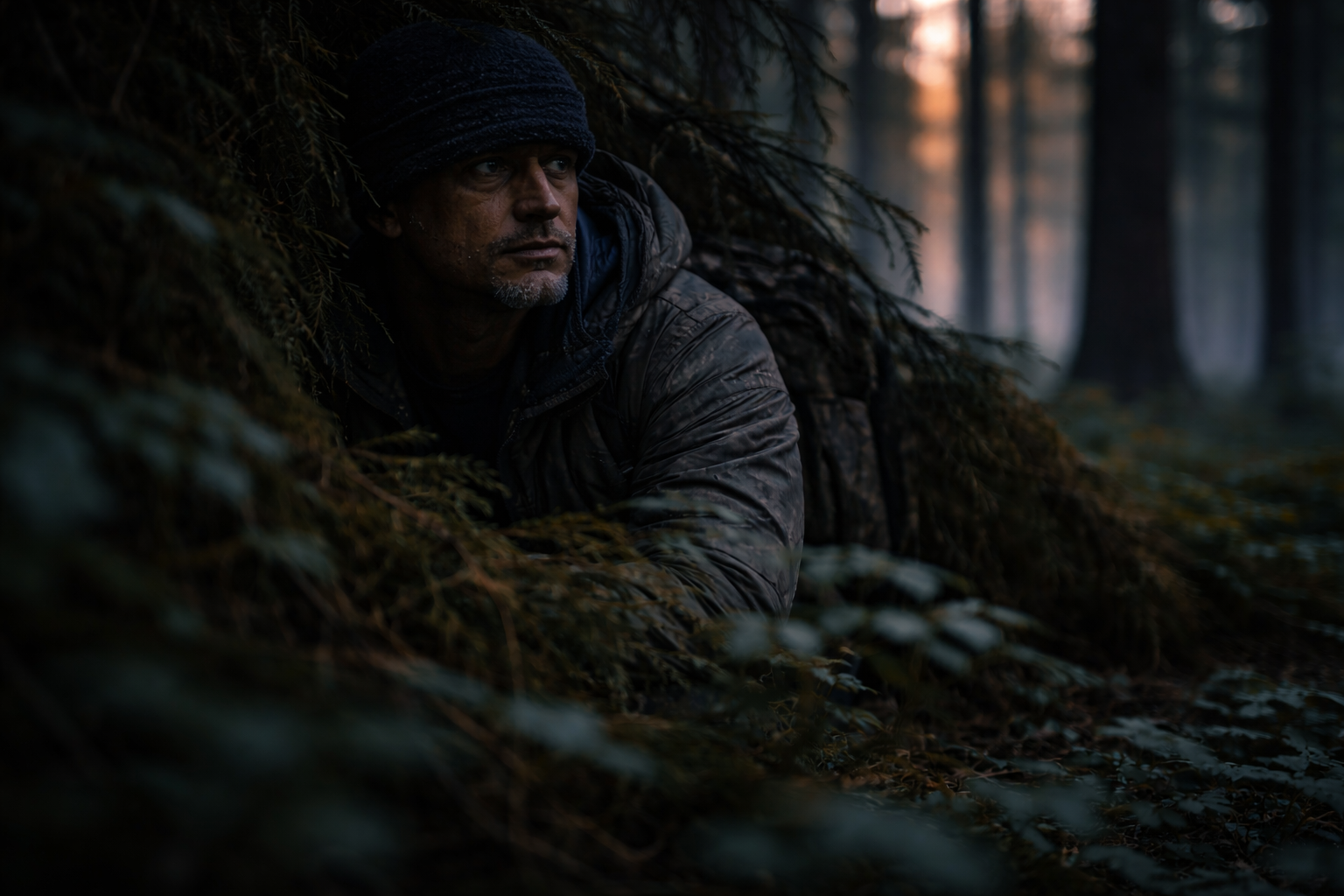
In survival stories, we often imagine action — running, building, fighting, searching. But one of the most powerful and least understood survival strategies is the opposite:
Doing less. Staying quiet. Becoming still.
Sometimes, survival isn’t about what you do — it’s about what you don’t do.
🌲 Why Stillness Is a Survival Skill
When people feel threatened, adrenaline pushes them to move fast and make noise. But movement burns energy, attracts attention, and can escalate danger.
Experienced survivors know that stillness gives you three critical advantages:
- You observe without being noticed
- You conserve strength
- You allow situations to reveal themselves
In the wild — and even in urban emergencies — patience often beats panic.
👂 Your Senses Sharpen in Silence
When you stop moving and talking, something remarkable happens: your awareness expands.
You begin to notice:
- Subtle sounds (footsteps, wind shifts, distant activity)
- Patterns in the environment
- Changes that signal risk or opportunity
Silence is not emptiness — it’s information.
🔥 When Moving Too Soon Creates Risk
Many survival mistakes happen because people rush:
- Leaving shelter before assessing conditions
- Walking into unknown terrain without listening first
- Revealing their position unnecessarily
A pause of even a few minutes can prevent hours — or days — of trouble.
🧠 The Psychological Power of Stillness
Staying still calms the nervous system. Breathing slows. Thinking becomes clearer.
Instead of reacting emotionally, you start making decisions deliberately — which is often the difference between control and chaos.
🛠️ How to Practice the Silence Advantage
Try this simple exercise:
- Sit quietly outdoors or in a quiet room for 5 minutes
- Don’t check your phone or speak
- Notice every sound and movement around you
- Focus on slow breathing
Over time, you train your mind to remain steady under pressure — a core survival skill.
⚠️ The Hidden Truth
Nature — and crisis — reward those who can wait.
The person who pauses, listens, and understands the moment often sees options others miss.
Because sometimes, the smartest move… is no move at all.