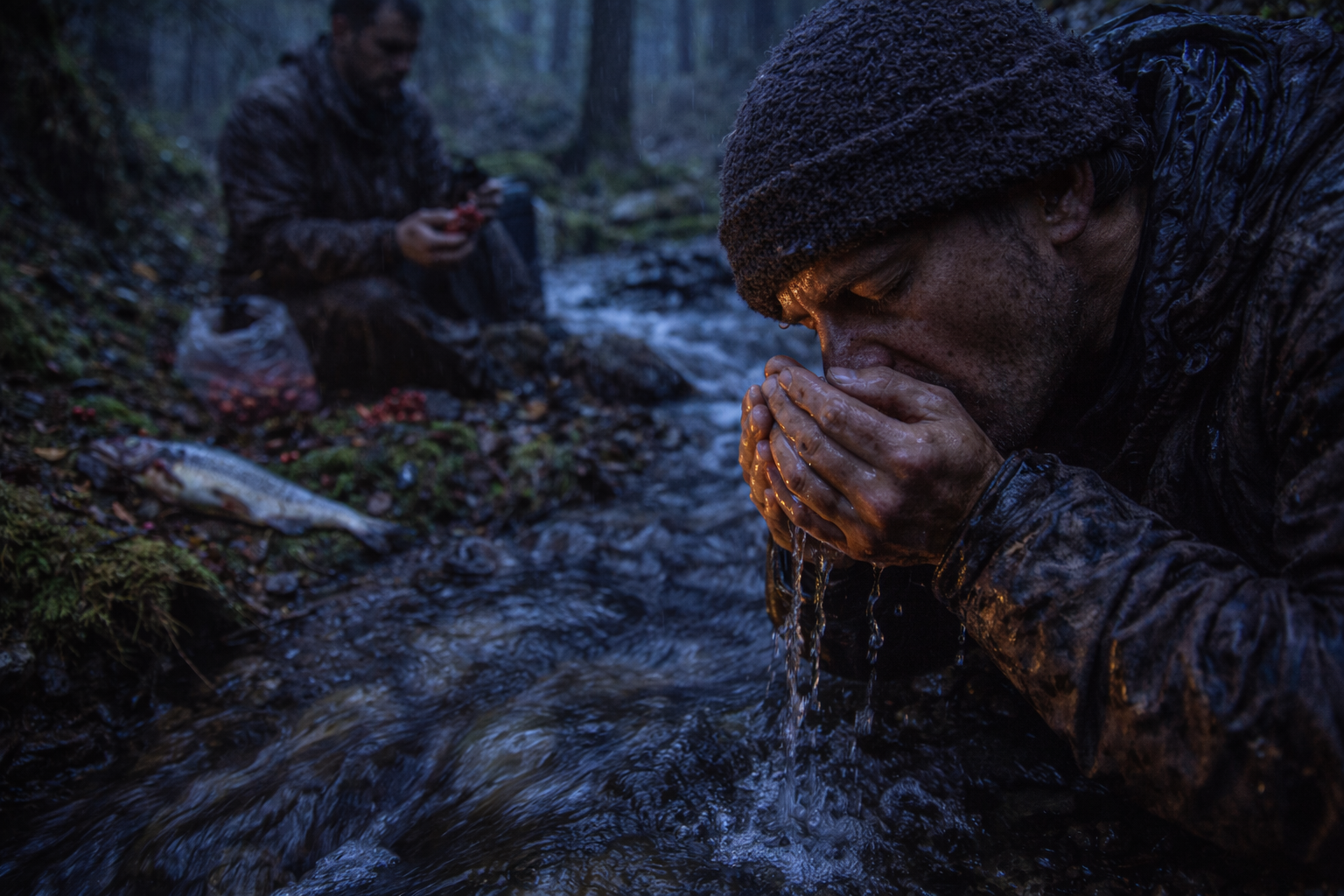
At first, it feels like victory.
You find water within hours.
Maybe a stream, berries, fish, or even an abandoned structure with supplies.
Your heart slows. Your stress drops. Your brain says: “I’m safe now.”
That thought is where many survival stories quietly turn fatal.
The Illusion of Safety
Early success creates a powerful psychological trap: false stability.
The human brain is wired to relax once an immediate need is met. In modern life, that works. In the wild, it kills.
When survivors find food or water too early, three dangerous shifts happen:
- Urgency disappears
- Risk awareness drops
- Long-term planning shuts down
People stop asking “What happens tomorrow?” and start living only for the next hour.
Why Early Resources Are Often the Most Dangerous
1. You Stop Moving Too Soon
Finding water early often causes people to settle in a bad location:
- flood zones
- animal corridors
- insect-heavy lowlands
- areas with no long-term shelter materials
Many deaths happen not from thirst—but from staying near water that attracts predators, disease, or weather exposure.
2. You Overtrust a Temporary Source
Streams dry. Berries rot. Game moves.
Survivors who assume “this will last” fail to:
- cache supplies
- scout alternatives
- mark routes
When the resource disappears, panic returns—but now with fewer options.
3. Early Food Lowers Mental Discipline
Hunger sharpens focus.
Early food dulls it.
Studies and real survival cases show that people who eat too early:
- take bigger risks
- wander farther without reason
- stop conserving energy
Calories give confidence—but confidence without structure becomes recklessness.
The Survival Paradox
The most dangerous moment is not when you have nothing.
It’s when you have just enough.
Enough water to stop searching.
Enough food to stop thinking.
Enough comfort to delay hard decisions.
Early success convinces the brain the crisis is over—while the environment disagrees.
How Experienced Survivors Avoid the Trap
Real survivors treat early resources differently:
- Water found ≠ water secured
- Food found ≠ food system established
- Shelter found ≠ safe position
They immediately ask:
- What happens if this disappears tonight?
- What does this place attract?
- Where is my exit if conditions change?
They act more cautiously after success, not less.