In survival stories, people often imagine dramatic moments — running through forests, building shelters in a rush, or desperately searching for food. But one of the most powerful and overlooked survival skills is surprisingly simple: the ability to slow down.
When something goes wrong in the wild — you lose the trail, weather shifts, or equipment fails — your mind naturally pushes you toward urgency. Heart rate rises, decisions become reactive, and mistakes happen fast. Experienced outdoorsmen know that the first step is not action, but pause.
🌲 Why slowing down matters
Panic narrows your thinking. You miss obvious landmarks, forget basic procedures, and burn energy you may desperately need later. By deliberately slowing your breathing and movements, you allow your brain to switch from reaction mode to problem-solving mode.
Many real survival accounts show that people who stop, sit, and observe often resolve situations faster than those who rush blindly.
🔥 The “STOP” principle
A simple mental checklist used in wilderness survival:
- S — Stop: Sit down. Do nothing for a moment.
- T — Think: What actually happened? What are your priorities?
- O — Observe: Check surroundings, weather, daylight, resources.
- P — Plan: Decide your next step calmly.
This approach prevents small problems from turning into emergencies.
🪵 Practical example
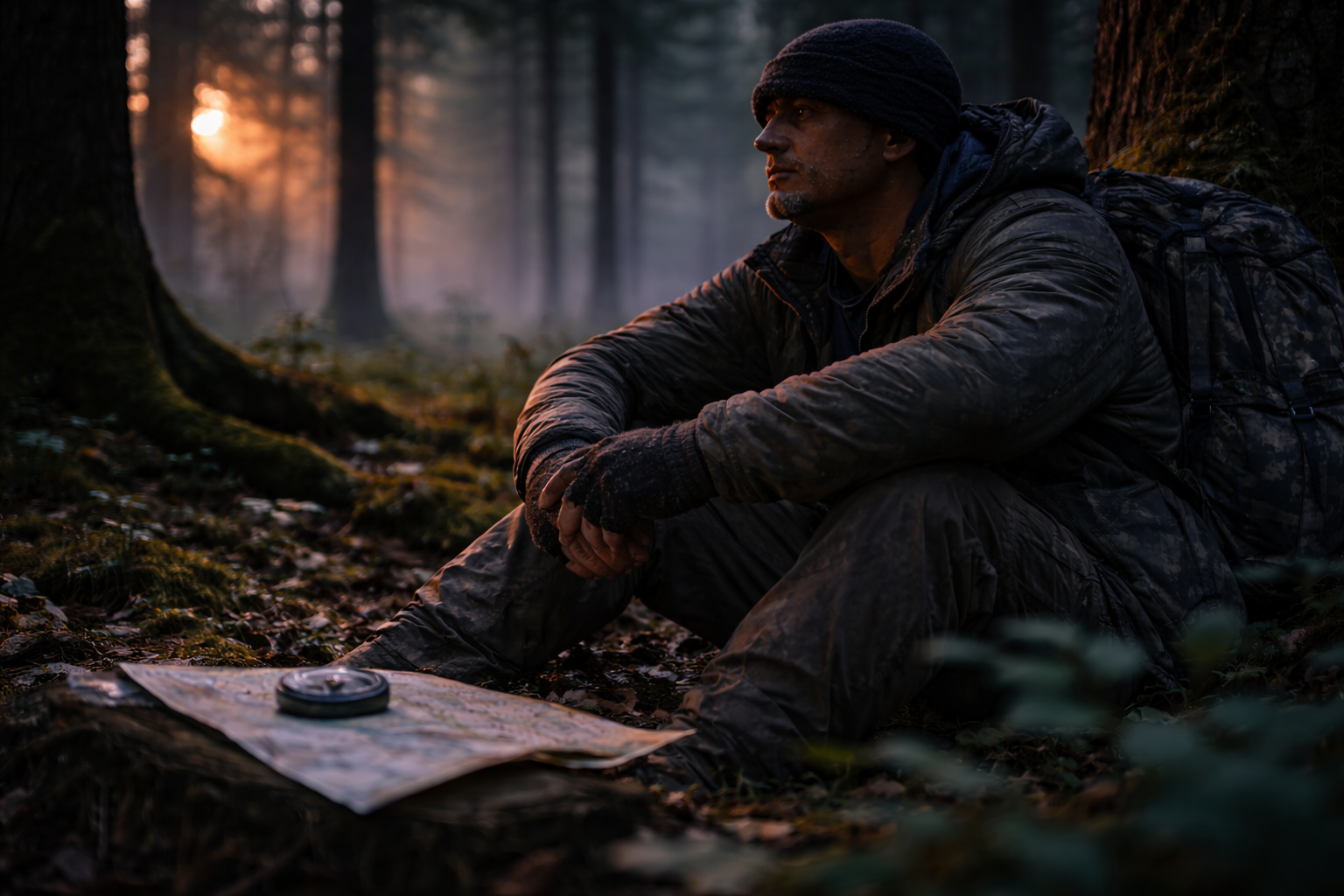
Imagine you realize you’re off trail as daylight fades. Instead of wandering, you stop, mark your location, listen for distant sounds (roads, rivers), check your map or GPS, and consider shelter options. That calm decision can mean a warm night instead of a dangerous one.
🧠 Training your mind
You can practice this skill anywhere:
- Pause before reacting to stress.
- Take slow breaths when solving problems.
- Rehearse scenarios mentally during hikes or trips.
Survival is as much psychological as physical — sometimes more.
Takeaway:
In the wild, speed feels natural, but calm thinking is what keeps you safe. The ability to slow down turns chaos into clarity — and often makes the difference between a close call and a crisis.