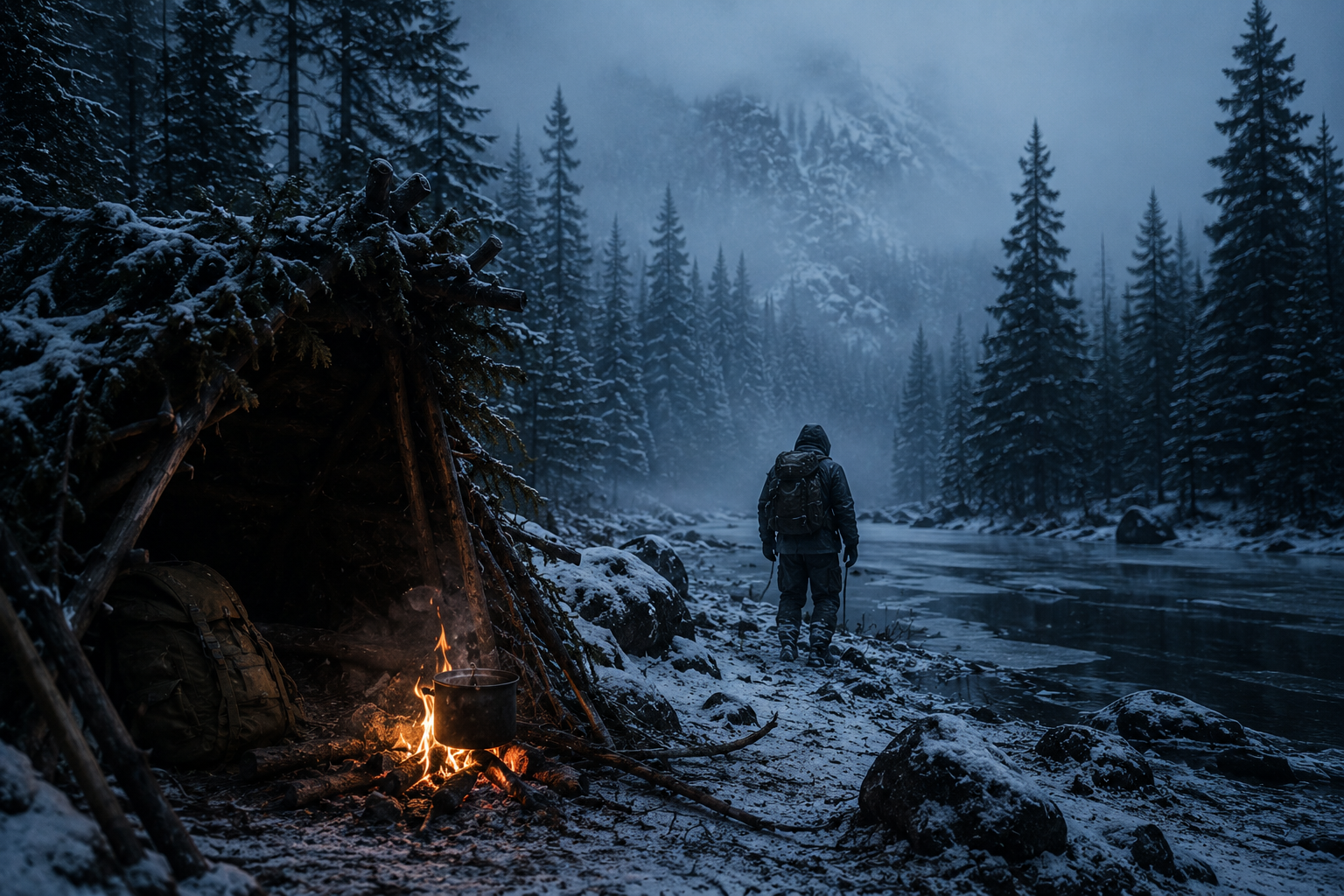

Winter survival is not usually destroyed by panic.
It is destroyed by comfort.
The fire starts burning steadily.
Your shelter finally blocks the wind.
Your gloves dry slightly.
The forest becomes quiet.
And little by little, your awareness fades.
That is when winter becomes dangerous.
Cold environments rarely kill people instantly. Instead, they wear people down slowly and quietly. Energy disappears without being noticed. Judgment weakens. Small tasks begin taking longer. Motivation drops.
The wilderness does not rush the process.
It simply waits.
Snow creates a strange psychological effect on people.
Everything feels slower.
Softer.
More distant.
Sound becomes muted under fresh snowfall. Forests lose movement. Rivers become quieter beneath ice. Even your own footsteps seem absorbed by the environment itself.
It feels peaceful.
But peace in the wilderness is often deceptive.
Because winter hides problems until they become serious.
Wet clothing does not feel dangerous immediately.
Fatigue does not feel critical immediately.
A dropping body temperature does not announce itself dramatically at first.
It begins subtly.
You stop moving efficiently.
You avoid unnecessary effort.
You think more about rest than direction.
Your decisions become smaller and slower.
And if nobody interrupts that cycle, the cold keeps taking more from you.
Experienced survivors understand something important about winter:
Fire is not safety.
Shelter is not safety.
Stopping is not safety.
Awareness is safety.
The people who survive longest in cold environments are usually the ones who continue observing themselves even after conditions improve.
They monitor exhaustion.
They watch their hands.
Their breathing.
Their motivation.
Their thinking.
Because winter rarely attacks through violence.
It usually attacks through silence.
And by the time most people notice the difference, the wilderness has already started winning.