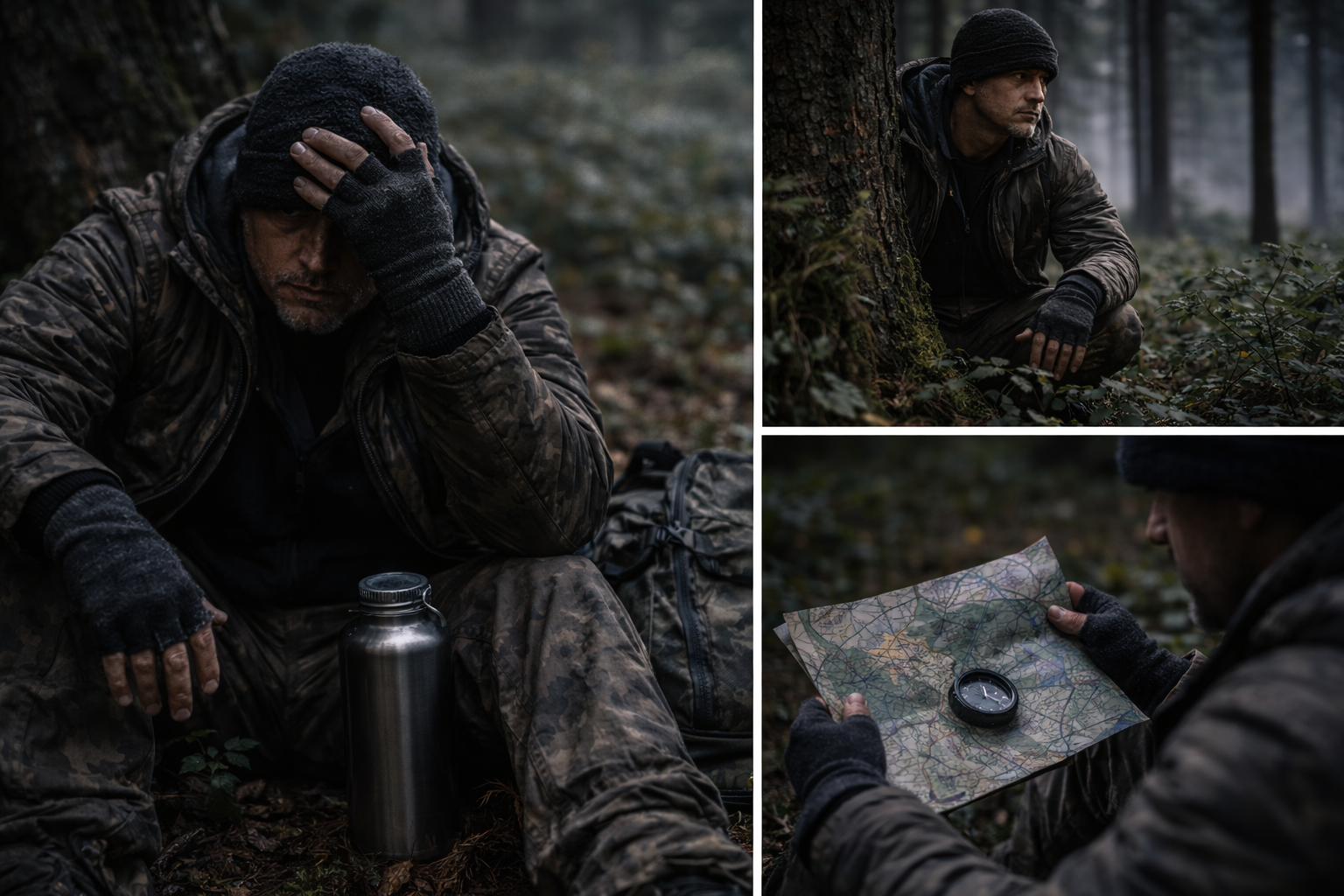

In many survival situations, the first 10 minutes after something goes wrong are the most dangerous.
Not because of the environment — but because of panic.
People rush, make fast decisions, move in the wrong direction, and waste energy. Later they realize the situation could have been controlled if they had just slowed down.
🧠 The “10-Minute Rule” Used by Experienced Outdoorsmen
When something unexpected happens — you lose the trail, your gear breaks, the weather changes — stop immediately.
Don’t rush forward.
Instead, use the next 10 minutes to reset your mind.
🔍 Step 1: Stop Moving
Movement without direction creates bigger problems.
Every step in the wrong direction makes rescue or navigation harder.
Sit down if you need to. Slow your breathing.
👂 Step 2: Observe Your Environment
Listen carefully.
Sometimes the forest, wind, water, or distant sounds can tell you more about where you are than a map.
Look for:
- The position of the sun
- Landmarks
- Trails or broken branches
- Water flow direction
🧭 Step 3: Make a Simple Plan
After calming down, choose one clear action.
For example:
- Stay where you are and signal for help
- Return the same direction you came from
- Find water and build temporary shelter
Simple plans prevent confusion.
⚡ A Small Trick Many Survivors Use
Before moving again, ask yourself one question:
“Will this action improve my situation — or make it worse?”
If the answer isn’t clear… wait and think longer.
Because in the wild, patience often keeps people alive longer than speed.