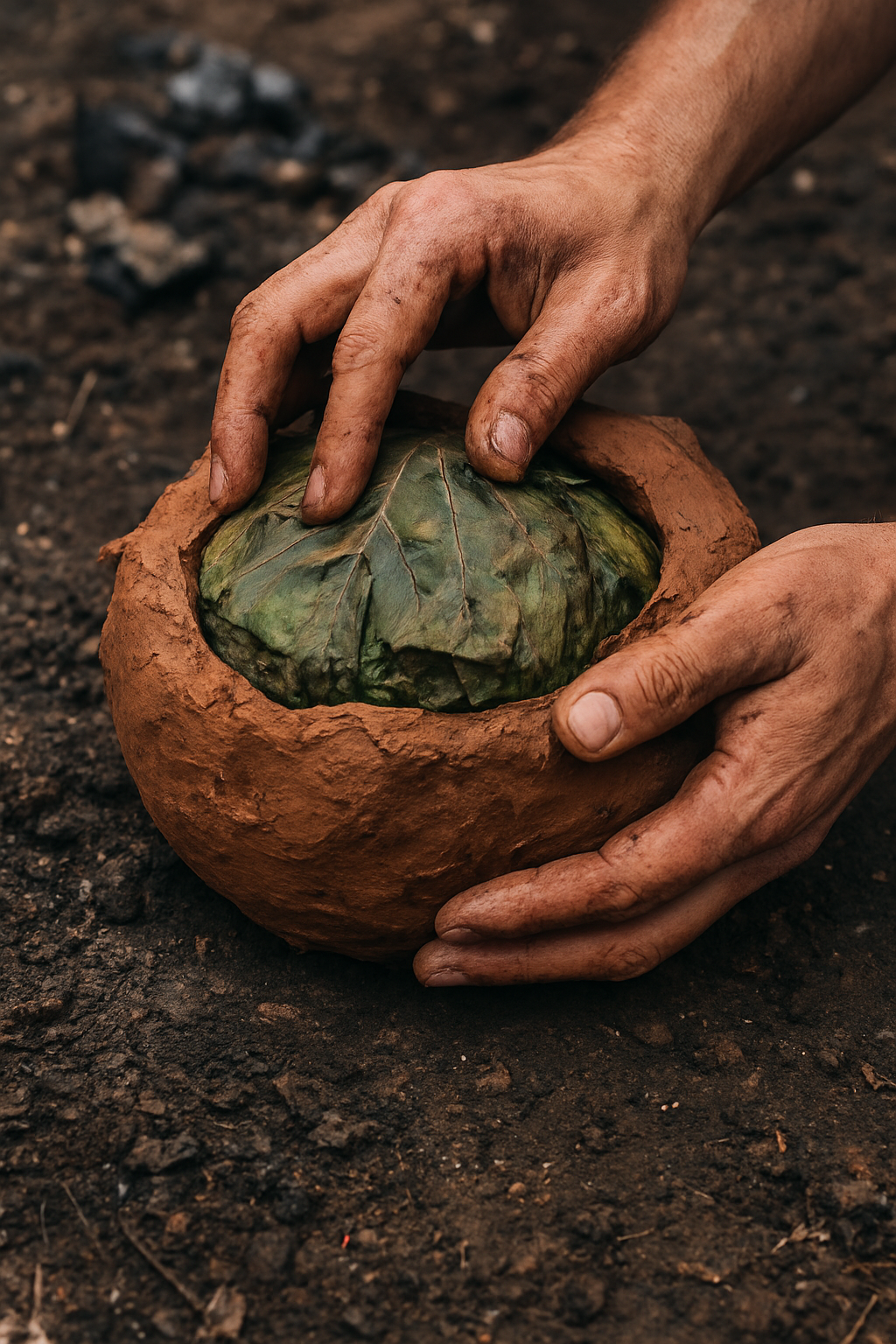

Why Clay Baking Works So Well
Clay acts like a natural, protective oven. When you pack food inside wet clay and place it near or under hot coals, several things happen:
1. Clay Creates a Seal
It traps moisture inside, turning the food into a slow-cooked, steamed dish.
2. It Provides Full Heat Distribution
Unlike direct flame—where food can burn quickly—clay spreads heat evenly across the entire surface.
3. It Protects From Ash and Dirt
You can bury the clay bundle or place it right inside the coals without worrying about contamination.
4. It Enhances Flavor
As the clay hardens, it forms a crust. When cracked open, the aroma is intense and the meat remains juicy.
This technique works perfectly with fish, birds, roots, mushrooms, and even eggs.
What You’ll Need
Everything can be found in nature:
-
Clay-rich soil (smooth, sticky, and moldable when wet)
-
A heat source (preferably hot coals, not open flame)
-
Fresh green leaves (optional but recommended to wrap the food before the clay layer)
-
Your knife for cleaning or scaling your food
If you can sculpt mud pies, you can clay bake.
How to Clay Bake Food Step-by-Step
1. Find and Prepare the Clay
Search for soil that feels sticky when wet.
If it cracks or crumbles easily, add more water.
Knead the clay until it has the consistency of bread dough.
2. Prepare the Food
Depending on what you’re cooking:
-
Fish: Gut it, remove scales, but leave the skin.
-
Small birds: Remove intestines but keep skin and feathers—they will peel off with the clay.
-
Vegetables/roots: Wash off dirt, keep skin on.
For extra aroma, layer the food in natural leaves such as:
-
burdock
-
banana leaves
-
cattail leaves
-
wild garlic leaves
These help lock in moisture and add herbal flavor.
3. Pack the Food in Clay
Cover the food in a 1–2 cm layer of clay.
Make sure there are no cracks.
The layer must be sealed completely.
4. Place the Clay Bundle in the Fire
You have two options:
Option A: Under Hot Coals
Place the clay ball on embers
→ cover with more coals
→ let cook 30–90 minutes depending on size.
Option B: Buried Underground
Dig a shallow hole, place the clay ball, cover with coals and hot earth.
This cooks slow and evenly—perfect for birds or larger fish.
5. Crack It Open
When the clay has hardened and turned dry, remove it from the heat.
Tap the surface with a stone or stick.
The clay breaks into chunks and:
-
feathers pull off clean
-
fish skin peels away
-
roots become soft and smoky inside
You’re left with tender, perfectly cooked food infused with natural, earthy flavor.
What Foods Cook Best in Clay?
-
Trout, carp, perch, and catfish
-
Pheasant, quail, pigeon, grouse
-
Potatoes, sweet roots, burdock root, cattail root
-
Wild mushrooms (large caps like oyster mushrooms)
-
Whole eggs (wrapped in leaves and clay to prevent explosion)
Everything becomes soft, juicy, and deeply aromatic.
Why Every Survivalist Should Practice Clay Baking
Clay baking is more than a cooking method—it’s a survival advantage:
-
No pot or pan needed
-
No chance of burning the food
-
No contamination from ash
-
Works in rain, wind, and harsh weather
-
Adds no smell (useful for stealth situations)
-
Saves fuel because clay retains heat