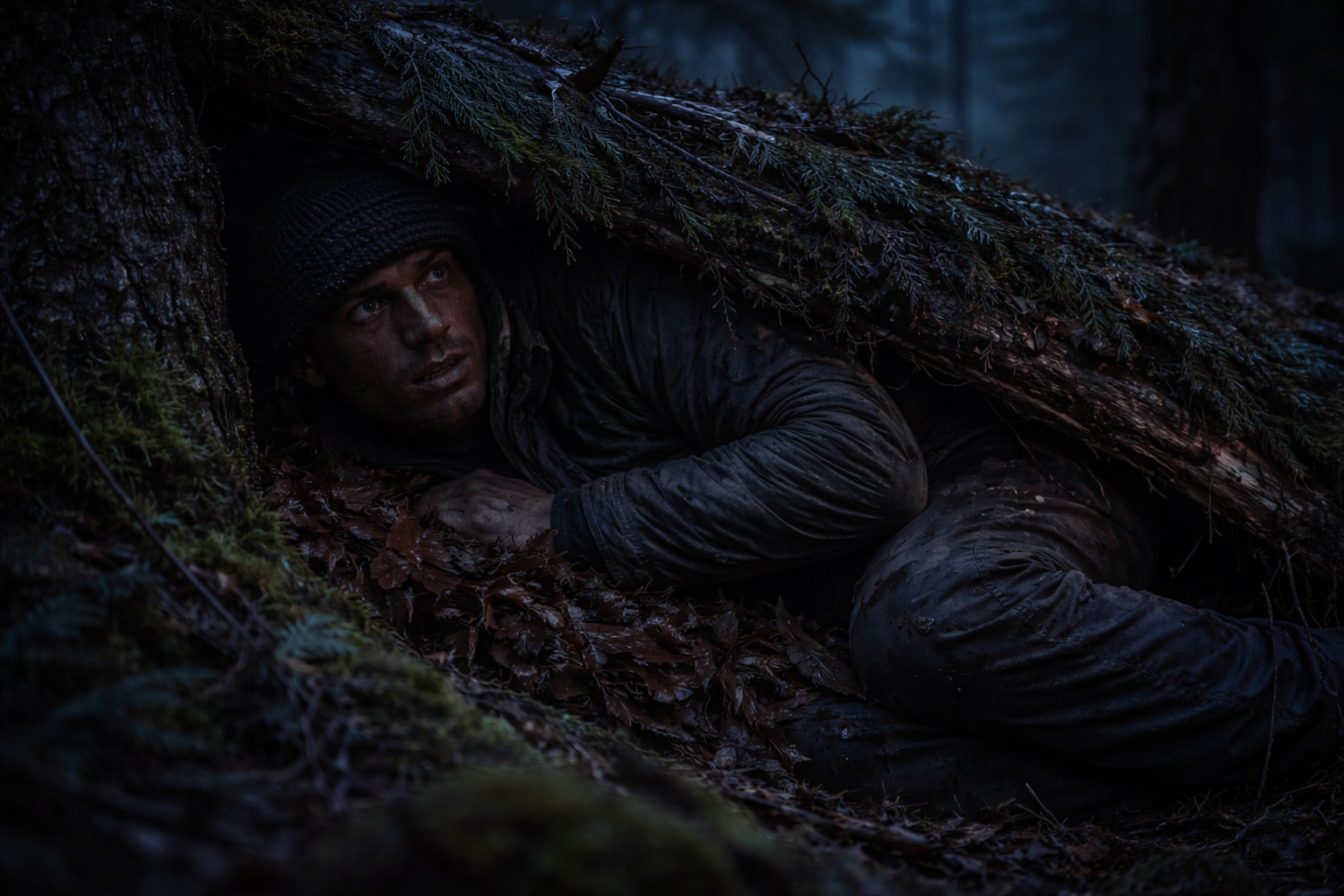

How Humans Stayed Alive in Cold, Wet Environments With No Flame at All
Fire is the first thing people panic about losing.
No fire means no warmth.
No fire means no cooked food.
No fire means no protection.
That belief has killed more survivors than cold ever did.
Throughout history, people have survived weeks — sometimes months — without fire in environments where logic says it should be impossible: cold forests, wet coastlines, endless rain, and freezing nights. They didn’t survive because they were tougher. They survived because they stopped trying to fight nature and started adapting to it.
Why Fire Can Be a Liability
In many survival situations, fire attracts more danger than it solves:
- Smoke reveals your position
- Constant moisture makes fire unreliable
- Wind and rain drain energy faster than heat provides
- Gathering fuel exposes you to injury and exhaustion
In cold, wet environments, maintaining a fire can cost more calories than it saves.
Some survivors lived longer by abandoning fire completely.
The Cold Reality: Heat Is About Retention, Not Flame
Fire creates heat.
Survival depends on keeping it.
Humans who survived without fire focused on:
- Reducing heat loss
- Eliminating evaporation
- Trapping body warmth
- Staying dry, not warm
They treated warmth like a resource — not a reaction.
How People Stayed Warm Without Fire
1. Micro-Shelters Instead of Camps
Instead of building large shelters, survivors used:
- Tight leaf nests
- Earth depressions
- Wind-blocking formations
- Natural overhangs and fallen trees
Smaller spaces retain body heat better and require less energy to maintain.
2. Ground Insulation Over Blankets
Cold kills through contact, not air.
Survivors layered:
- Leaves
- Bark
- Grass
- Moss
They insulated underneath themselves first, often stacking material higher below than above.
3. Stillness as a Thermal Strategy
Movement generates heat — briefly.
Stillness preserves it longer.
Survivors learned to:
- Move during the day
- Stay still at night
- Minimize sweating
- Avoid unnecessary motion
Sweat without fire is deadly.
Eating Cold, Living Warm
Cooking is not required to survive.
Fireless survivors relied on:
- Raw plant calories
- Cold-soaked roots
- Fats when available
- Minimal digestion effort
The goal wasn’t comfort — it was efficiency.
Digesting heavy meals in cold environments without fire drains energy fast.
The Biggest Mental Shift
The most important change wasn’t physical.
It was psychological.
Survivors who lived without fire stopped thinking in days and started thinking in hours:
- Stay dry this hour
- Preserve heat this night
- Move efficiently tomorrow
Fire is powerful — but dependence on it is dangerous.
The Truth Most Survival Guides Avoid
Fire is a tool.
It is not a requirement.
In certain environments, fire shortens survival time by:
- Increasing exposure
- Draining calories
- Creating false confidence
Humans survived long before fire was reliable — and sometimes survived because they didn’t rely on it.