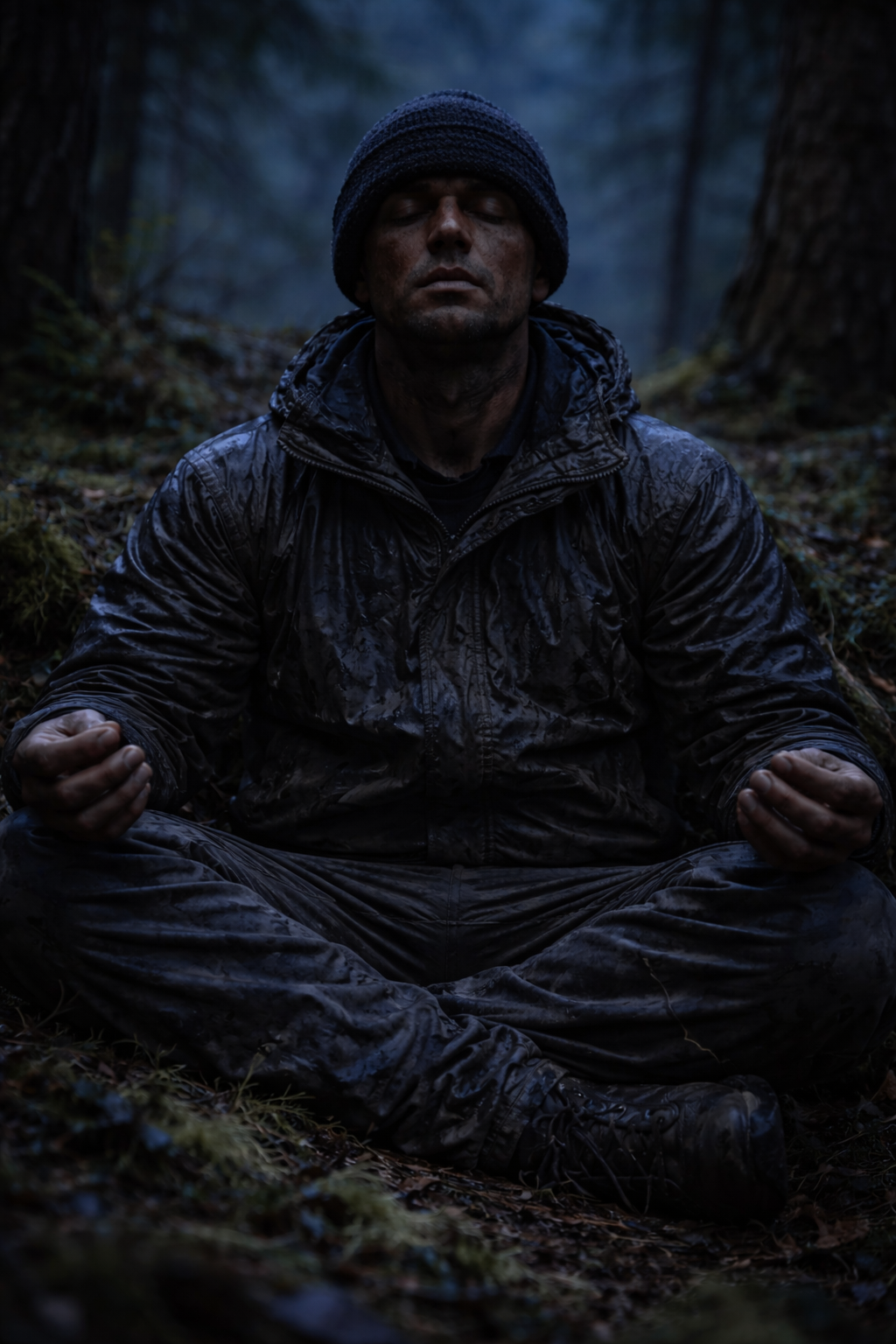

In extreme survival situations, equipment eventually breaks, food runs out, and plans collapse. What remains is the human body — often underestimated, yet brutally capable when used correctly.
Across real survival experiments and documented wilderness incidents, one truth keeps repeating: the body adapts faster than fear allows you to believe.
People have survived days without food by lowering movement and conserving heat. Others endured freezing nights not through strength, but by controlling breathing, posture, and muscle tension to slow heat loss. In deserts, survivors learned to ration sweat instead of water — moving only at dawn and dusk, using shade like a physical resource.
One experiment showed that participants who stayed mentally calm burned up to 30% fewer calories than those panicking, despite identical conditions. Panic wastes energy. Calm multiplies endurance.
Early humans didn’t have “gear loadouts.” They understood posture, pacing, breath, and pain thresholds. They treated discomfort as information, not danger. Hunger became a timer, cold became a signal, fatigue became a guide.
Modern survival myths focus on tools. Real survival proves something darker and more powerful:
Your body is already designed to survive —
your mind just has to stop fighting it.
This post isn’t about pushing limits recklessly. It’s about learning when to slow down, when to let the body adapt, and when doing less is the most dangerous-looking — and effective — choice you can make in nature.