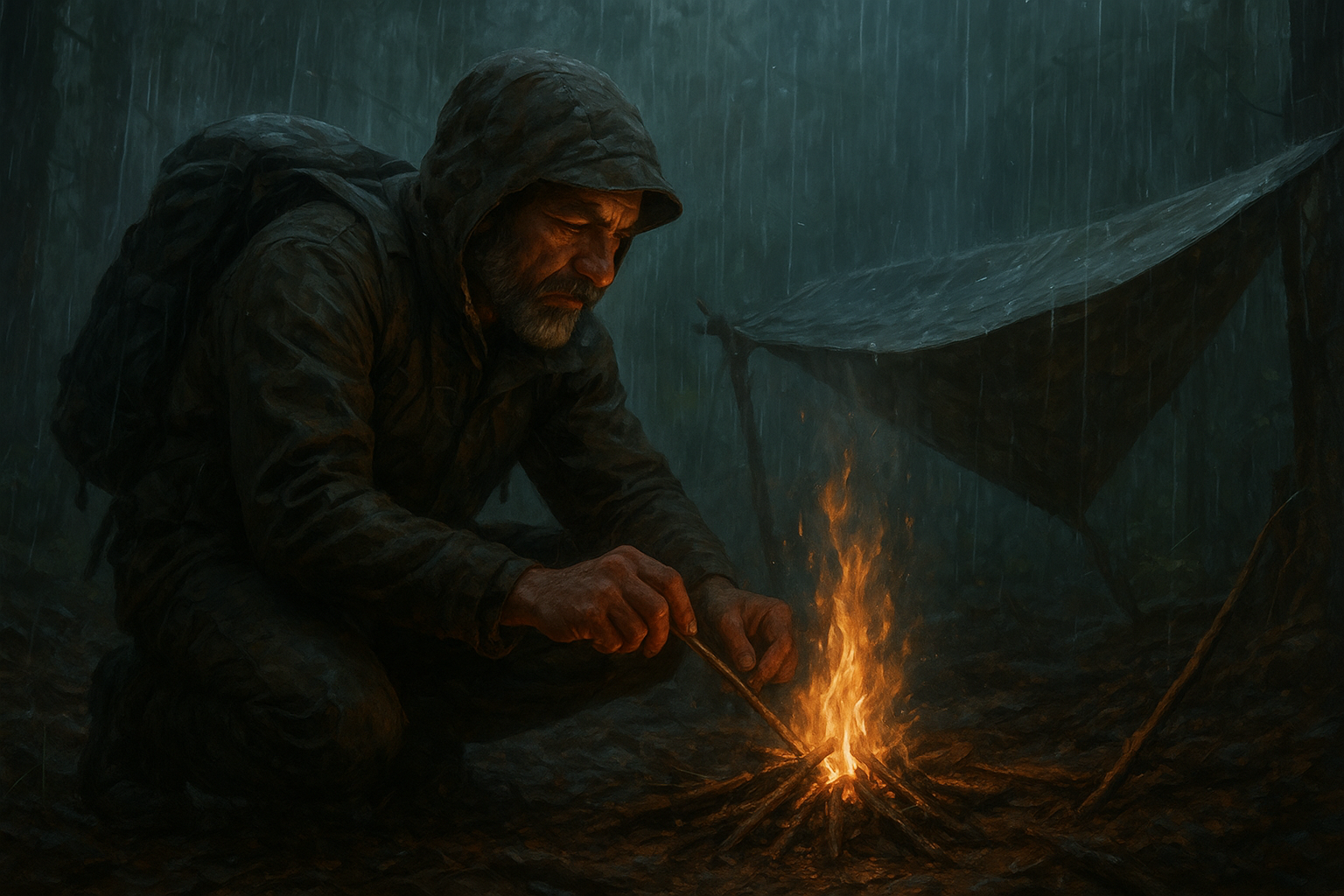

🔥 1. Firekeeping in Wet Conditions — The Art of Flame Preservation
In prolonged rain, it’s not only hard to start a fire —
it’s hard to keep one alive.
Here are the most reliable techniques used by bushcrafters, soldiers, and wilderness guides:
✔ Build a “fire roof”
Always protect your flame with:
-
a tarp pitched low
-
layered branches
-
split logs forming a wind-and-rain wall
Your fire should live in a micro-shelter.
✔ Use the “Feather Dry” method
Split wet logs down the middle — the inner core is dry.
Carve feather sticks or thin curls to expose dry fibers.
✔ Create a long-burning base
Use a platform made from:
-
bark
-
flat stones
-
thick branches
This prevents your fire from drowning in the wet soil.
✔ Keep a coal nest
Once you get a fire going, maintain a small ember bundle at all times.
Even if flames go out, you can revive the fire in minutes.
🥾 2. Rain-Friendly Foraging — What You Can Actually Eat in Soaked Forests
Rain changes everything when it comes to wild food.
Plants become waterlogged, insects hide, and many edible species rot quickly —
but several reliable sources remain:
✔ High-calorie “rainproof” plants
Even in bad weather, you can usually find:
-
pine nuts
-
cattail roots
-
burdock root
-
acorns (leach to remove tannins)
-
hazelnuts
-
young spruce tips
These foods stay edible even after heavy rain.
✔ Mushrooms: abundant, but dangerous
Rain brings mushrooms out in massive numbers —
but identification errors are fatal.
Only collect species you know 100%:
-
morels
-
chanterelles
-
oyster mushrooms
-
porcini
If uncertain, don’t touch.
✔ Edible insects
Wet forests make insects slow and easy to grab:
-
worms
-
snails (purge before eating)
-
slugs (only cooked!)
-
woodlice
They may not be glamorous — but they’re nutrient machines.
🔥 3. Cooking in the Rain — Techniques That Always Work
Cooking in wet conditions requires setup, not strength.
✔ The Reflective Heat Wall
Build a wall of logs behind your fire to reflect heat toward your cooking area.
✔ The “Corded Pot” Method
Suspend your pot under the shelter roof using string or vine.
This keeps your food safe from:
-
ash
-
dripping rain
-
sudden flare-ups
✔ Stone boiling
If you can’t open flame cook:
-
Fill a wooden bowl or carved depression with water.
-
Heat stones in the fire.
-
Drop them into the water to boil food safely.
Works in the worst weather.
😓 4. Fatigue, Dampness & Energy — Staying Alive on Day 2… 3… 5
Rain steals warmth, warmth steals calories.
In prolonged storms, the biggest killer is exhaustion, not exposure.
Here’s how to counter it:
✔ “Micro-Dry” Strategy
Keep one item of clothing always dry, even if you must sleep cold to protect it.
This piece becomes your emergency warmth layer.
✔ Warm water = life
Even if you have no food, drinking hot water every 2–3 hours:
-
boosts morale
-
prevents hypothermia
-
supports circulation
✔ Move with intention
In rain survival:
Every wasted step = wasted heat.
Plan your movements and conserve energy.
✔ Sleep above the ground
Wet earth drains heat faster than wind.
Use:
-
branches
-
moss
-
bark
-
your backpack
-
a raised log bed
Anything to avoid ground contact.
🌧️ Final Thoughts
Mastering food, fire, and fatigue in the rain transforms you from a person simply getting wet…
into someone who can endure, adapt, and outlast even the harshest weather.