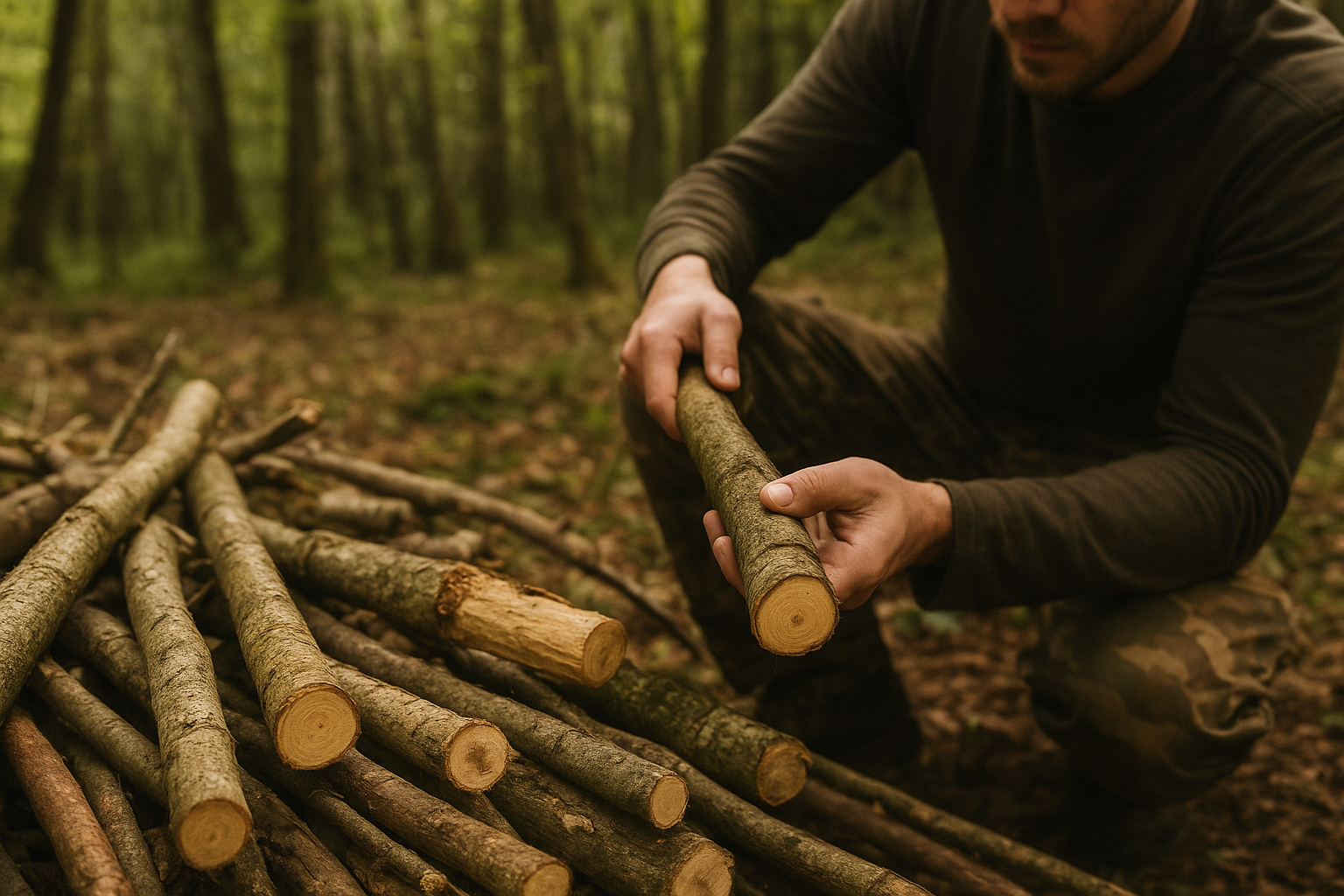

🌲 Why Wood Selection Matters More Than Technique
You can be a master at lashings and carving, but if the wood is weak, your furniture won’t survive the first rain.
Correct wood selection gives you:
-
Strength for chairs, cots, tables, and racks
-
Flexibility for bent frames and ergonomic structures
-
Rot resistance for long-term use
-
Predictable behavior as it dries
-
Safety—no collapsing chairs or cracking joints
Bushcraft isn’t just building — it’s reading the forest like a craftsman.
🌲 The 5 Best Tree Species for Bushcraft Furniture
Memorize these — they’re reliable across most regions.
1. Oak (The King of Strength)
-
Extremely hard
-
Great for load-bearing frames
-
Naturally rot-resistant
-
Perfect for chairs, cots, and tables
If you want furniture that feels bulletproof — choose oak.
2. Hazel (Best for Bending & Frames)
-
Flexible
-
Light, easy to cut
-
Great for hoops, chair backs, rib structures
Hazel is unbeatable for curved designs without steam bending.
3. Birch (Perfect for Smooth Surfaces & Carving)
-
Straight-grained
-
Carves beautifully
-
Ideal for stools, seats, utensils, tabletops
Birch gives your bushcraft furniture a “polished” feel.
4. Ash (Strong Yet Flexible)
-
Springy wood
-
Excellent shock resistance
-
Good for chairs, tool handles, bows
If your furniture needs to survive weight and movement — choose ash.
5. Pine (Fast, Lightweight, Easy to Process)
-
Soft
-
Ideal for surfaces and light-duty structure
-
Good for drying racks, shelves, camp tables
Just avoid the wet sap pockets when carving.
🌲 How to Identify Safe, Usable Wood in the Wild
You don’t need a forestry degree.
Use the 3-Touch Rule:
1. Tap It — Listen for Sound
-
Hollow, dull sound = rotten core → avoid
-
Solid, crisp sound = healthy wood → good
2. Bend It — Test Flexibility
-
If it snaps too easily → too dry or brittle
-
If it bends evenly → excellent for furniture
3. Scratch It — Check the Fibers
-
Tear-out fibers = weak, inconsistent grain
-
Smooth fibers = strong, workable wood
🌲 Dead vs. Green Wood: Which Should You Use?
Green Wood
✔ Great for bending
✔ Easy to carve
✔ Fresh, strong fibers
✘ Shrinks as it dries (can warp)
Use it for: frames, curved parts.
Dead Wood (Standing Dead Only)
✔ Already dry
✔ Hard and durable
✔ Minimal shrink
✘ Harder to carve
Use it for: seats, legs, weight-bearing parts.
Never use fallen, ground-dead wood — it’s usually rotten inside.
🌲 How to Harvest Wood Without Damaging the Forest
Sustainable bushcraft is ethical bushcraft. Always:
-
Take branches, not full trees, when possible
-
Prefer windfall branches if they’re still solid
-
Leave young trees untouched
-
Cut cleanly to help the forest heal
Your furniture should not cost nature more than necessary.
🌲 Preparing Wood: The Secret to Long-Lasting Camp Furniture
Once harvested, prepare it like this:
1. Debark It
Prevents pests and speeds drying.
2. Let It Rest
Even a few hours reduces moisture and prevents twisting.
3. Smooth the Contact Points
Where joints meet, remove bumps for a stronger fit.
4. Inspect Every Piece Before Assembly
If there’s the slightest crack—don’t use it.
🔥 Why This Matters
Because your bushcraft furniture is more than comfort.
It’s structure.
It’s safety.
It’s long-term sustainability.
And it starts with choosing the right wood—something most beginners overlook completely.