
Why Rain Is One of the Biggest Survival Threats
Cold alone is manageable. Rain alone is uncomfortable.
Together, they are deadly.
Rain causes:
-
Rapid heat loss
-
Skin damage and infections
-
Heavy, waterlogged clothing
-
Reduced mobility
-
Fire-starting difficulties
Primitive cultures learned that staying dry enough was the real goal — not staying dry at all costs.
The Core Principle of Primitive Rain Protection
Primitive rain systems followed one rule:
👉 Shed water, dry fast, and keep insulation protected.
Modern waterproof clothing often traps moisture inside. Primitive solutions allowed water to escape and clothing to dry quickly.
Natural Materials Used for Rain Protection
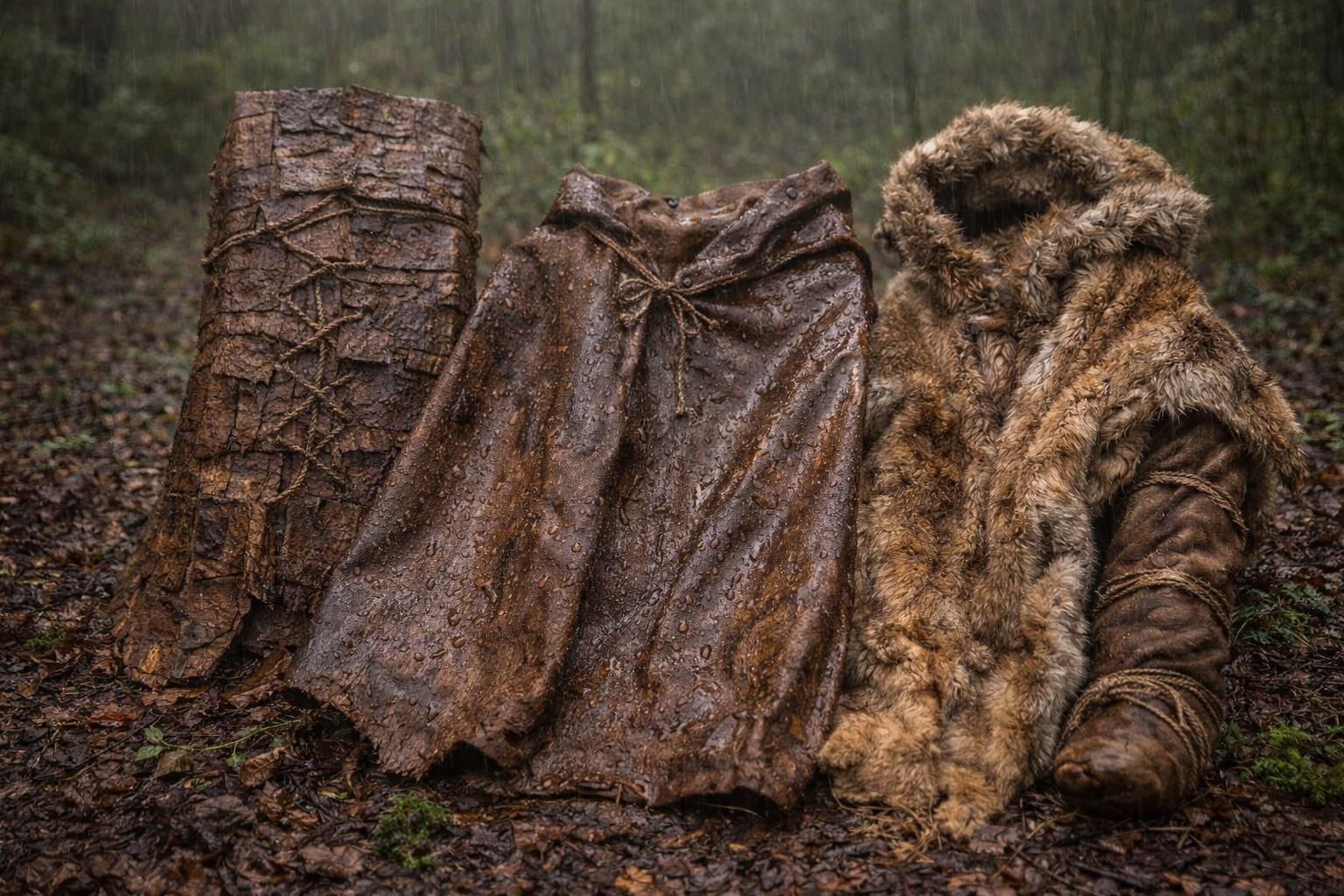
1. Bark Cloaks — Nature’s Rain Shell
Tree bark was one of the earliest rain barriers.
Commonly used:
-
Birch bark
-
Elm bark
-
Cedar bark
Why bark works:
-
Naturally water-resistant
-
Lightweight
-
Easy to shape into cloaks
-
Can be layered or overlapped
Bark cloaks shed rain while allowing airflow underneath — reducing sweat buildup.
2. Oiled Hides & Leather
Animal hides treated with fat or oil acted like primitive waterproof jackets.
Treatment methods:
-
Animal fat
-
Fish oil
-
Bone marrow
-
Rendered grease
These coatings:
-
Repelled rain
-
Increased flexibility
-
Prevented cracking
Oiled hides weren’t fully waterproof, but they slowed water penetration long enough to protect insulation layers underneath.
3. Fur Used the “Wrong” Way (On Purpose)
In rain, fur was often worn fur outward, not inward.
Why?
-
Rain runs off fur tips
-
Water doesn’t reach the skin quickly
-
Inner layers stay drier
In cold rain, fur-out hides worked surprisingly well — especially when moving.
Primitive Rain Layering System
Outer Layer — Water Shedding
-
Bark cloak
-
Oiled hide
-
Fur worn outward
Middle Layer — Structural Warmth
-
Leather
-
Woven plant fiber
-
Thick hide
Inner Layer — Dry Insulation
-
Fur
-
Grass padding
-
Soft plant fibers
The key was protecting the inner insulation at all costs.
Why Primitive Rain Gear Was Loose
Primitive rain clothing was never tight.
Loose designs:
-
Allowed airflow
-
Reduced sweating
-
Prevented moisture buildup
-
Dried faster after rain
Tight modern rain gear often fails because sweat becomes the enemy.
Rain Protection for the Lower Body
Lower legs and feet suffer the most in rain.
Primitive solutions:
-
Wraps made from bark or hide
-
Elevated walking paths when possible
-
Frequent drying stops
-
Replaceable insulation inside footwear
They accepted wet outer layers — but protected warmth underneath.
Fire and Rain: The Hidden Connection
Primitive rain protection was designed with fire in mind.
-
Clothing dried quickly near flames
-
Materials didn’t melt
-
Hides could be smoked dry
-
Bark could be replaced easily
Modern synthetics often fail here.