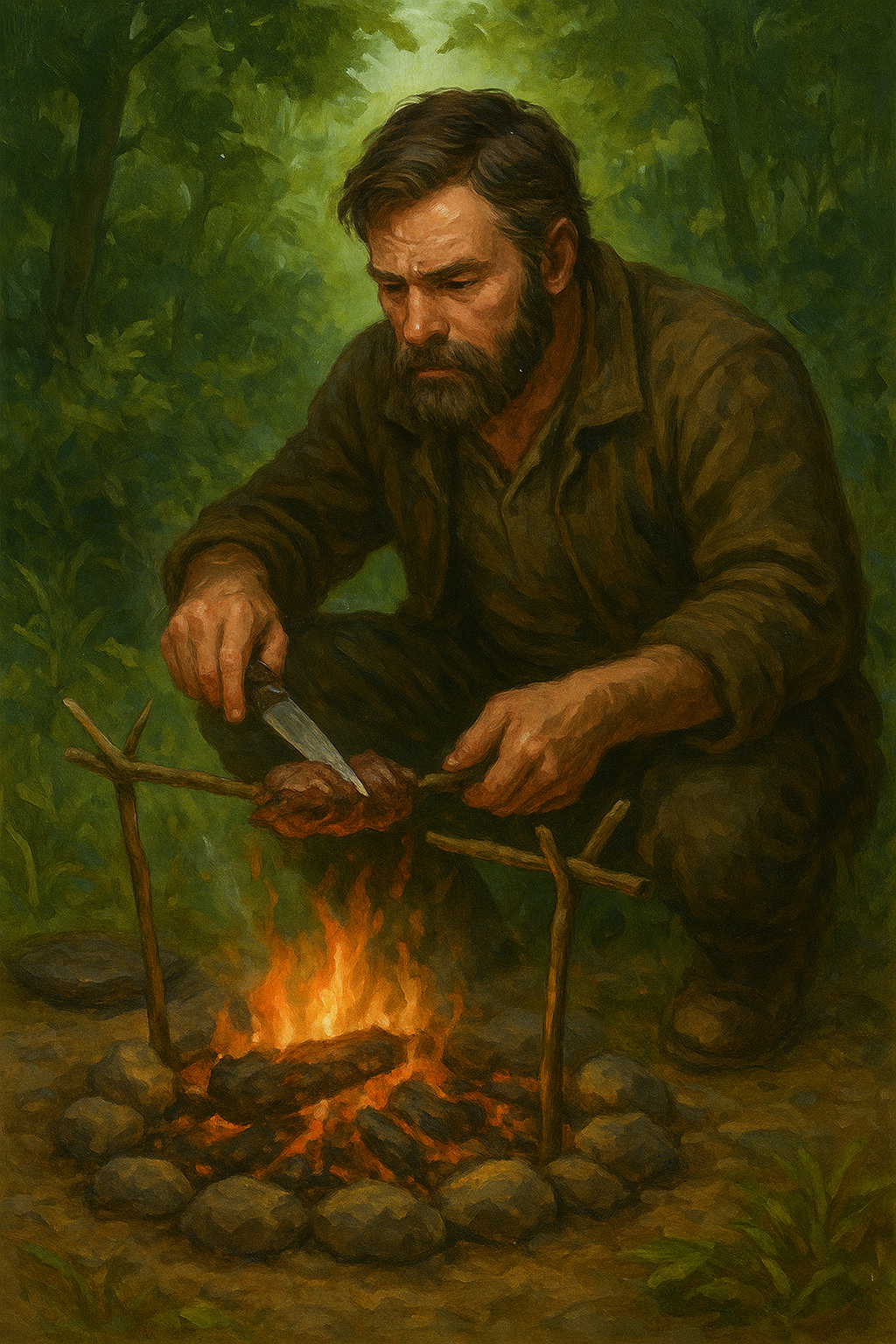

🔥 1. Understanding Fire Zones: Your Natural “Stove”
Every primitive fire has 3 cooking zones, each with different heat levels:
1) Flame Zone — High Heat
-
Fast boiling
-
Rapid searing
-
Bringing water to a rolling boil
-
Burning off bacteria
Use it for:
• hard roots, purifying water, browning meat
2) Ember Zone — Medium Heat
This is where real primitive cooking happens. Embers are stable, predictable, and easier to control.
Use it for:
• roasting, baking, smoking, slow cooking
3) Ash Zone — Low Heat
Gentle, long-lasting warmth.
Perfect for:
• reheating, drying meat, keeping food warm, slow-steeping herbs
Knowing how to move food between these “zones” is the difference between burnt meat and perfect campfire cooking.
🔥 2. The Art of Ember Cooking (The #1 Survival Skill)
Ember cooking is ancient, foolproof, and extremely effective.
You can use embers to cook:
-
fish wrapped in leaves
-
bread buried in ash
-
tubers baked under coals
-
meat skewered and placed beside the heat
-
stone-slab meals roasted evenly
How to Make Perfect Embers
-
Use hardwood (oak, maple, birch, ash).
-
Burn the fire hot for 20–30 minutes.
-
Let flames collapse into glowing embers.
-
Spread them evenly.
-
Add small hardwood pieces to maintain temperature.
Your goal is a bed of orange coals, not flames.
🔥 3. Wild Baking — Stone, Clay & Ash Methods
Primitive baking doesn’t need ovens — nature provides them.
1. Clay-Coating Method
-
Wrap meat or fish in leaves.
-
Cover with a thick layer of clay.
-
Place directly in embers.
-
After 30–60 minutes, crack open the clay.
The clay removes skin and traps all juices inside — a perfect bushcraft “steam oven.”
2. Stone-Slab Baking
Flat heated stones act like a grill or frying pan.
You can cook:
-
bannock (flatbread)
-
mushrooms
-
sliced meat
-
small fish
3. Ash Baking (Ancient Method)
-
Bury potatoes, tubers, or dough balls in ashes.
-
Let them slow-cook for 40–90 minutes.
It’s simple. It’s reliable. And it works every time.
🔥 4. Steam Cooking With Leaves (Zero Tools Needed)
Leaf steaming is a lifesaver in wet environments or when you need gentle cooking.
Best leaves to use:
-
burdock
-
cabbage
-
banana leaf
-
maple
-
grape leaf
How to steam:
-
Wrap food in leaves
-
Tie with plant fiber or vines
-
Place near flames, not in them
-
Add water-soaked leaves for extra steam
This method keeps food moist and prevents burning — ideal for fish, mushrooms, and herbs.
🔥 5. Using Stones to Control Temperature (Primitive Thermostat)
You can raise or lower heat using stones:
-
Heat stones in fire
-
Move to cooking pit
-
Adjust number of stones for temperature
Cook on hot stones when you:
-
want even heat
-
need to avoid burning
-
are making bread or roasting vegetables
You can also boil water in wooden bowls by adding glowing stones into the water — a classic indigenous technique.
🔥 6. Smoke Cooking & Flavor Preservation
Smoking does two things:
-
Cooks food slowly
-
Preserves it for days or weeks
Use:
-
damp wood
-
pine needles
-
hardwood chips
Hang meat above smoldering fire, not flames.
Great for long-term survival because smoked food stores longer without refrigeration.