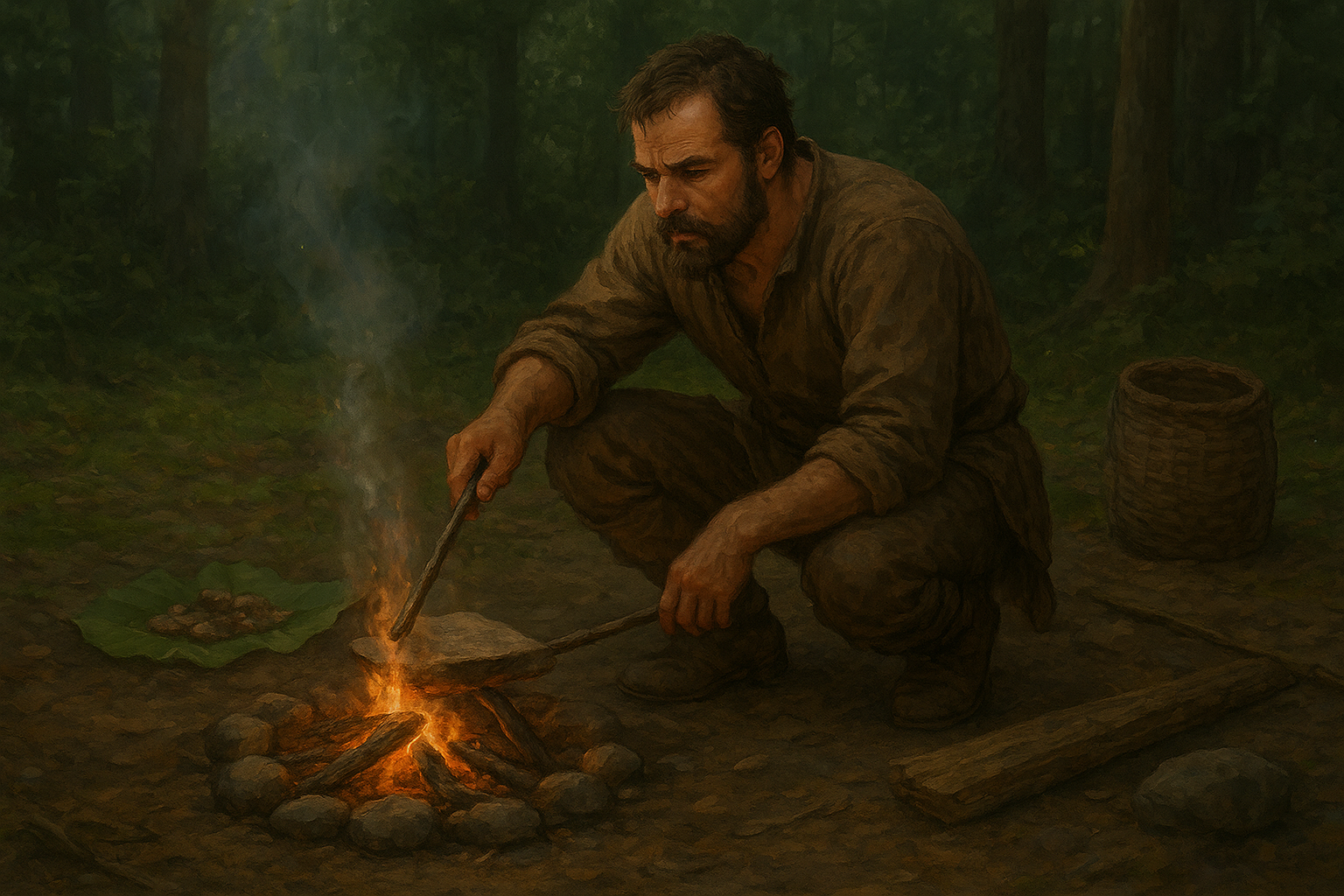

🔥 1. Understanding Fire as Your Main Cooking Tool
In primitive cooking, fire is your stove, your oven, your grill, and your dehydration machine — all at once.
But you need to control how it burns.
Types of Survival Fires and What They’re Good For
🔥 The Cooking Bed (Coal Bed) — Best for almost everything
You burn wood down until it becomes glowing coals.
Perfect for:
-
roasting
-
baking in ash
-
stone cooking
-
slow simmering
-
heating clay pots
🔥 The Teepee Fire — Fast heat for boiling water
Creates strong, vertical flames.
Use when:
-
you need boiling water quickly
-
igniting wet wood
🔥 The Log Cabin Fire — Even, stable heat
Square layers of logs provide sustained warmth.
Use when:
-
you need long-lasting heat
-
slow-cooking meat
-
drying wet ingredients
🔥 The Dakota Fire Hole — Stealth cooking
A hidden, efficient fire burned underground.
Use when:
-
you want low smoke
-
windy conditions
-
conserving fuel
A survivalist doesn’t just make fire — he makes the right type of fire for the right meal.
🔥 2. Cooking Without Cookware: Using Nature as Your Kitchen
Primitive cooking uses the land itself as a tool.
Here are the most valuable natural “cookware” options:
🍂 Hot Stones — The Original Skillet
A flat river stone can act like a frying pan.
When heated properly, it can:
-
fry meat
-
heat berries or roots
-
cook flatbread
-
purify water (stone boiling)
Tip: Choose stones from dry ground, never wet river stones — moisture will cause them to explode.
🌿 Leaves — Nature’s Wrapping and Steaming System
Large, non-toxic leaves (burdock, plantain, banana leaf, chestnut leaf) can:
-
wrap meat or fish
-
hold spices (pine needles, herbs)
-
protect food from burning
-
keep moisture inside
When buried under coals, leafy-wrapped food becomes tender, smoky, and evenly cooked.
Wood Planks — Primitive Smoking & Plank Cooking
Flat slices of hardwood work like a natural grill.
Best woods: oak, hickory, maple, birch.
Avoid: pine (resin makes food bitter).
Lay meat or fish on the plank and cook it next to the fire for a rich, smoky flavor.
🔥 The Earth Oven — Nature’s Slow Cooker
One of the most powerful primitive techniques.
How it works:
-
Dig a pit.
-
Heat stones until glowing.
-
Drop stones inside.
-
Place food wrapped in leaves.
-
Cover with soil.
-
Leave for 2–4 hours.
This method cooks large meals, even entire animals, with almost zero effort.
🔥 3. Using Heat Zones Correctly
Most survival beginners make the same mistake:
They put food right into the strongest flames.
Primitive cooking is all about zones:
🔥 High Heat Zone (near the flames)
-
boiling
-
rapid heating
-
searing meat
🔥 Medium Heat (coal edges)
-
roasting
-
slow cooking
-
drying roots or insects
🔥 Low Heat (outer ring)
-
keeping food warm
-
dehydrating berries or meat
-
making jerky or smoking fish
Knowing where to put your food is 80% of primitive cooking.
🔥 4. The Three Essential Primitive Cooking Methods
You’ll use these constantly:
1. Direct Heat Cooking
Food touches coals or stones.
Great for meat, roots, bread.
2. Indirect Heat Cooking
Food cooks beside the fire.
Great for slow roasting.
3. Enclosed Heat Cooking
Food is wrapped or buried.
Great for wet, tender, juicy meals.
🔥 5. Primitive Seasoning: Natural Flavor Enhancers
Even without spices, nature gives you flavor:
-
Pine needles → citrus aroma
-
Wild onions/garlic → strong seasoning
-
Juniper berries → smoky-sweet
-
Birch bark → caramel smell
-
Salt from evaporated water if near the sea
-
Charcoal dust (yes!) → improves flavor and cleans toxins
Primitive cooking can be incredibly flavorful when you know where to look.