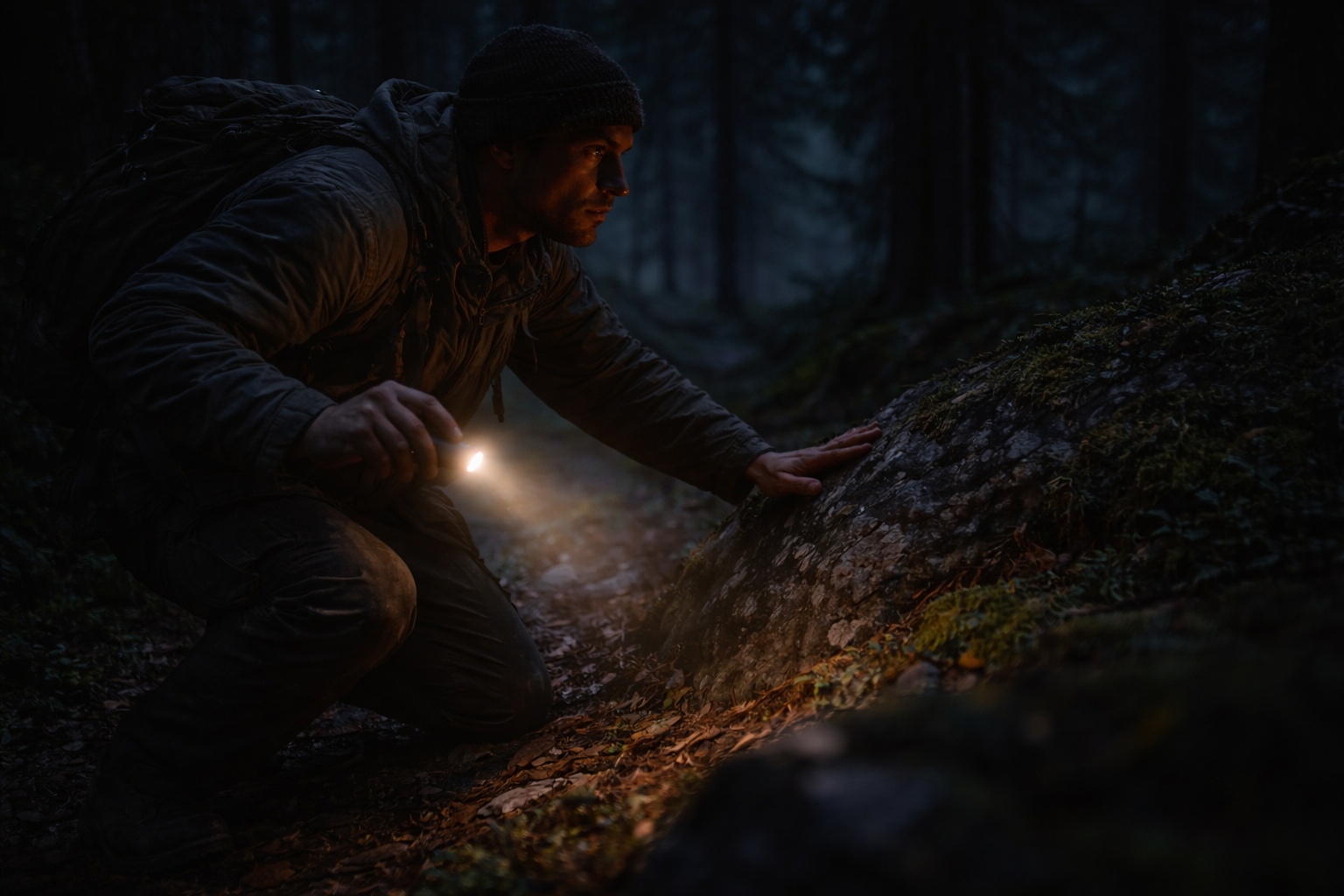
Why Moving at Night Is So Dangerous
After sunset:
- Depth perception collapses
- Terrain hazards disappear until impact
- Navigation errors multiply
- Energy drains faster than expected
Many lost survivors didn’t die because they stayed still. They died because they moved at the wrong time.
When Staying Still Saves Lives
Experienced survivors understand that stillness is a strategy, not weakness.
Staying put is often the right choice when:
- You have shelter, warmth, and water
- Terrain is unknown or uneven
- Weather or visibility is poor
- Fatigue is affecting judgment
Night rewards patience. Daylight rewards action.
When Movement Is Necessary
There are moments when staying still becomes more dangerous than moving:
- Rising water levels
- Immediate exposure to cold or wind
- Active threats near your position
In these cases, movement must be slow, deliberate, and minimal—measured in meters, not kilometers.
Rules for Safe Night Movement
Survivors who move at night follow strict rules:
- Never rush, even under stress
- Move low and pause often
- Test every step before committing weight
- Stop immediately if orientation is lost
Movement without awareness is how people vanish.
Decision-Making in Darkness
Night distorts thinking. Fear pushes people to “do something”—anything.
But survival isn’t about action. It’s about timing.
The strongest survival skill at night isn’t strength or courage.
It’s knowing when not to move.