Navigation by Sun & Shadows: How to Find Direction Using Only Nature
When maps tear, GPS batteries die, and compasses are lost, the sun never fails. For tens of thousands of years, humans crossed forests, deserts, tundra, and coastlines guided by nothing more than light, shadow, and time. Navigation by the sun is not a trick — it is one of the oldest and most reliable survival skills ever used.
This post breaks down sun-and-shadow navigation in a practical, field-tested way — no myths, no guesswork, just techniques that actually work when everything else is gone.
Why Sun Navigation Still Matters in Survival
Getting lost is rarely instant. It happens slowly — wrong turns, poor visibility, exhaustion. Sun navigation gives you:
-
Reliable direction without tools
-
Confidence to move instead of panic
-
The ability to maintain a straight travel line
-
A way to orient shelters, fires, and camps
In survival, direction equals control.
The Core Principle: The Sun Is a Moving Compass
The sun rises in the east and sets in the west — but its path across the sky gives much more information than most people realize.
What matters is not the sun’s position alone — but how shadows move over time.
The Shadow Stick Method (Most Reliable Technique)
This is one of the oldest known navigation techniques — and it works anywhere on Earth.
How to Do It:
-
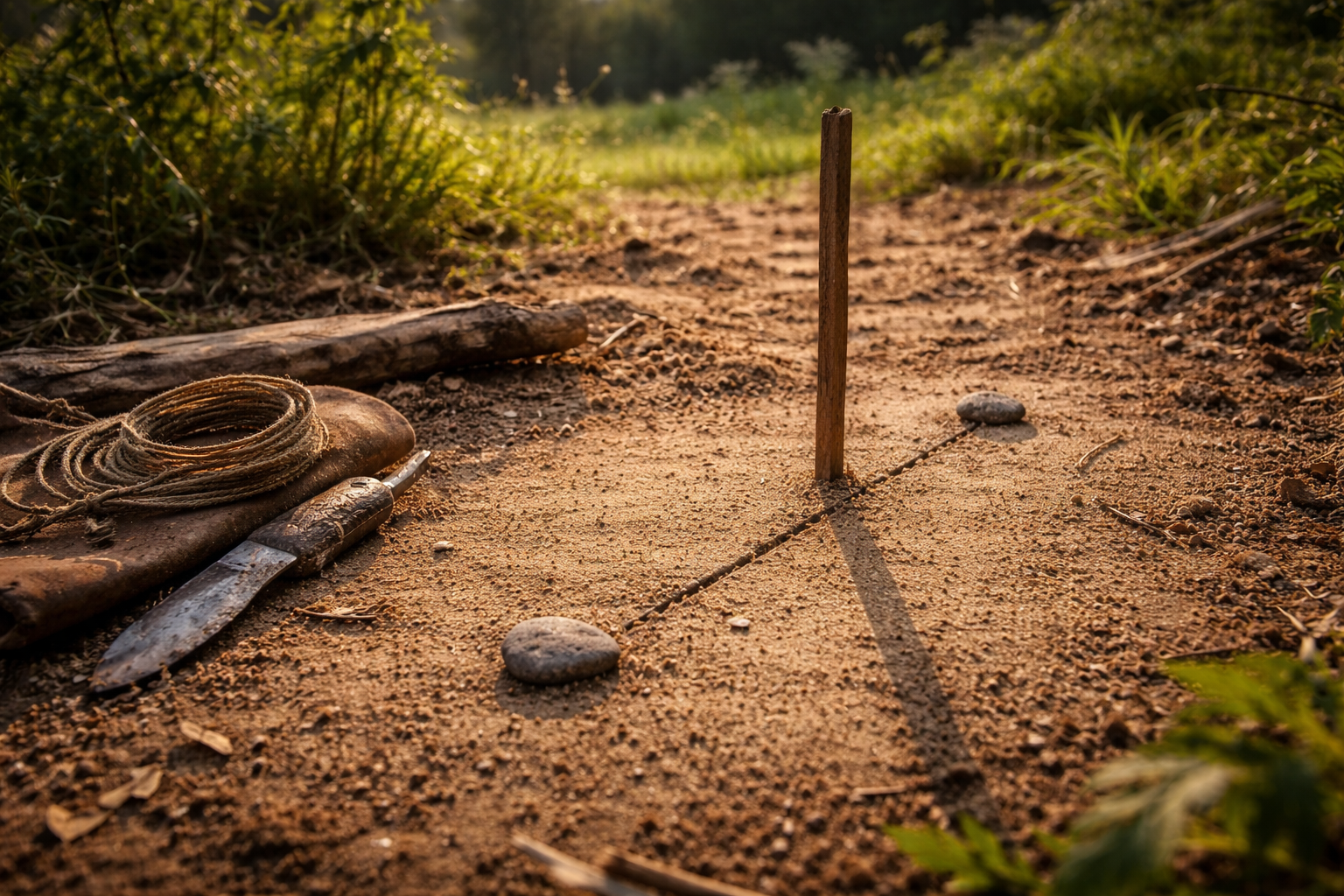
Place a straight stick upright in the ground.
-
Mark the tip of its shadow with a stone.
-
Wait 15–30 minutes.
-
Mark the new shadow tip.
-
Draw a line between the two marks.
👉 The first mark is west, the second mark is east.
A line perpendicular to it gives north–south.
Why it works:
The sun moves east to west, but shadows move in the opposite direction.
Fast Direction Finding (When Time Is Critical)
If you don’t have time to wait:
-
In the morning, the sun is generally east
-
At midday, it reaches its highest point (south in the Northern Hemisphere)
-
In the evening, it moves west
Use the sun’s position combined with terrain to maintain a consistent travel line.
Using Shadows Without a Stick
Even without tools, shadows tell direction.
-
Long shadows = early or late day
-
Short shadows = midday
-
The shadow always points away from the sun
Track how your shadow shifts over time — direction becomes clear quickly.
Navigating With the Sun in Different Environments
Forests
-
Use small clearings
-
Watch light movement on tree trunks
-
Track shadow direction on the ground
Deserts
-
Shadows are sharp and reliable
-
Morning and evening give best direction clarity
Mountains
-
Use shadow movement on slopes
-
Be cautious of terrain-induced shadow distortion
Common Mistakes That Get People Lost
Primitive knowledge only works if applied correctly.
Avoid:
-
Assuming the sun is always due east or west
-
Ignoring seasonal sun angle changes
-
Forgetting hemisphere differences
-
Rushing without confirming direction
Early humans observed before moving.
Combining Sun Navigation With Other Clues
Sun navigation is strongest when paired with:
-
Terrain reading
-
Wind patterns
-
Water flow direction
-
Plant growth clues
Navigation is a system, not a single trick.
Why This Skill Beats Modern Technology
Sun navigation:
-
Never runs out of power
-
Cannot break
-
Works worldwide
-
Builds confidence and calm
When technology fails, the sky still works.