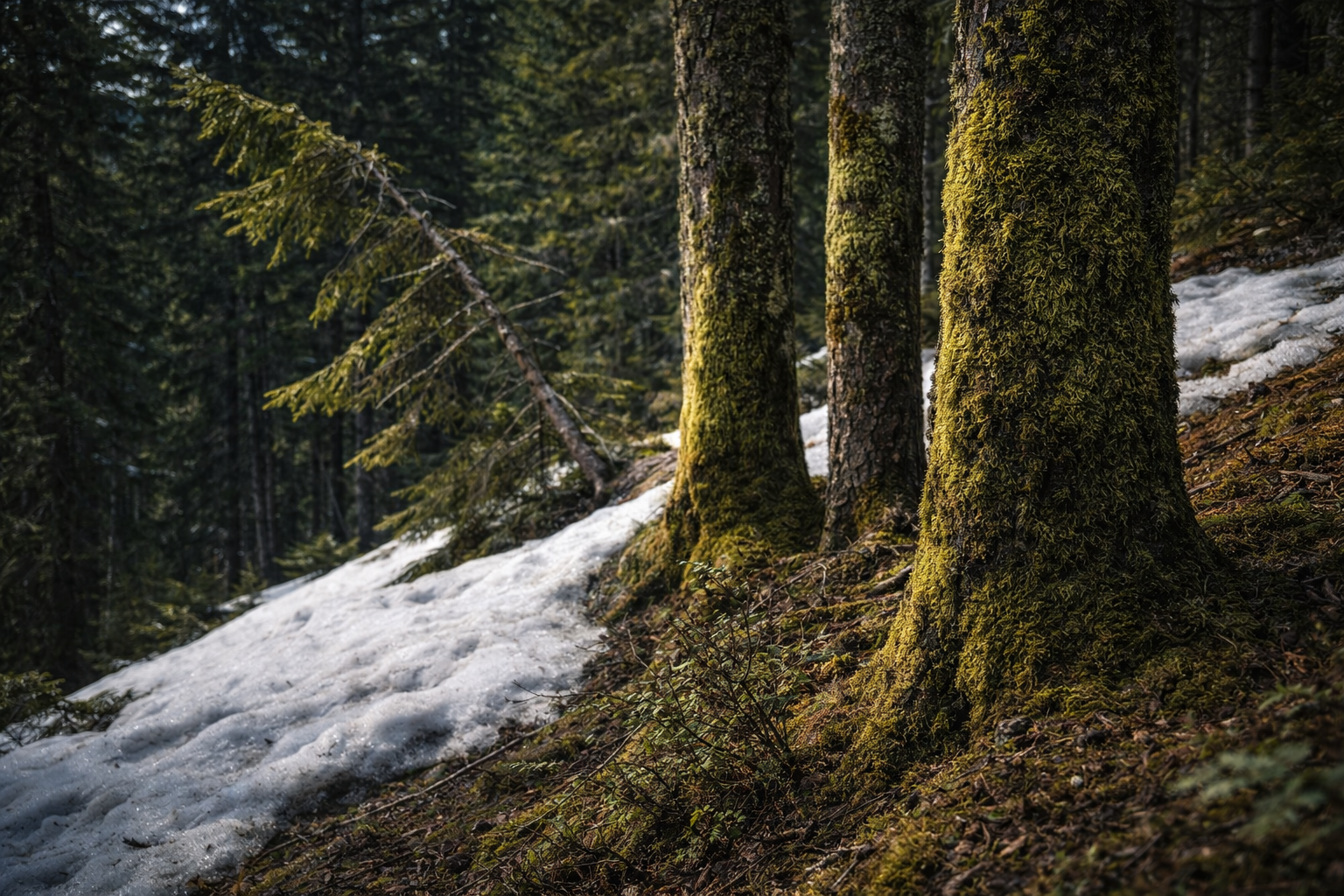
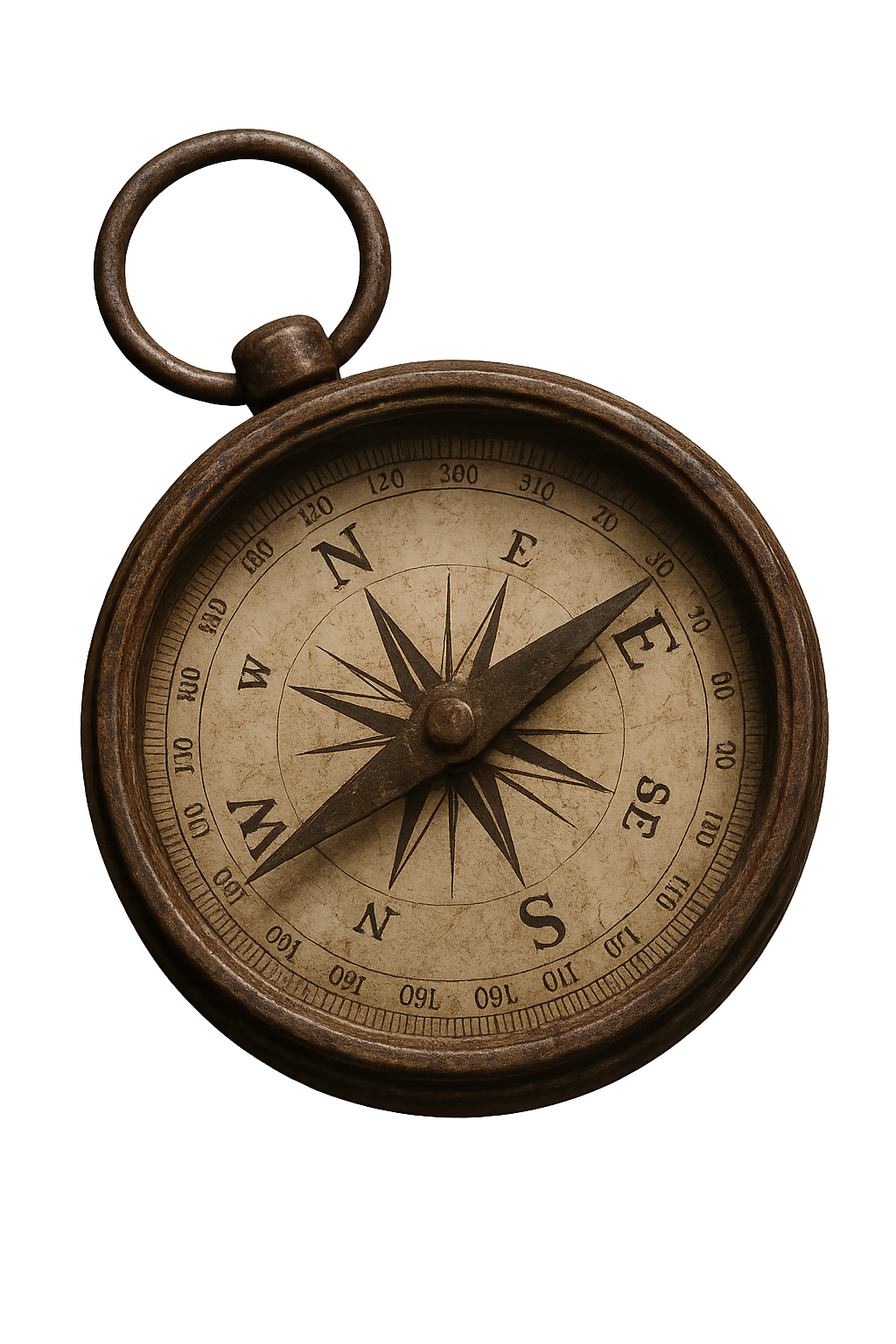
Moss on Trees: Truth vs. Popular Myth
You’ve heard it before: “Moss always grows on the north side of trees.”
This is partially true—but dangerously oversimplified.
What’s real:
-
Moss prefers shade and moisture
-
In the Northern Hemisphere, north-facing sides often receive less sunlight
-
Dense forests increase moss reliability due to reduced sun exposure
What’s myth:
-
Moss does not grow exclusively on the north side
-
In humid or shaded areas, moss can grow all around the tree
-
Wind, slope, and water runoff matter more than compass direction
Tree Growth & Branch Patterns
Trees adapt to light, wind, and gravity—and these adaptations can quietly reveal direction.
Reliable indicators:
-
Heavier branch growth usually faces the direction of strongest sunlight
-
In open areas, trees often lean away from prevailing winds
-
Southern exposure (Northern Hemisphere) promotes thicker bark cracking due to sun heat
What to watch out for:
-
Forest competition distorts growth
-
Storm damage can create false patterns
Best practice: Compare multiple trees, not just one.
Wind Patterns & Landscape Clues
Wind is one of the most underrated natural navigation tools.
Signs left by dominant winds:
-
Trees bent or “flagged” in one direction
-
Snow scoured clean on windward sides of ridges
-
Sand dunes shaped consistently by prevailing airflow
Snow & Ice: Nature’s Temporary Compass
In cold environments, snow can be incredibly revealing.
What works:
-
Snow melts faster on sun-facing slopes
-
In the Northern Hemisphere, southern slopes lose snow first
-
Ice remains thicker on shaded sides of rocks and trees
What fails:
-
Fresh snowfall resets indicators
-
Dense cloud cover removes solar influence
Combining Indicators: The Real Survival Skill
The key to natural navigation isn’t memorizing tricks—it’s pattern recognition.
A skilled survivor:
-
Cross-checks multiple signs
-
Observes terrain over time
-
Avoids single-indicator decisions
Moss + tree growth + snow melt + wind damage = reliable direction
Why This Matters in Real Survival
When lost, most people don’t fail due to lack of strength—they fail due to disorientation. Understanding real natural indicators:
-
Reduces panic
-
Saves energy
-
Prevents walking in circles
-
Keeps movement intentional and controlled