There’s a moment in survival when things stop going according to plan.
You’re tired. Cold. Maybe lost. Maybe injured. And nothing is working the way you expected. That’s the moment most people don’t fail physically — they fail mentally.
Because panic feels like action.
Your heart speeds up. Your breathing changes. Your thoughts race. It feels like you’re doing something, but you’re not. You’re just losing control faster.
So the first skill is simple, but not easy:
Do nothing.
Just for a moment.
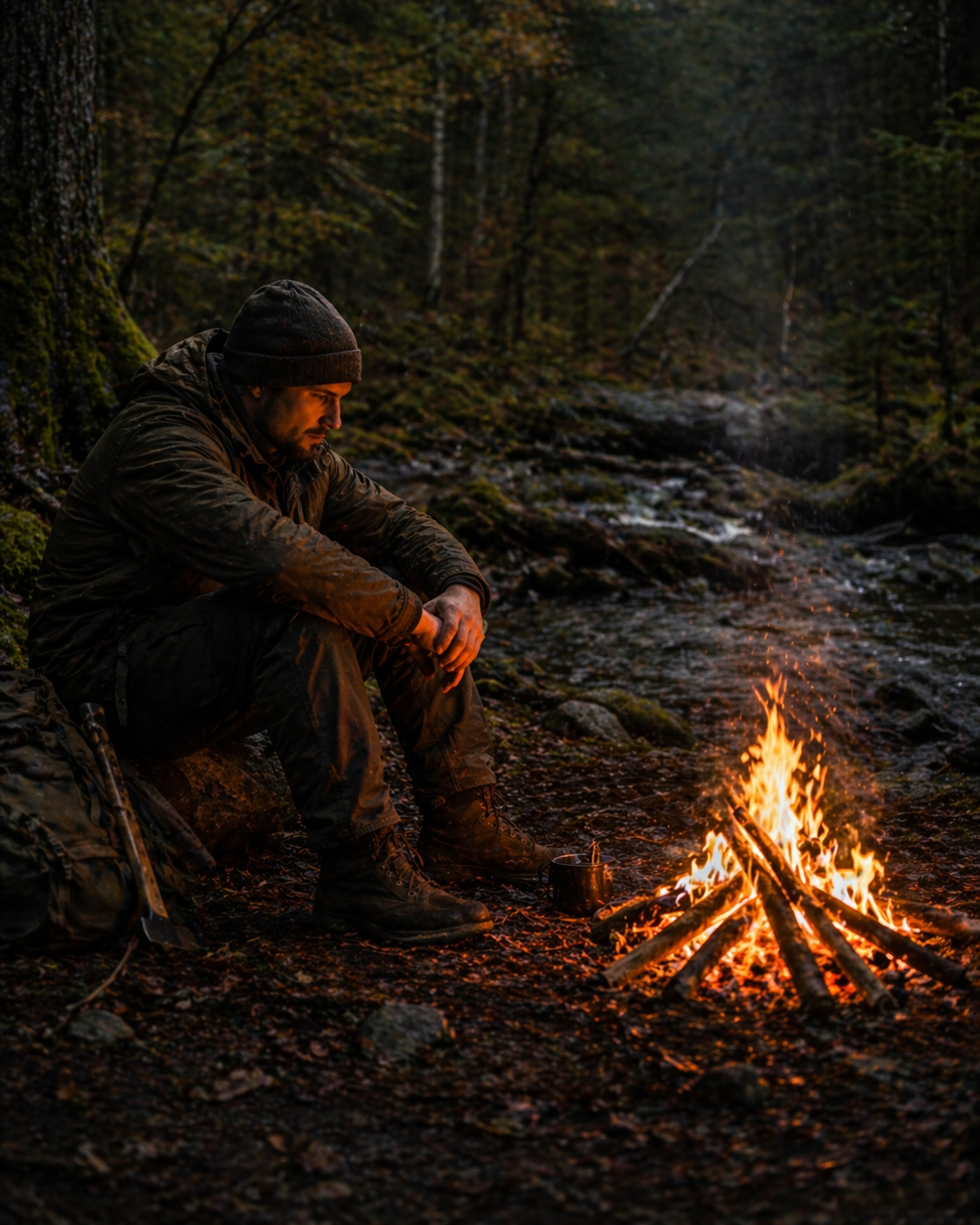
Sit down. Breathe slowly. Look around you without trying to fix anything. This isn’t weakness. This is reset. Because every bad decision in survival comes from reacting too fast.
Control your breathing first.
Slow inhale. Slower exhale. Again. Your body follows your breath. When your breathing stabilizes, your mind begins to follow. You don’t need to feel “calm” — you just need to stop getting worse.
Then shrink the problem.
Survival is overwhelming when you think about everything at once: water, shelter, food, direction, time. That’s too much. You don’t solve survival. You solve one problem.
Right now.
Maybe it’s finding dry ground. Maybe it’s starting a fire. Maybe it’s just sitting still until you think clearly again.
One decision at a time.
You don’t need the perfect plan. You need the next correct step. Then the next one after that. That’s how people get out — not with big ideas, but with small, controlled actions.
And here’s the truth most people don’t expect:
The situation is rarely as bad as your mind makes it feel.
Fear exaggerates. It turns uncertainty into danger, silence into threat, discomfort into panic. But the environment doesn’t change just because you’re afraid.
Once you understand that, something shifts.
You stop reacting.
You start thinking.
And in survival, that’s the difference between losing control… and taking it back.