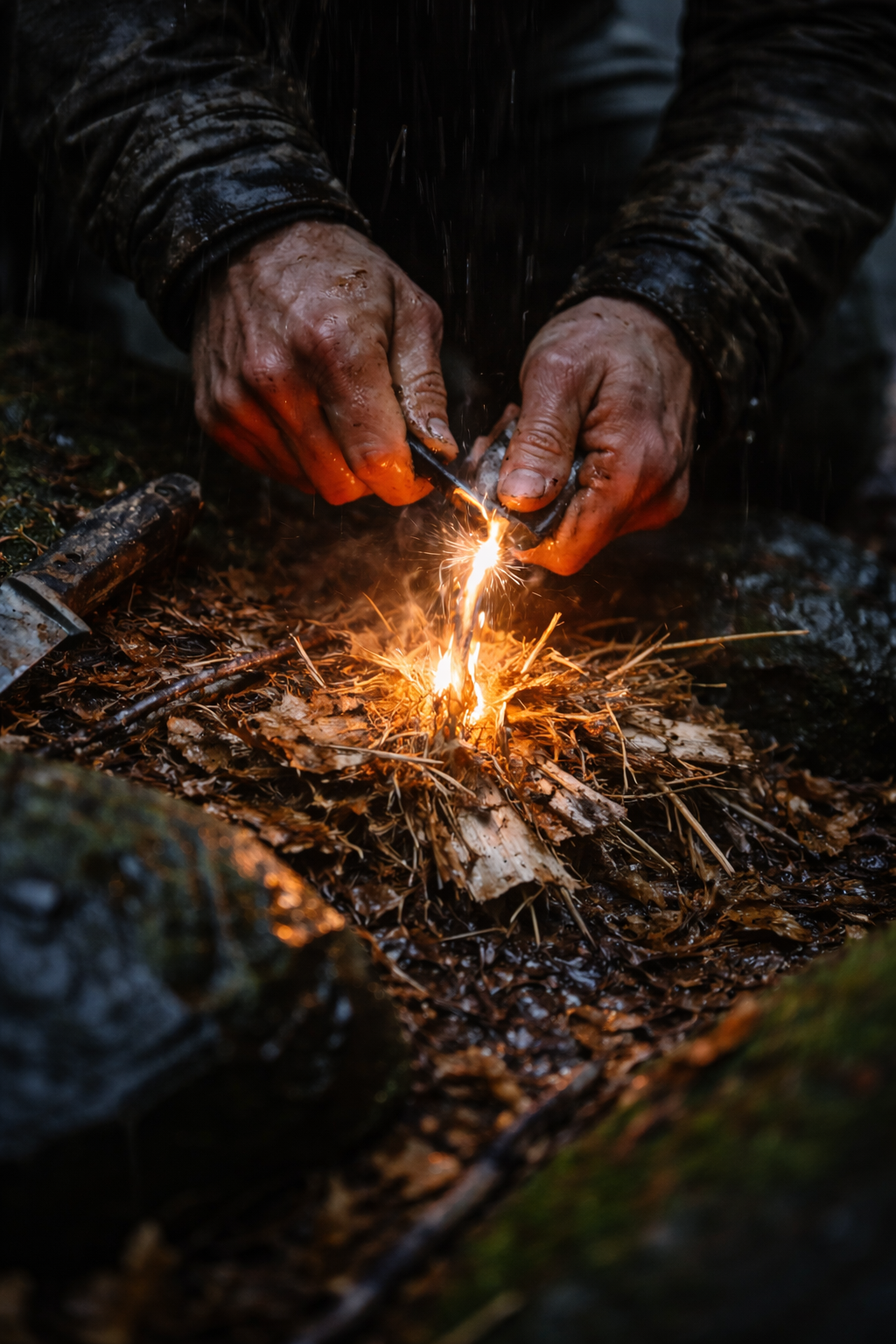

Rain changes everything.
Wood becomes heavy, the air feels colder, and every simple task turns into a slow fight. Fire, which normally feels easy, suddenly becomes the hardest thing to achieve — and the most important.
The mistake most people make is trying to light wet wood.
It won’t work. Not at first.
Instead, you need to think differently. Fire doesn’t start with logs — it starts with something almost weightless. Your real goal is not fire. Your goal is a spark that survives.
Look for dead branches that are still attached to trees. Wood on the ground absorbs moisture, but anything elevated has a chance of staying dry inside. Break it — if it snaps clean, there is dry core within.
Now split it.
Even wet wood hides dry life inside. Use a knife, a rock, anything — expose the inner layers. That’s what burns first. Shave it into thin curls, almost like feathers. The finer it is, the easier it catches.
Your tinder is everything. Birch bark, dry grass under logs, the inside of rotten wood — these are not “options,” they are your lifeline. If you don’t have good tinder, you don’t have fire.
Protect the flame like it’s alive — because it is.
Shield it from wind. Use your body, your backpack, even the ground shape. One careless gust can erase 20 minutes of work.
When the flame finally appears, don’t rush it. People kill their fire by feeding it too much, too soon. Start small. Let it grow. Let it earn the bigger wood.
In the wild, fire is more than heat. It’s morale. It’s signal. It’s control over a situation that wants to control you.
And when everything around you is wet and cold, that small flame becomes the difference between surviving the night… and not.