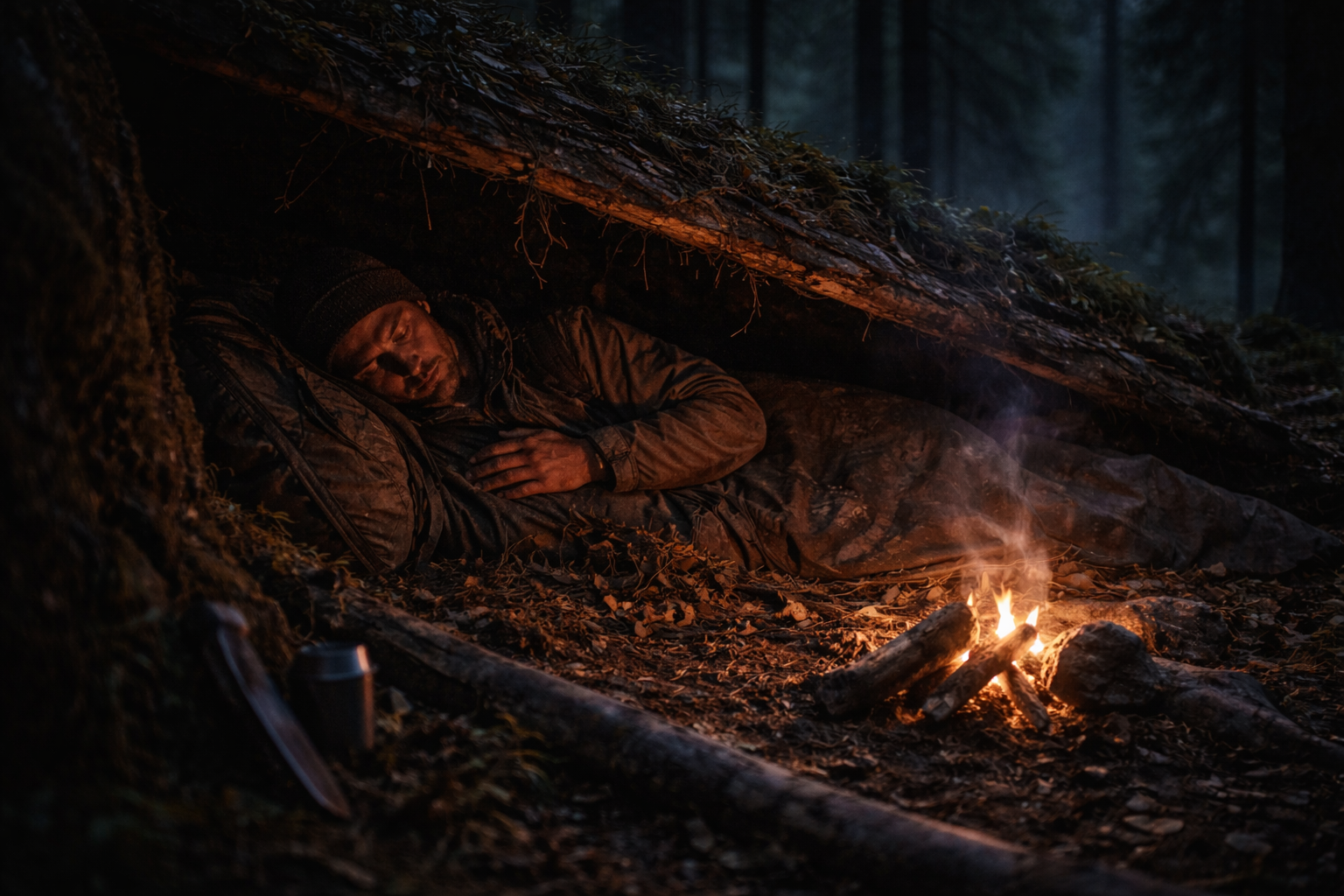

Night is when survival quietly tests you. Not with hunger or cold—but with exhaustion. A tired survivor makes mistakes, and at night, mistakes multiply.
This post breaks down how to sleep safely in the wild when visibility drops to zero and threats increase—without relying on modern gear.
You’ll learn:
-
Why “lying down anywhere” is a survival mistake
Ground choice affects heat loss, insects, predators, and visibility. Where you sleep matters more than how tired you are. -
Natural sleep positioning for safety
How early humans positioned their bodies to protect vital organs, retain warmth, and wake quickly if disturbed. -
Low-profile sleeping setups
How to build beds that keep you insulated while staying visually hidden and scent-neutral. -
Night awareness without staying awake
Techniques to rest deeply while maintaining partial alertness—used by hunters, scouts, and nomadic tribes. -
Common night-sleep myths that get people hurt
Fires, open clearings, and “comfortable” spots that actually increase risk after dark.
This isn’t about comfort.
It’s about waking up alive, warm, and ready.