In survival, energy is more valuable than food.
People think strength keeps you alive. It doesn’t. Control does.
You don’t lose because you’re weak — you lose because you spend everything too early.
The biggest mistake is doing too much, too fast.
You feel urgency, so you start moving, building, searching, fixing everything at once. It feels productive. It feels right. But your body is not built for chaos. It burns fast, and when it crashes — it crashes hard.
So you slow down.
Not physically — strategically.
Every action must have a reason. Not “maybe this helps.” Not “just in case.” If it doesn’t solve a real problem, it’s wasting energy you might not get back.
Think in priorities.
Water. Shelter. Temperature. Then everything else.
Not all problems are equal. Hunger feels urgent, but it’s rarely the first threat. Exposure, dehydration, exhaustion — those end situations faster.
You manage effort like a resource.
Work in short bursts. Rest before you feel exhausted, not after. Because recovery in the wild is slow. If you push to the limit, you don’t bounce back — you decline.
Your pace should feel almost too slow.
That’s how you know you’re doing it right.
Watch your breathing.
Heavy breathing means high energy loss. If you can’t control your breath, you’re pushing too hard. Survival is not a race. It’s endurance.
And then there’s discipline.
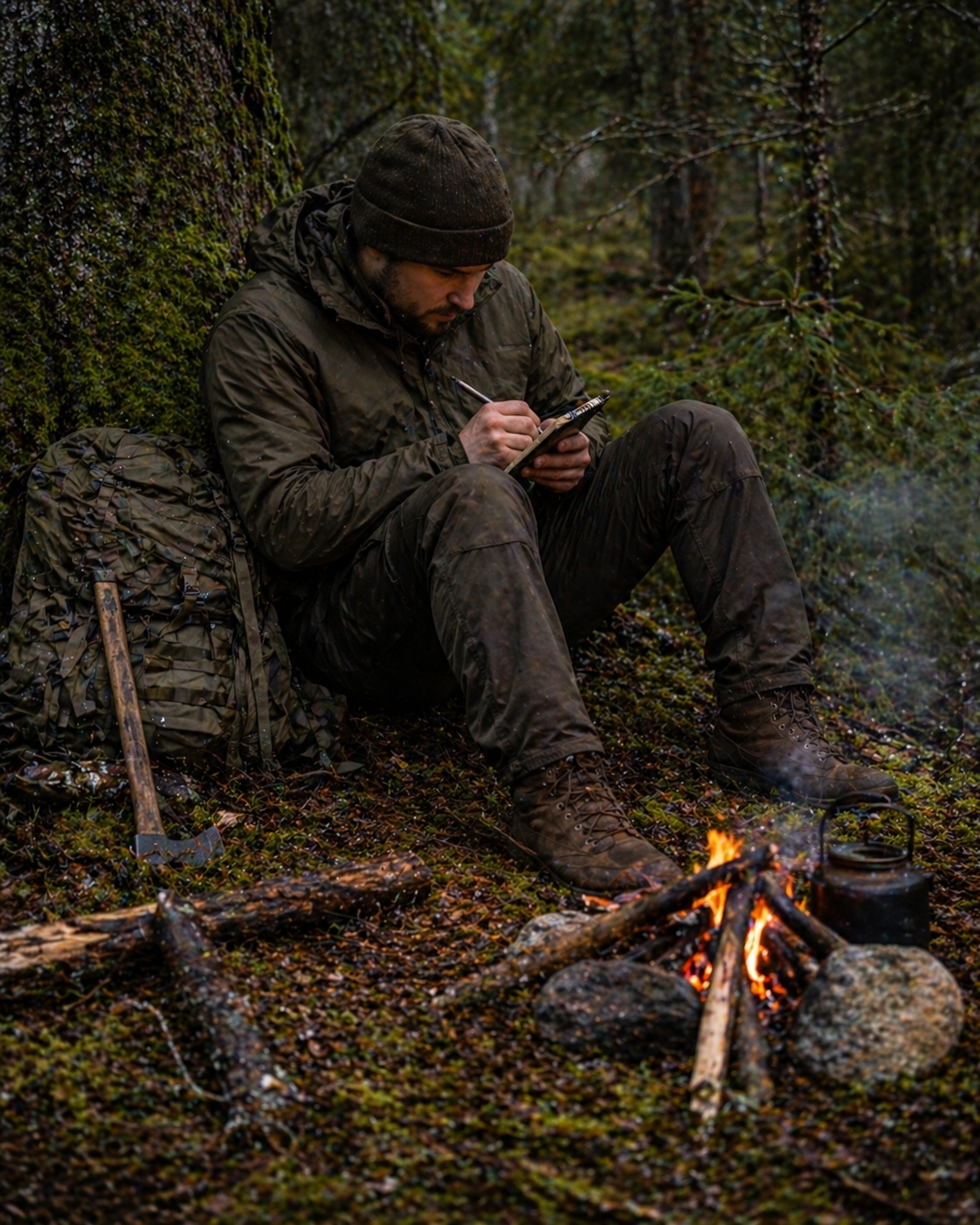
Sometimes the smartest move is to stop. To sit. To wait. Not because you’re giving up, but because you’re preserving what matters.
Energy is time.
The more you have, the longer you can think, move, adapt. Run out of it — and even simple tasks become impossible.
In the wild, the goal is not to do more.
It’s to last longer.