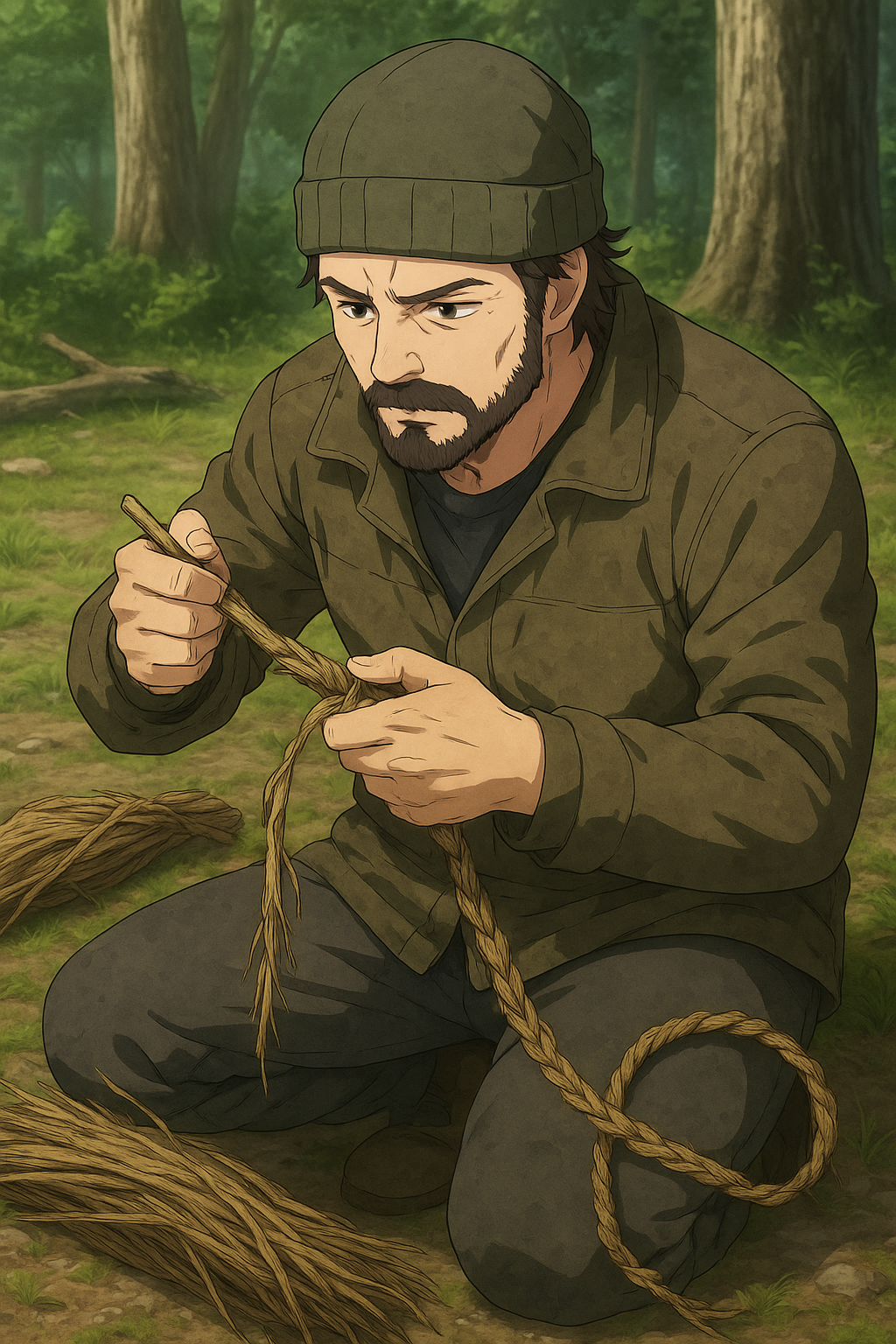

When modern gear fails, rope becomes one of the most valuable tools in your survival arsenal. But what most people don’t realize is this: nature is full of fibers strong enough to build shelters, craft weapons, hang food, and secure loads — if you know where to find them and how to work them.
In this post, you’ll learn something many “preppers” never go beyond watching on YouTube — how to turn raw bark, roots, and wild plants into survival-grade cordage that can withstand real stress.
This skill alone can push you from “modern camper” to “true bushcrafter.”
🌿 Best Plants and Materials for Natural Cordage
Different environments give you different fibers — but the principles stay the same. Here are the most reliable materials worldwide:
1. Inner Bark (Bast Fibers)
The “bast layer” beneath the outer bark is flexible, sticky, and naturally strong.
Best trees:
-
Basswood (linden)
-
Cedar
-
Willow
-
Elm
-
Mulberry
Why it works:
These trees produce long cellulose fibers that interlock when twisted, making rope surprisingly strong — strong enough to lash together shelter frames or make primitive bowstrings.
2. Long Grasses & Wild Plants
Plants with fibrous stems are perfect for emergency cordage.
Best species:
-
Cattail leaves
-
Dogbane
-
Milkweed
-
Yucca
-
Nettle
Fun fact: Dogbane and milkweed produce natural fibers with tensile strength rivaling early manufactured rope.
3. Roots
Tree roots aren’t just for carving bowls with hot stones — they work as rope too.
Best roots to use:
-
Spruce
-
Pine
-
Cedar
Tip: Soak roots in water for 20–30 minutes to soften them before weaving.
🔥 How to Harvest Fibers Without Tools
Even without a knife, you can pull usable material straight from nature:
-
Bend and crack bark slowly to separate the bast layer.
-
Twist grass bundles to break the stiff outer layer and reveal flexible strands.
-
Expose roots by scraping soil with a stick or stone, then pull them carefully to avoid breaking.
A simple rock wedge can replace a knife when stripping bark — just tap lightly along the trunk’s contour.
🧵 The Secret Technique: Reverse Wrap
Every strong survival cordage uses the same principle:
one strand twists in one direction, the second twists in the opposite direction — locking together under tension.
Here’s how to do it:
-
Split your bundle into two equal strands.
-
Twist the right strand away from you.
-
Loop it over the left strand.
-
Now twist the new right strand away, loop over, repeat.
This method:
-
increases strength by 5–10×
-
prevents unraveling
-
makes rope that gets tighter under load
Testing Strength Like a Bushcrafter
After 10 minutes of twisting, you’ll feel like your cordage is “good enough.”
But survival isn’t about “good enough.”
Run these tests:
-
Tensile Test: Pull between two trees or sturdy branches until you feel fiber compression.
-
Knot Test: Tie a square knot, yank it tight — if it slips, retwist the fibers thinner.
-
Abrasion Test: Drag the rope across bark. If it frays too fast, try thicker bundles.
-
Water Test: Soak for 1 hour. Strong cordage tightens when wet — weak cordage softens and unravels.
Good cordage should handle:
-
tying a tarp
-
lifting firewood
-
securing shelter poles
-
carving tools
-
making traps and snares
If it breaks during testing, it’s better now than in the middle of a storm.
💡 Pro Tip: Layering Cordage for Maximum Strength
If your cordage is still weak, braid 3–4 strands together. This multiplies strength without requiring perfect fiber quality.
Primitive cultures used this technique to make:
-
fishing nets
-
snowshoe bindings
-
pack straps
-
bowstrings
-
climbing lines
With enough time, you can produce rope stronger than many store-bought paracord alternatives.
🌲 Why Natural Cordage Is a Survival Superpower
Cordage is more than rope — it’s capability.
With natural fibers, you can build:
✓ shelters
✓ tools
✓ weapons
✓ traps
✓ backpacks
✓ sleds
✓ rafts
And you can do it with nothing but what’s around you.