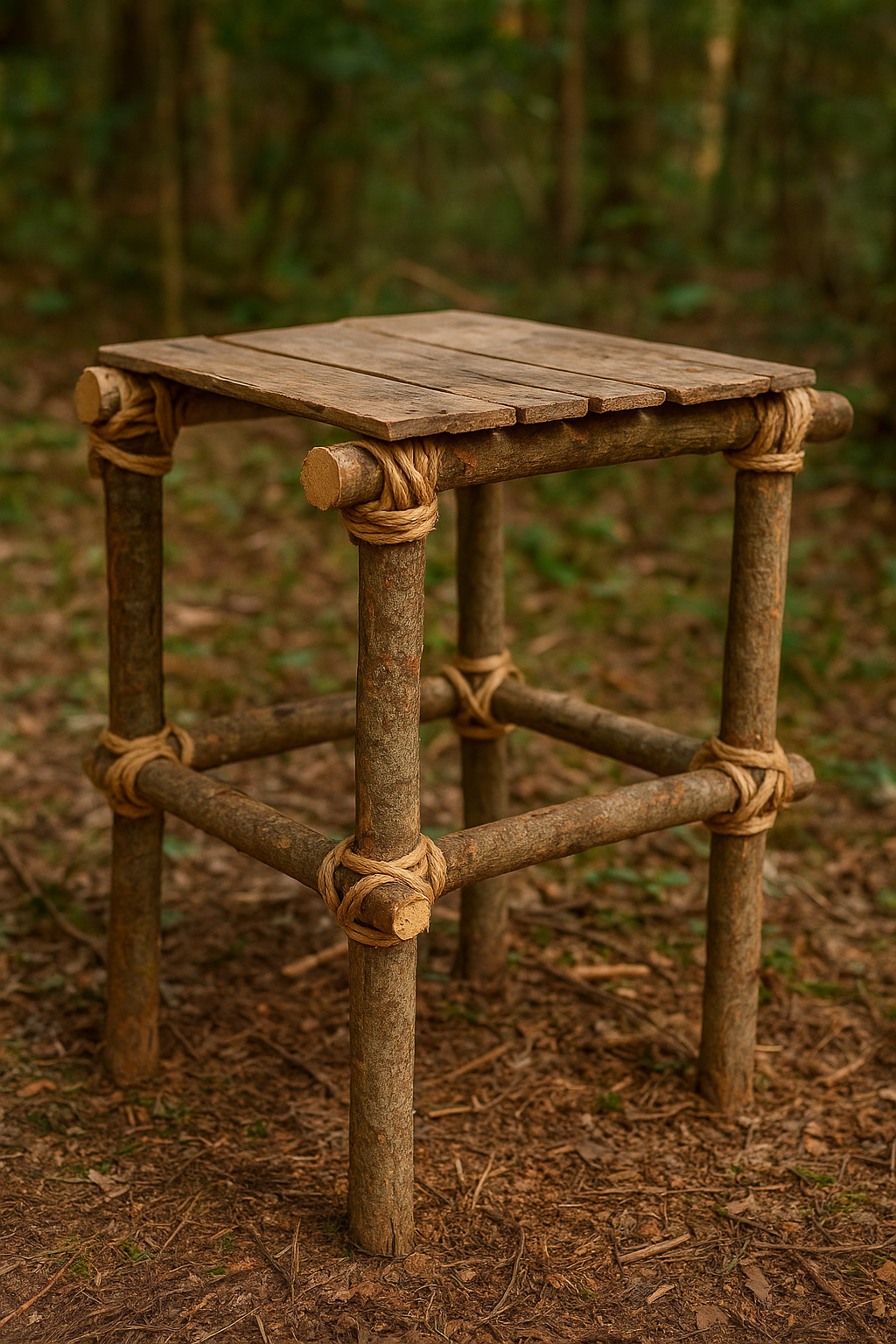

Why Weatherproofing Matters in Survival
Rain, moisture, and ground contact are the true enemies of bushcraft builds — not lack of tools.
Unprotected furniture:
-
Absorbs water
-
Swells and loosens joints
-
Develops rot and mold
-
Becomes slippery and unsafe
-
Attracts insects
Weatherproof furniture:
-
Stays strong under load
-
Dries faster after storms
-
Requires less maintenance
-
Can be reused season after season
In long-term survival, durability equals energy saved.
Rule #1: Keep Everything Off the Ground
Ground moisture is constant — even in dry weather.
Smart Elevation Techniques
-
Raise legs on flat stones or bark pads
-
Use short stumps as footings
-
Build furniture on slightly sloped terrain
-
Avoid depressions where water pools
A raised structure dries faster and resists rot far longer.
Wood Selection for Wet Environments
Not all wood reacts the same to moisture.
Best Woods for Rainy Conditions
-
Oak — extremely rot-resistant
-
Cedar — natural oils repel water and insects
-
Pine — acceptable if debarked and elevated
-
Birch — good if kept off ground
Woods to Avoid
-
Soft, spongy wood
-
Fallen ground-dead branches
-
Hollow or insect-damaged logs
Always remove bark — bark traps moisture underneath.
Natural Water-Resistance Techniques
1. Fire-Hardening
Slowly rotate wood over low heat.
-
Dries internal moisture
-
Seals outer fibers
-
Increases resistance to rot
Perfect for legs, stakes, and load-bearing points.
2. Resin & Sap Coating
Pine resin acts like primitive waterproofing.
Use it on:
-
Furniture feet
-
Joint contact areas
-
Cordage anchor points
Mixed with charcoal powder, it becomes even more durable.
3. Design for Drainage
Water should never sit on a surface.
Smart design choices:
-
Slightly angled seats and tabletops
-
Gaps between slats
-
Rounded edges instead of flat cuts
If water can run off — rot can’t start.
Lashings That Survive Rain
Moisture loosens poorly made lashings.
Rain-Proof Lashing Tips
-
Use natural cordage slightly damp when tying
-
Tighten aggressively — fibers shrink as they dry
-
Add extra frapping turns
-
Avoid smooth wood at tie points (add shallow notches)
A good lashing actually tightens after rain, not loosens.
Long-Term Camp Maintenance Routine
Even the best bushcraft furniture needs attention.
Every few days:
-
Check joints
-
Retighten lashings
-
Replace damaged cordage
-
Remove debris and leaves
Five minutes of maintenance can extend a build’s life by weeks.
Why This Skill Separates Beginners From Experts
Anyone can build something once.
Experts build things that keep working.
Weatherproof bushcraft furniture means:
-
Fewer rebuilds
-
Less wasted energy
-
Safer camp conditions
-
True long-term self-reliance
This is where bushcraft becomes real-world survival engineering.