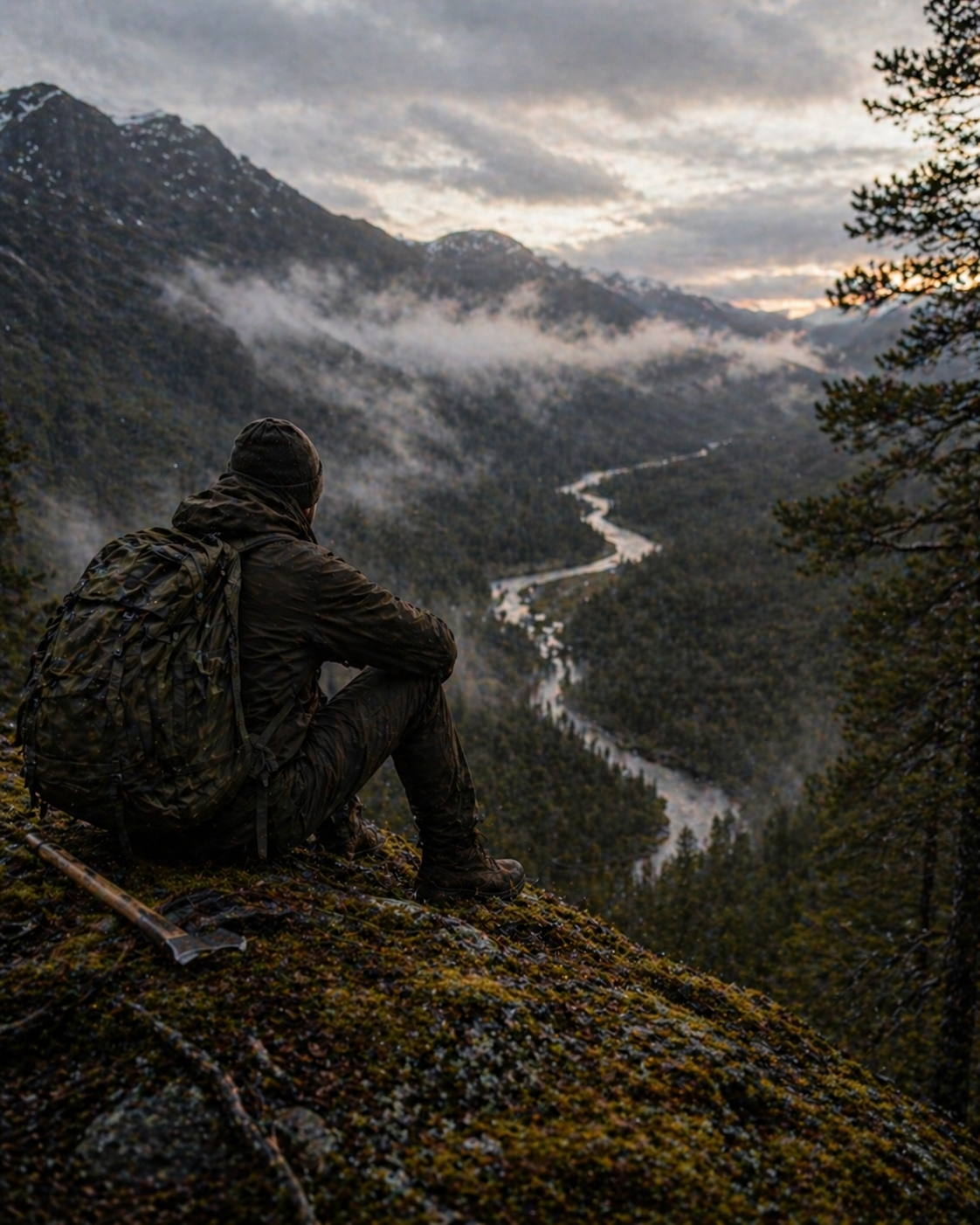
Movement feels like survival.
Doing something. Going somewhere. Searching. Trying. It gives you the illusion of control. Like you’re getting closer to safety just by not standing still.
But in the wild, movement is one of the most dangerous decisions you can make.
Because every step costs you something.
Energy. Water. Time. Focus.
And if you move in the wrong direction, you’re not just staying lost — you’re getting harder to find.
So the real skill is not knowing how to move.
It’s knowing when not to.
If you are injured, low on water, or already disoriented — movement is a gamble. And survival is not about gambling. It’s about reducing risk.
In those moments, staying put is not weakness.
It’s strategy.
You become easier to locate. You conserve energy. You create structure — shelter, signals, fire. You turn one place into something stable instead of turning the entire forest into your problem.
But staying only works if you commit to it.
Not sitting and waiting with hope. Building visibility. Maintaining signals. Preparing for rescue like it’s going to happen — even if it hasn’t yet.
Now, when do you move?
When you have direction.
Not a guess. Not a feeling. Direction.
A river leading somewhere. A known landmark. A clear understanding of where you are relative to something else. Movement without direction is just slow self-destruction.
And even then — you move carefully.
Short distances. Clear goals. Constant awareness of your condition.
Because the truth is simple:
Most people don’t die because they stayed too long.
They die because they left too soon… without a plan.