Water looks calm from a distance. That’s the first mistake.
Rivers don’t need to be wide or fast to kill you. Cold water steals your strength. Current steals your balance. And one wrong step turns a simple crossing into a fight you didn’t plan for.
So you don’t rush a river. You study it.
Before stepping in, walk along the bank. Look for the widest section — that’s usually where the current is weaker. Avoid narrow points, bends, and areas with white water. Fast water is loud, chaotic, and unforgiving.
Clarity matters. If you can’t see the bottom, you don’t know what you’re stepping on. Rocks covered in algae are as slippery as ice. One fall in cold water can end everything fast.
Unclip your backpack.
This sounds wrong, but it’s critical. If you fall and your pack is strapped tight, it can drag you under or trap you. Keep it loose so you can get free instantly if needed.
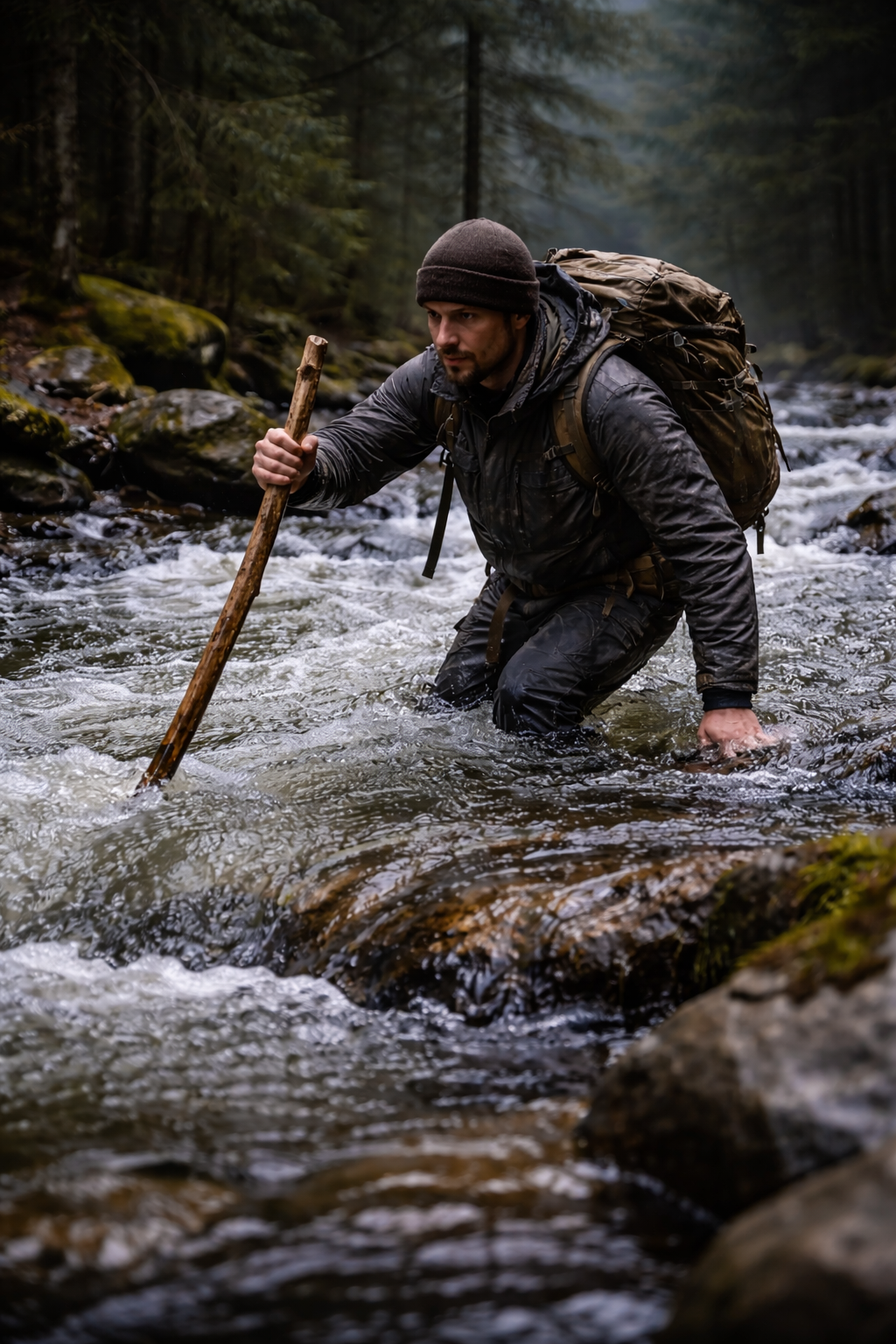
Use a stick. Not as support — as a third leg. Plant it upstream and move one step at a time. Slow. Deliberate. You’re not walking — you’re negotiating with the current.
Face slightly upstream. Let the water hit your side, not your back. This gives you more control and stability. Small steps. Always test before shifting your weight.
If the water is above your knees and pushing hard — reconsider. Pride doesn’t matter out here. Turning back is often the smartest move you can make.
And temperature is the silent threat.
Cold water drains energy faster than anything. Even a short crossing can leave you shaking, weak, and unable to function. That’s how people make their next mistake.
Once you’re across, don’t celebrate. Recover. Get dry. Get warm. Regain control.
Because survival is not about one success.