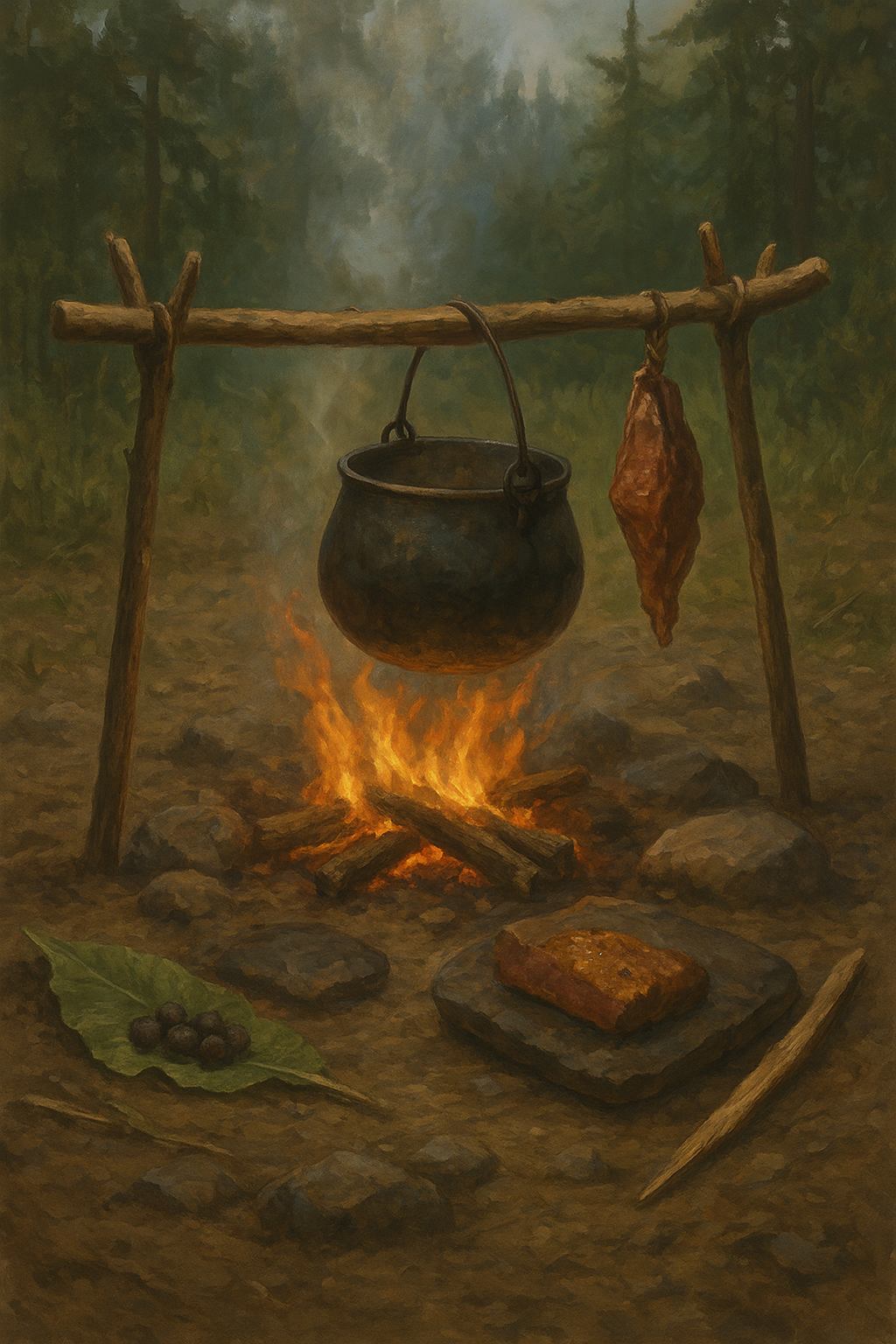

🔥 1. The Four Types of Primitive Heat (You Must Know These)
To cook food in the wild, you have to understand how fire delivers heat:
• Direct Flame (Fast, Hot, Risky)
Perfect for:
-
Searing meat
-
Burning off hair
-
Hardening wooden tools
But terrible for:
-
Cooking evenly
-
Delicate wild foods
Direct flame burns fast and destroys nutrients if you’re not careful.
• Hot Coals (The Most Useful Type of Heat)
Glowing coals cook food evenly and slowly, which is exactly what you want for:
-
Roasting
-
Baking
-
Grilling on stones
-
Slow-cooking roots
Coals = the ancient oven.
• Radiant Heat (Side-of-the-fire cooking)
This is heat that radiates outward from a big log or fire wall.
Use it for:
-
Drying meat
-
Smoking fish
-
Dehydrating berries
-
Warming shelters
Radiant heat is gentle and predictable — perfect for slow, controlled cooking.
• Trapped Heat (Primitive ovens)
Made by:
-
Covering coals with soil
-
Using clay pots
-
Heating stones
-
Building earth or leaf ovens
This method allows you to bake anything:
-
Meat
-
Tubers
-
Flatbread
-
Fish
-
Even insects
Trapped heat = nature’s pressure cooker.
🍖 2. The Stone-Cooking Method (Your Wild Kitchen Counter)
One of the oldest and safest cooking methods is heating stones until they glow and using them to cook without burning your food. Stones store heat much longer than wood flames.
Use stones to:
-
Grill meat
-
Fry eggs (if you find bird nests)
-
Boil water inside a wooden or bark container
-
Bake roots by placing them between two stones
-
Smoke meat using stone walls
Just avoid river stones — they can explode if they contain water.
🍲 3. Primitive Boiling Without Metal Pots
You don’t need a pot to boil water.
You can boil using:
-
A hollowed wooden bowl
-
A carved stone bowl
-
A clay pot
-
A bark container
The trick?
🔥 Heat stones in the fire until glowing, then drop them into the water.
Repeat until the water reaches boiling.
This allows you to:
-
Cook soups
-
Make herbal tea
-
Sterilize river water
-
Boil snails or insects
-
Make bone broth
This is one of the most useful wilderness cooking skills — period.
🥩 4. Smoking Food to Preserve It for Days or Weeks
Smoking is not just for flavor — it’s for survival.
Here’s why smoking works:
-
Removes moisture
-
Adds antimicrobial compounds
-
Creates a protective outer layer
-
Prevents insects from laying eggs
You can smoke:
-
Fish
-
Meat
-
Mushrooms
-
Roots
-
Even fruit
A simple smoking rack can be built with:
-
Forked branches
-
A stable frame
-
Slow-burning green wood
This lets you turn one day’s catch into a week’s supply.
🔥 5. Pit-Roasting: The Easiest Primitive “Set and Forget” Method
Dig a pit.
Fill it with hot stones.
Place the food inside (wrapped in leaves or mud).
Cover with dirt.
Wait a few hours.
That’s it.
Pit roasting:
-
Preserves juices
-
Softens tough meat
-
Works in rain
-
Requires no tending
-
Masks cooking smell (important for survival!)
Perfect for:
-
Large roots
-
Rabbit
-
Fish
-
Birds
-
Wild pig (if you’re lucky)
🌿 Primitive Cooking Is About Control, Not Tools
Anyone can light a fire.
But cooking with nature demands understanding.
You manipulate:
-
Airflow
-
Heat type
-
Moisture
-
The layout of your fire
-
The fuel you choose
Master this — and you can cook anything in the wilderness.