The hardest part of survival is not hunger.
Not cold.
Not even fear.
It’s doubt.
The moment when you stop trusting your own decisions.
You begin questioning everything: the direction you chose, the shelter you built, whether you should stay or move, whether you missed something important. And once doubt takes control, your actions become weaker, slower, uncertain.
That’s dangerous.
Because survival depends on one thing more than people realize:
Your ability to rely on yourself under pressure.
And trust is not something that appears automatically.
It’s built through small proof.
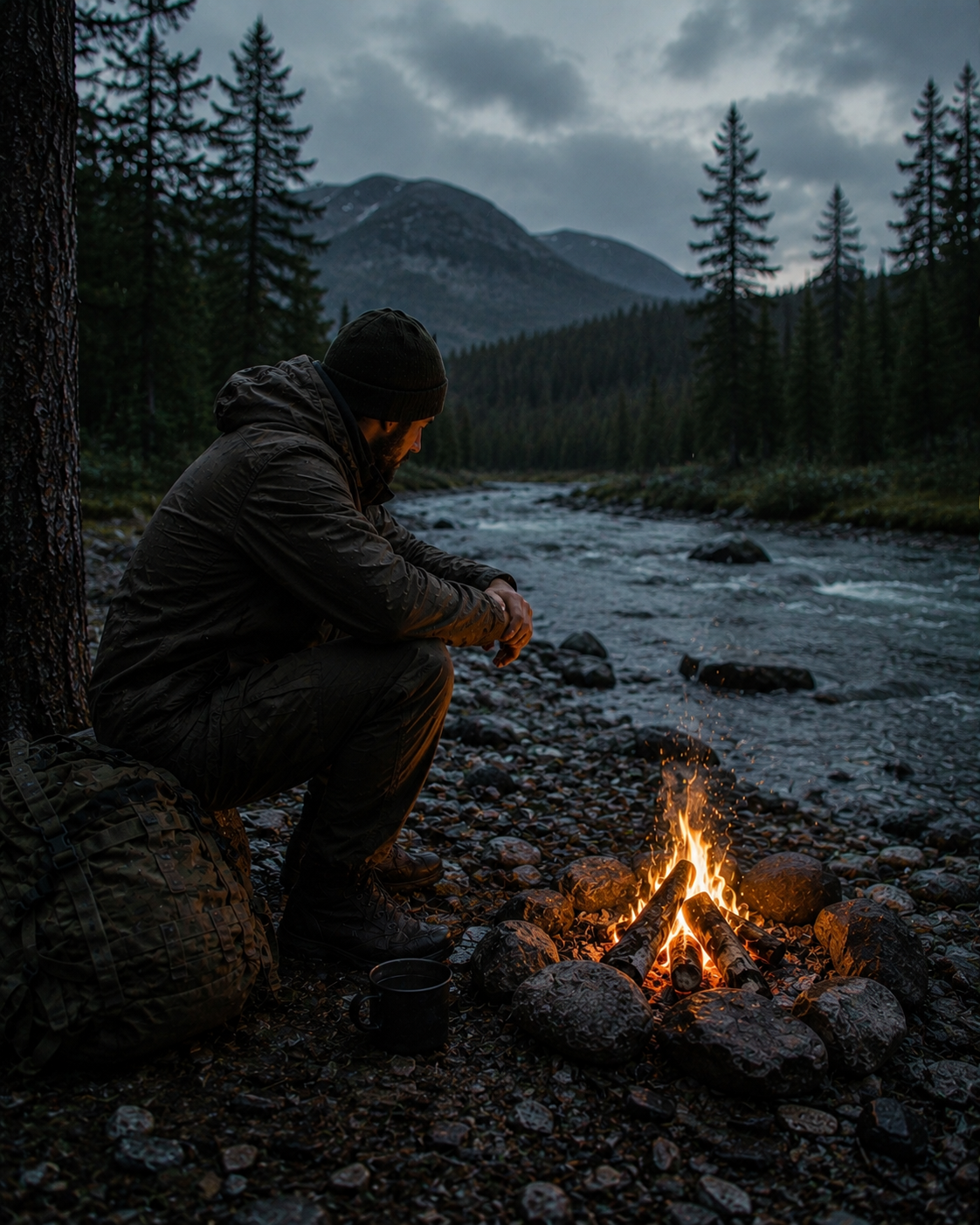
You build it by solving one problem at a time. Finding dry wood. Starting a fire in bad weather. Navigating correctly for an hour. Every small success tells your mind something important:
“I can handle this.”
That matters more than confidence.
Confidence can be fake. Trust cannot.
Trust comes from evidence.
This is why routines become powerful in survival. Repeating small actions — checking gear, gathering wood, organizing shelter, managing water — creates stability inside chaos. Your mind stops spiraling because it has structure.
And structure creates control.
You also learn to separate emotion from reality.
Feeling afraid does not mean you’re in danger. Feeling hopeless does not mean the situation is hopeless. The wild constantly pressures your mind into exaggerating problems.
You fight that by focusing on facts.
Do you have shelter? Water? Fire? Energy? A plan for the next few hours? Then you are not helpless — even if you feel uncertain.
And here’s something most people never understand:
Self-trust is quiet.
It’s not dramatic. It’s not fearless. It’s the ability to stay functional while afraid. To continue making careful decisions while uncomfortable.
That’s real mental strength.
Because in the wild, nobody arrives to calm your mind for you.
At some point, you become the person you rely on.