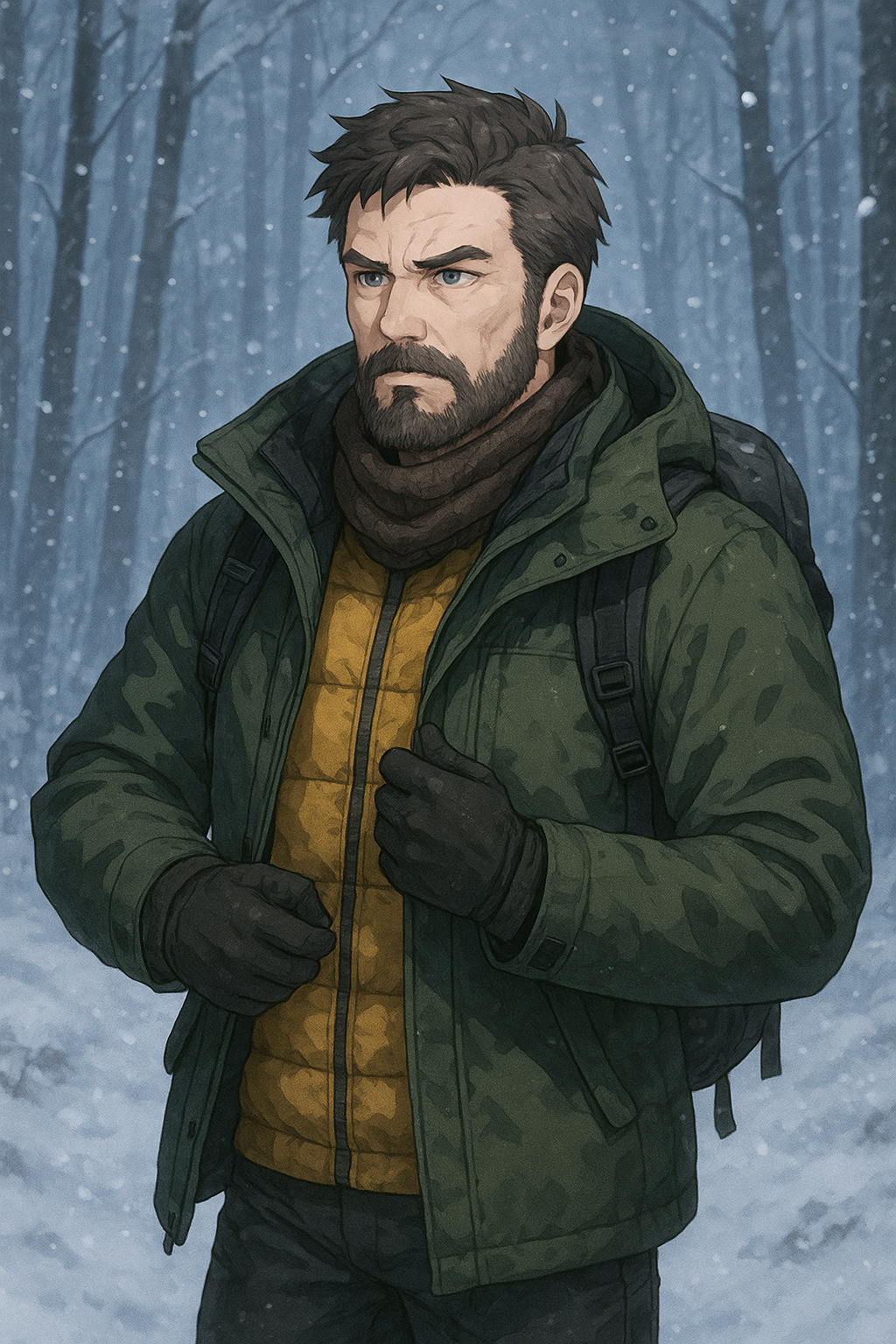

Most people think “staying warm” means putting on a big jacket.
Wrong.
Winter survival isn’t about a single piece of clothing — it’s a system. A living, breathing, adjustable shield that protects your body from every type of heat loss described in Post 1.
This post reveals how to build that system step-by-step, using the same principles used by Arctic explorers, soldiers, mountaineers, and long-term survivalists.
🔥 Why Layering Works (And Why One Thick Jacket Fails)
Your body generates heat.
Clothing doesn’t create warmth — it traps the warmth you already produce.
A thick jacket traps heat well, but it fails when:
-
you sweat
-
the wind penetrates it
-
you get wet
-
the temperature dramatically changes
-
you start moving and overheating
A clothing system adapts to everything nature throws at you.
🧩 The 3-Layer Formula for Winter Survival
This is the foundation of all cold-weather clothing systems. But in survival situations, we take it even deeper.
1️⃣ Base Layer — Your Temperature “Thermostat”
This is the most underestimated piece of clothing in winter survival.
Its job is simple but vital:
Move sweat away from your skin before it freezes.
If moisture stays on your body, you lose heat five times faster.
Best base layer materials:
-
Merino wool (king of winter survival — warm even when wet)
-
Polyester blends (fast-drying, cheap, lightweight)
Avoid at all costs:
🚫 Cotton — “Cotton kills” because it absorbs sweat and freeze-soaks you from the inside.
2️⃣ Mid Layer — Your Real Insulation
Think of this as the “engine” of your warmth.
Its job: trap warm air close to your body.
Best options:
-
Fleece
-
Synthetic puffy jackets
-
Wool sweaters
-
Quilted insulation
For survival, synthetics often beat down because they stay warm even when wet.
3️⃣ Outer Shell — Your Shield Against the World
This layer stops:
-
wind
-
snow
-
freezing rain
-
moisture
-
abrasion
It doesn’t need to be bulky — it needs to be windproof + water-resistant.
Great outer shell choices:
-
Softshell jacket
-
Hardshell rain jacket
-
Military surplus windproof jackets
-
Parkas with reinforced outer fabric
🔥 The Layering Mistake That Kills Most Beginners
Wearing too much.
You start walking → you sweat → base layer gets wet → your warmth collapses.
A survival rule used by mountain guides:
➡️ Start slightly cold.
After 5 minutes of walking, you’ll warm up.
If you’re warm at the start, you’re making a deadly mistake.
🧊 Small Adjustments That Make a Huge Difference
These micro-tweaks are what veteran survivalists actually use:
✔ Open your jacket when climbing uphill
Stops sweat accumulation.
✔ Add a layer the moment you stop moving
Never let your core temperature start dropping.
✔ Vent before sweating, not after
Survival isn’t about reacting — it’s about preventing.
✔ Adjust wrists, neck, and waist first
Tiny openings → huge heat loss.
🔻 Survival Tip: Your Hands, Feet & Head Are Not “Extras”
If your core cools, your body sacrifices your extremities first.
So your gloves, boots, socks, and beanie matter just as much as your jacket system.
But that’s exactly what we will break down in the next post…