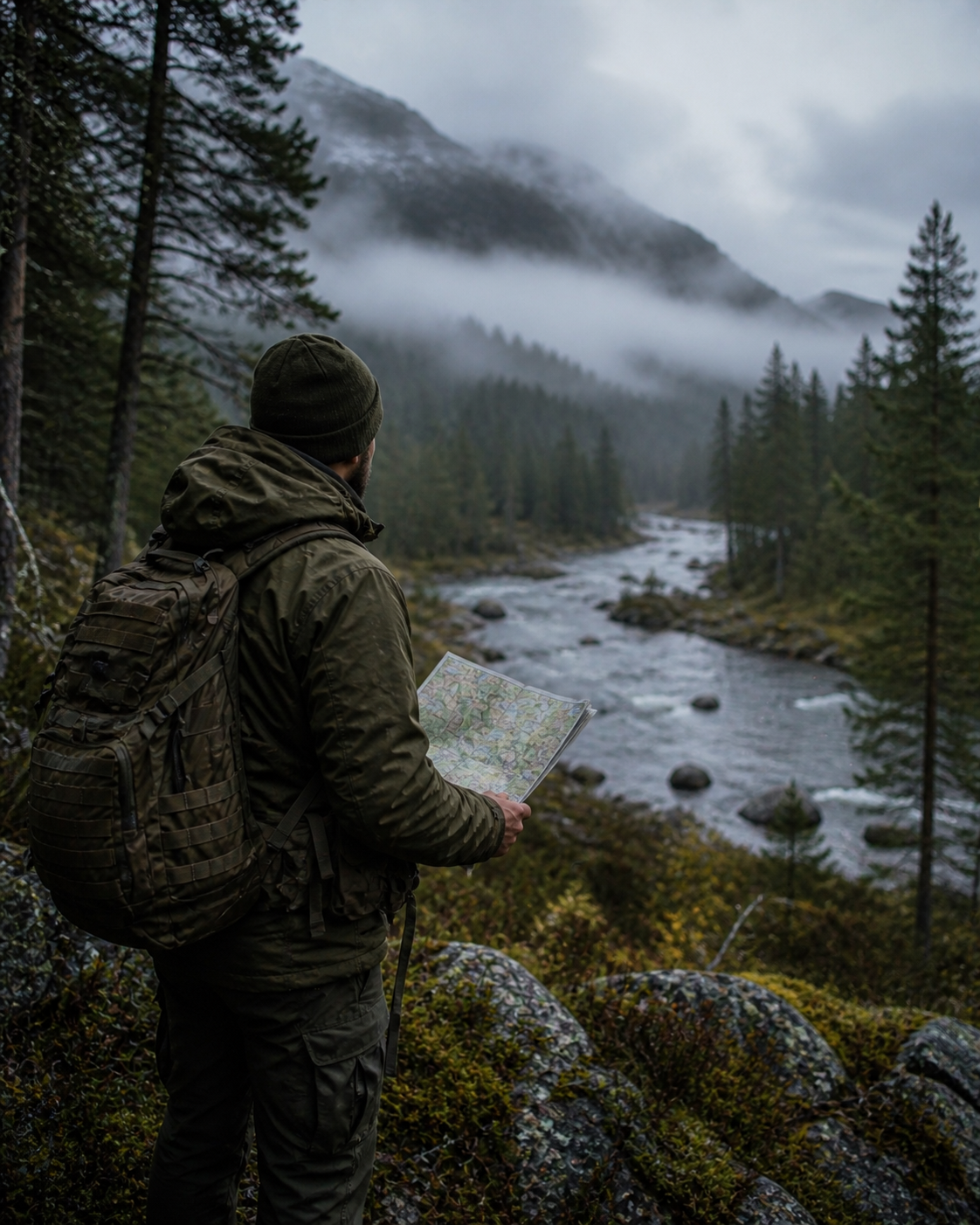

The easiest survival situation… is the one you never enter.
Most people think getting lost is something sudden. One wrong turn, one mistake, and everything goes wrong.
That’s not how it happens.
Getting lost is a slow process.
It starts with small decisions — not paying attention, ignoring direction, assuming you’ll “figure it out later.” And by the time you realize something is wrong, you’re already too far disconnected from where you started.
So survival doesn’t begin when you’re lost.
It begins before that.
The first rule is awareness.
Always know three things: where you came from, where you’re going, and what’s around you. Not in detail — but enough to recognize when something changes.
Look behind you sometimes.
People forget this. The way forward never looks the same as the way back. Landmarks shift. Angles change. If you don’t check your path in reverse, returning becomes harder than continuing.
Use simple markers.
Broken branches, small stacks of stones, marks in the ground — nothing obvious, just enough for you to recognize your own trail. You’re not marking for others. You’re leaving memory outside your head.
Don’t trust memory alone.
The human brain is bad at direction under stress or repetition. Forests, hills, open fields — they all start to look the same after a while. Confidence is not accuracy.
Check direction regularly.
The sun, terrain slope, wind patterns — small confirmations that you’re still moving the way you think you are. If you wait until you feel lost, you’re already behind.
And here’s the most important rule:
If something feels wrong — stop early.
Not later. Not “after a bit more.” Immediately.
It’s easier to correct a small mistake than recover from a big one.
Because once you’re truly lost, survival becomes reactive.
But if you stay aware from the start, you never give the wild that advantage.