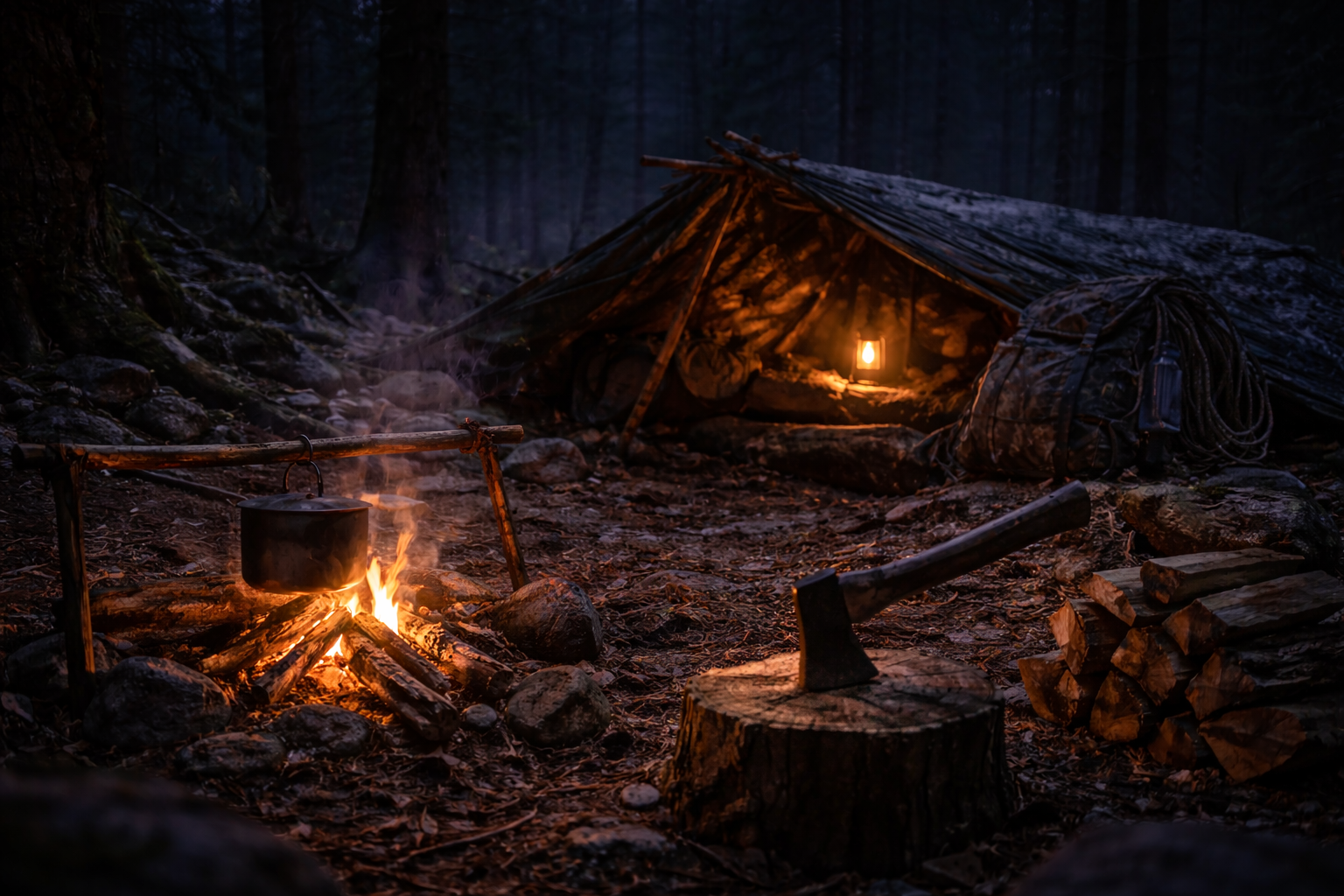

There’s a moment in every survival story that rarely gets talked about — not the storm, not the injury, not the hunger.
It’s the moment when nothing seems wrong.
You’ve got a shelter.
You’ve got some food.
The fire is steady.
The night is quiet.
And your mind whispers: “We’re fine.”
That whisper can be more dangerous than any blizzard.
🧠 The Invisible Threat — Complacency
Humans are wired to relax when immediate danger fades. It’s natural. But in survival situations, comfort is often temporary — and conditions can shift faster than you can react.
Many people stop improving their camp once it feels “good enough.” They delay gathering more wood. They skip reinforcing shelter. They postpone scouting escape routes.
Then the weather turns.
Supplies run low.
An injury happens.
And suddenly, “good enough” isn’t enough.
❄️ Real Survival Isn’t Static
Experienced outdoorsmen know a simple rule:
You are either preparing — or you are falling behind.
A shelter that’s warm today may fail in wind tomorrow.
A water source that flows today may freeze overnight.
A safe area today may become exposed if conditions change.
Survival is not about reaching comfort — it’s about maintaining readiness.
🪵 The Small Habits That Keep You Alive
People who make it through harsh situations tend to follow quiet routines:
- Gathering more firewood than they think they’ll need
- Checking gear daily
- Improving insulation even when already warm
- Planning “what if” scenarios every evening
- Keeping a mental map of resources and exits
These habits aren’t dramatic — but they build resilience.
🌌 The Psychological Edge
Complacency dulls awareness. Preparedness sharpens it.
When you stay mentally engaged, you notice subtle changes — wind direction, animal behavior, cloud patterns, unusual sounds at night. These signals often provide early warnings long before obvious danger arrives.
Staying alert doesn’t mean staying anxious. It means staying intentional.
⚠️ The Lesson
Comfort is not safety.
It’s a temporary state.
The wilderness — and life — rewards those who treat calm moments as opportunities to prepare, not to drift.
Because survival rarely fails in chaos.
It fails in quiet.