Fear Is Not the Enemy — Panic Is
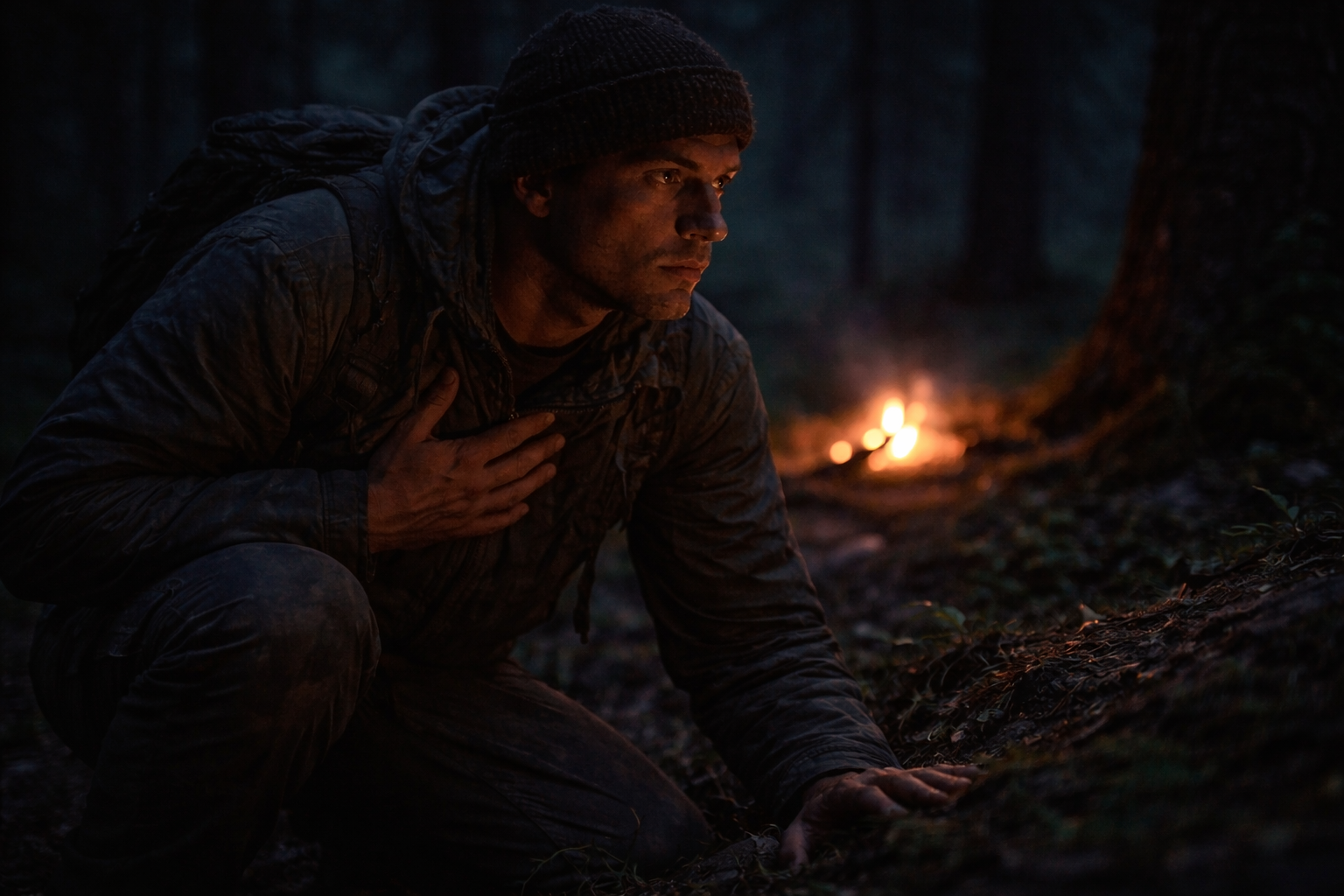
Fear is a biological alarm. It sharpens hearing, tightens focus, and prepares the body for action. Panic, however, does the opposite: it fractures thinking, accelerates bad decisions, and drains energy at the worst possible moment.
Primitive humans didn’t try to “be brave.” They learned to slow down inside danger, not speed up.
Survivors across history share one trait:
they pause before acting — even when every instinct screams to move.
The Primitive Pause Technique
Early survival behavior shows a repeated pattern:
- Stop moving
- Lower your body
- Control breathing
- Observe before deciding
This “pause” was not hesitation — it was information gathering. In the wild, the first action is rarely the correct one.
Modern survival failures often happen in the first 10 minutes because people rush to do something instead of understanding what’s happening.
Breathing: The Original Survival Tool
Primitive humans didn’t know anatomy, but they knew rhythm.
Slow nasal breathing:
- Reduces panic responses
- Conserves energy
- Keeps fine motor control
Fast mouth breathing signals danger to your own nervous system — and can escalate fear into chaos.
If you can control breathing, you can control fear.
If you lose breathing, you lose the situation.
Fear Narrows Vision — Awareness Expands It
Under stress, the human brain tunnels. Early humans countered this by scanning horizontally, not staring.
This habit:
- Prevented ambush
- Revealed escape routes
- Reduced imagined threats
Many “unknown dangers” dissolve once the brain receives real data instead of assumptions.
Why Stillness Keeps You Alive
In primitive environments, movement attracts attention — from predators and from people.
Stillness:
- Conserves calories
- Reduces noise
- Allows the nervous system to reset
Doing nothing for five minutes can be the most productive survival decision you make.
The Survival Rule Most People Ignore
Fear demands action.
Survival demands control.
Early humans survived because they delayed reaction long enough to let intelligence replace instinct.
The mind that slows down outlives the body that rushes.