Fear Was Never the Enemy
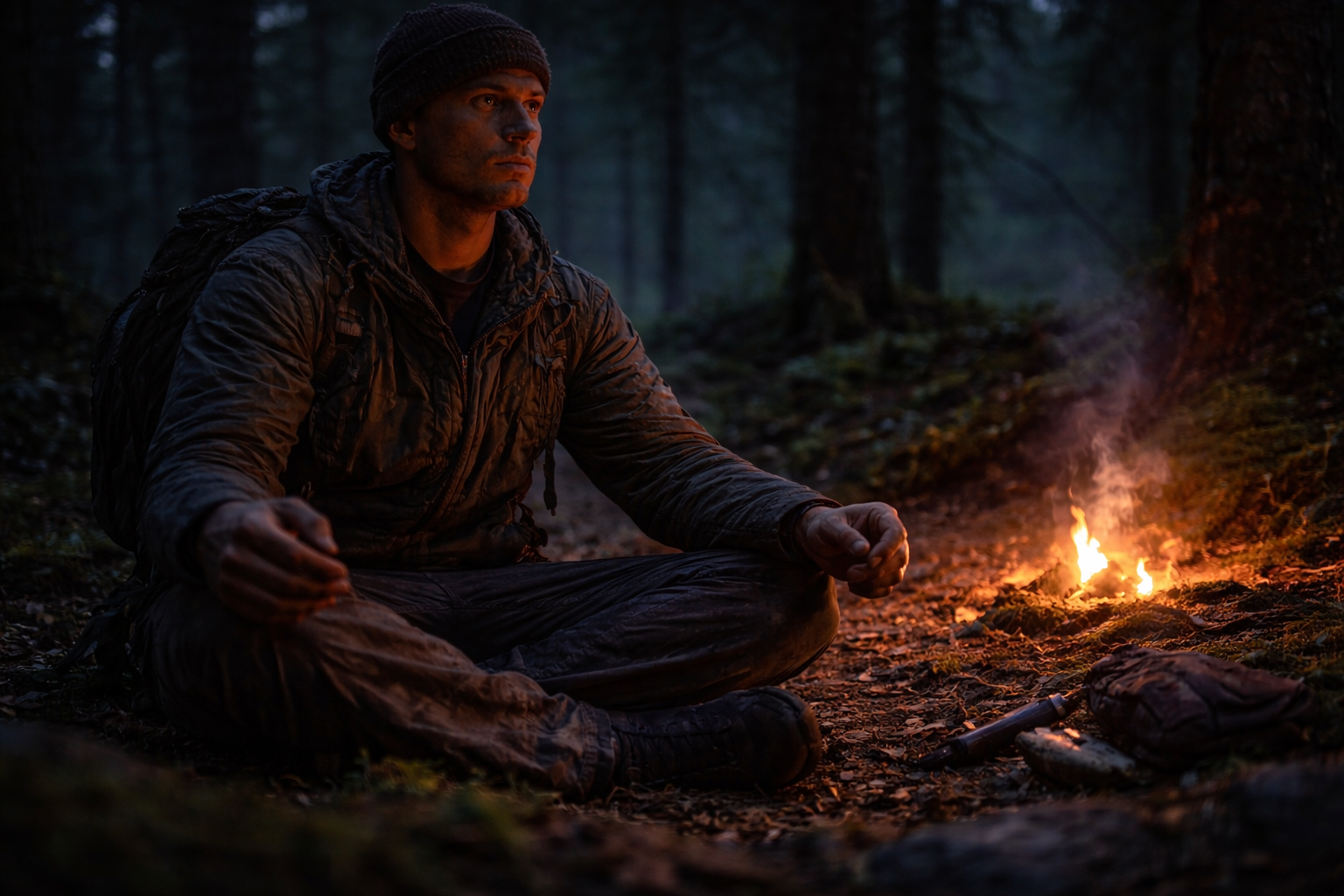
Early humans didn’t try to eliminate fear.
They learned to use it without letting it take control.
Fear sharpened hearing.
Fear improved night vision.
Fear slowed reckless movement.
Panic, on the other hand, was deadly.
That difference mattered more than strength or weapons.
Why Primitive Calm Worked
Primitive calm wasn’t emotional suppression.
It was situational control.
Instead of asking “How do I feel?”, early humans asked:
-
Where is the wind coming from?
-
What sounds are new?
-
What changed in the last minute?
By shifting attention outward, fear lost its grip.
Your nervous system cannot panic and observe details at the same time.
The Ancient Method: Ground → Pattern → Decision
Survivors instinctively followed a three-step loop:
1. Ground
Touch the earth. Sit. Kneel. Reduce body height.
This signals safety to the nervous system.
2. Pattern
Listen for repetition. Wind patterns. Animal sounds. Silence gaps.
Fear fades when randomness turns into patterns.
3. Decision
Only after patterns emerge does action happen.
Never before.
This method still works today — because your brain hasn’t changed.
Why Modern Humans Struggle
Modern life trains instant reaction:
-
Notifications
-
Deadlines
-
Alarms
-
Urgency without context
In survival, that conditioning backfires.
Primitive humans were patient by necessity.
Patience wasn’t a virtue — it was how you stayed alive.
The Calm That Keeps You Alive
Primitive calm doesn’t feel peaceful.
It feels quietly alert.
Your heart slows, but your awareness widens.
You don’t relax — you stabilize.
This state allows better choices:
-
When to move
-
When to wait
-
When fear is real — and when it’s noise
The Truth About Survival Mindset
Survival isn’t won by confidence.
It’s won by emotional neutrality under pressure.
Those who master primitive calm don’t feel fearless.
They feel clear.