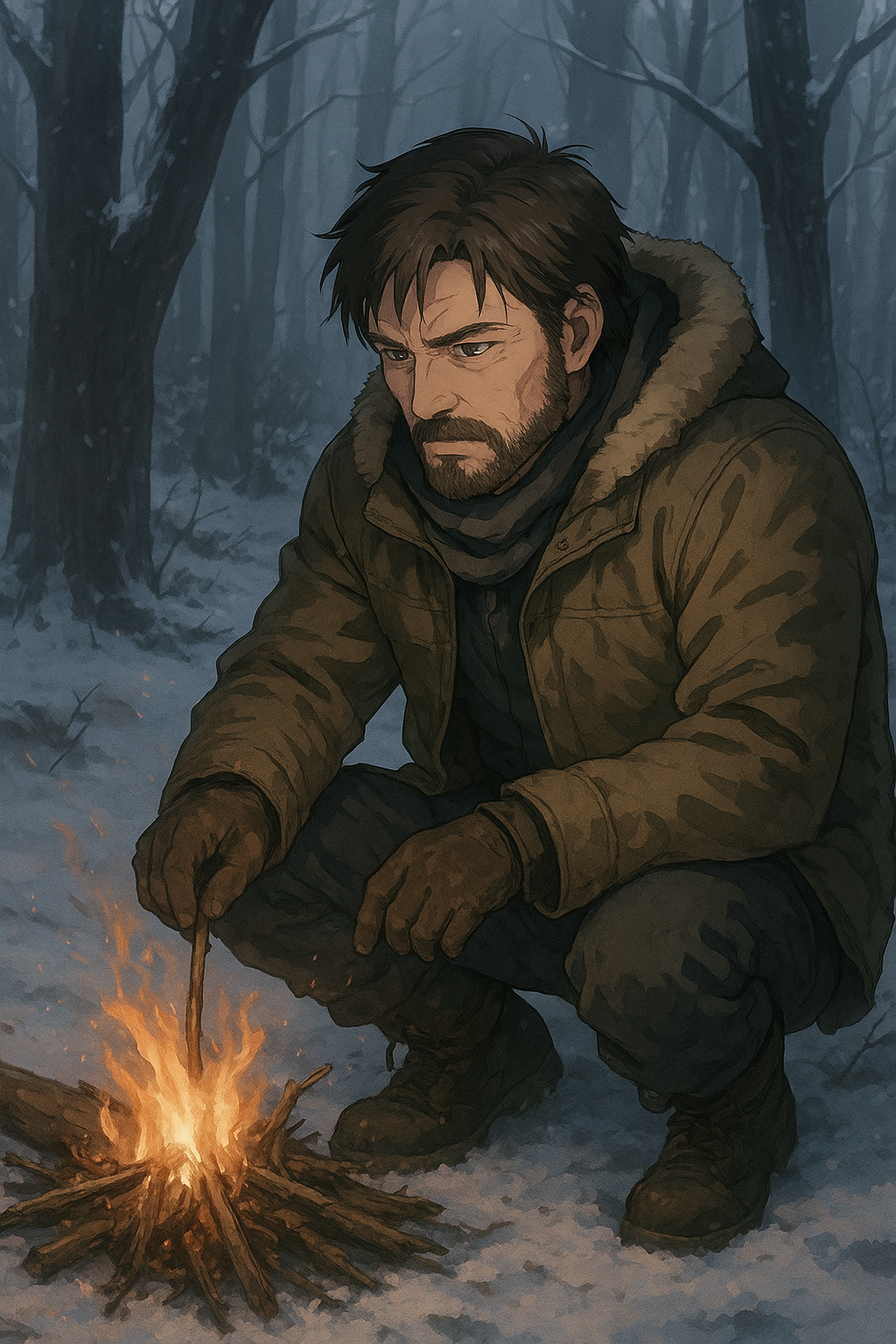

When winter turns brutal and every breath stings like needles, fire stops being “useful” — it becomes the line between life and death. In extreme cold, the rules of fire-making change. Wood behaves differently. Moisture becomes your enemy. Tools freeze. And tiny mistakes lead to dangerous consequences.
Below is your unusual, practical, and field-tested guide to mastering fire when the world around you tries to freeze you solid.
🔥 Why Fire in Winter Is a Completely Different Beast
Most people think:
“Fire is fire. You stack wood, spark it, enjoy warmth.”
No.
Winter fire is a stubborn, unforgiving adversary.
-
Your lighter might not spark.
-
Your matches can snap like glass.
-
Your tinder absorbs moisture from the air.
-
Even dry wood burns colder — yes, that’s real.
This is why true winter survivalists treat fire like a ritual: deliberate, systematic, and almost spiritual.
🔥 Step 1: Finding Fuel When Everything Is Frozen or Wet
Here’s the winter trick most beginners NEVER learn:
1. Dead branches that are still on the tree
Not the ones on the ground — those are waterlogged ice sponges.
Look for:
-
dead pine branches,
-
small dry twigs high up,
-
bark that peels easily.
2. Feathersticks (your best friend)
When wood is slightly damp, carve thin curls.
They ignite even when the core is wet.
3. The secret king of winter fire: BIRCH BARK
It burns like gasoline.
Even wet. Even frozen.
If you ever see birch — you just found your fire starter.
4. Fatwood
Sap-rich wood that lights even in blizzard conditions.
Smells like pine heaven, burns like a torch.
🔥 Step 2: Choosing the Only Fire Structure That Works in Extreme Cold
Most people know about tipis, log cabins, pyramids…
But in real winter survival, there is ONE superior structure:
🔥 The “Upside-Down Fire”
Yes — build it backwards.
Why it works:
-
The top lights first
-
The fire slowly burns downward
-
No collapsing, no smothering
-
Radiates heat for hours without babysitting
Perfect for conserving energy when your body is already slowing down from the cold.
🔥 Step 3: Igniting Fire When Your Hands Are Numb
In freezing weather, dexterity disappears.
You must prepare for “clumsy mode.”
1. Ferro rod + fatwood shavings
The combination that always works.
2. Cotton pads soaked in wax or petroleum jelly
These burn like a mini-lantern.
3. A lighter kept INSIDE your pocket
If it freezes, it’s dead.
Keep it warm against your body.
4. Flint & steel (old-school, but reliable)
No moving parts = no failure.
🔥 Step 4: Keeping the Fire Alive in Extreme Cold
Most people think they lost their fire due to weak flame — wrong.
The REAL reason winter fires die is:
Cold air rushes in from below.
Solution:
Create a fire base.
Build on:
-
a platform of thick logs,
-
a flat rock,
-
a bed of dry sticks.
This keeps oxygen under control and prevents melting snow from killing the flame.
🔥 Step 5: Winter Fire Safety That Actually Matters
✔ Never build fire directly on snow — it melts and smothers the flame
✔ Don’t use large fuel until you have strong, hot coals
✔ Keep spare tinder inside your jacket
✔ Build a reflector wall to bounce heat back at you
A reflector can be:
-
logs
-
stones
-
even your backpack in an emergency
It can double the warmth you feel.
🔥 The Real Reason Winter Fire-Making Matters
A winter fire isn’t just heat.
It is:
-
a psychological anchor
-
a source of light in endless darkness
-
a way to melt snow for drinking water
-
a signal for rescue
-
the heartbeat of your survival camp
Cold steals strength.
Fire gives it back.