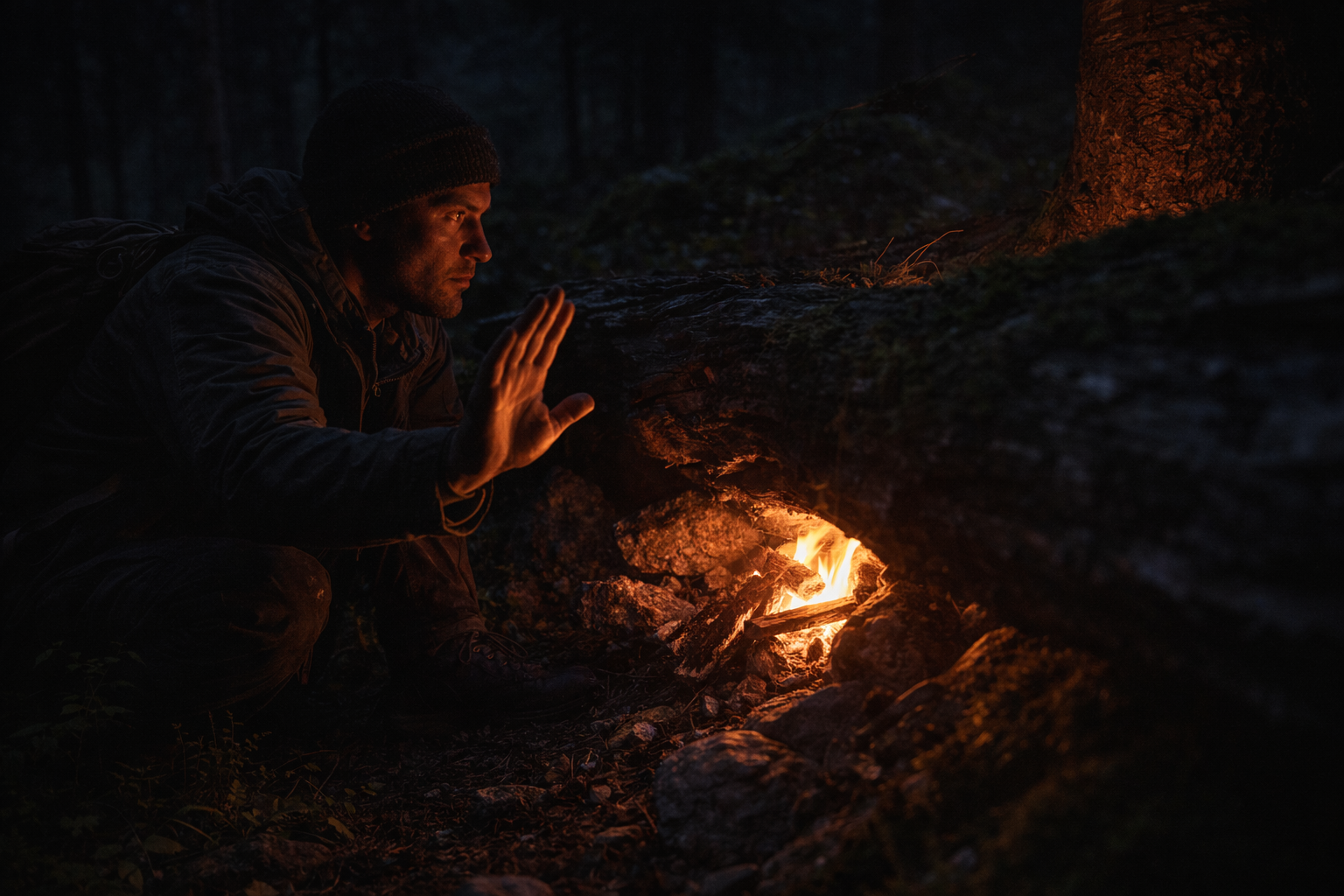

Why Fire Discipline Matters at Night
At night, light travels farther than sound. An open flame can:
-
Reveal your position from hundreds of meters
-
Destroy night vision in seconds
-
Attract animals and insects
-
Waste fuel you may not replace
True night survival isn’t about big fires — it’s about controlled, intentional light.
Low-Profile Fire Techniques
Primitive cultures rarely used tall flames at night. Instead, they relied on:
-
Dakota fire holes to reduce visible light and smoke
-
Coal beds for steady heat without flame
-
Shielded fires built behind logs, rocks, or terrain dips
These methods provide warmth and cooking ability while staying nearly invisible.
Managing Light Without Losing Night Vision
Your eyes take up to 30 minutes to fully adapt to darkness. One mistake can reset that.
Survivors protected night vision by:
-
Looking past the fire, not into it
-
Using embers instead of flames
-
Turning away before adding fuel
-
Letting fire die down before movement or navigation
The goal is to see without being seen.
When NOT to Use Fire
Experienced survivors know restraint saves lives. Avoid fire when:
-
Weather already provides warmth
-
You’re moving through unknown terrain
-
Wind direction is unstable
-
You lack enough fuel to maintain control
In these cases, insulation and positioning matter more than flame.
The Real Survival Lesson
Fire isn’t about comfort — it’s about control.
At night, the smartest survivor isn’t the one with the biggest fire, but the one whose fire you never notice.