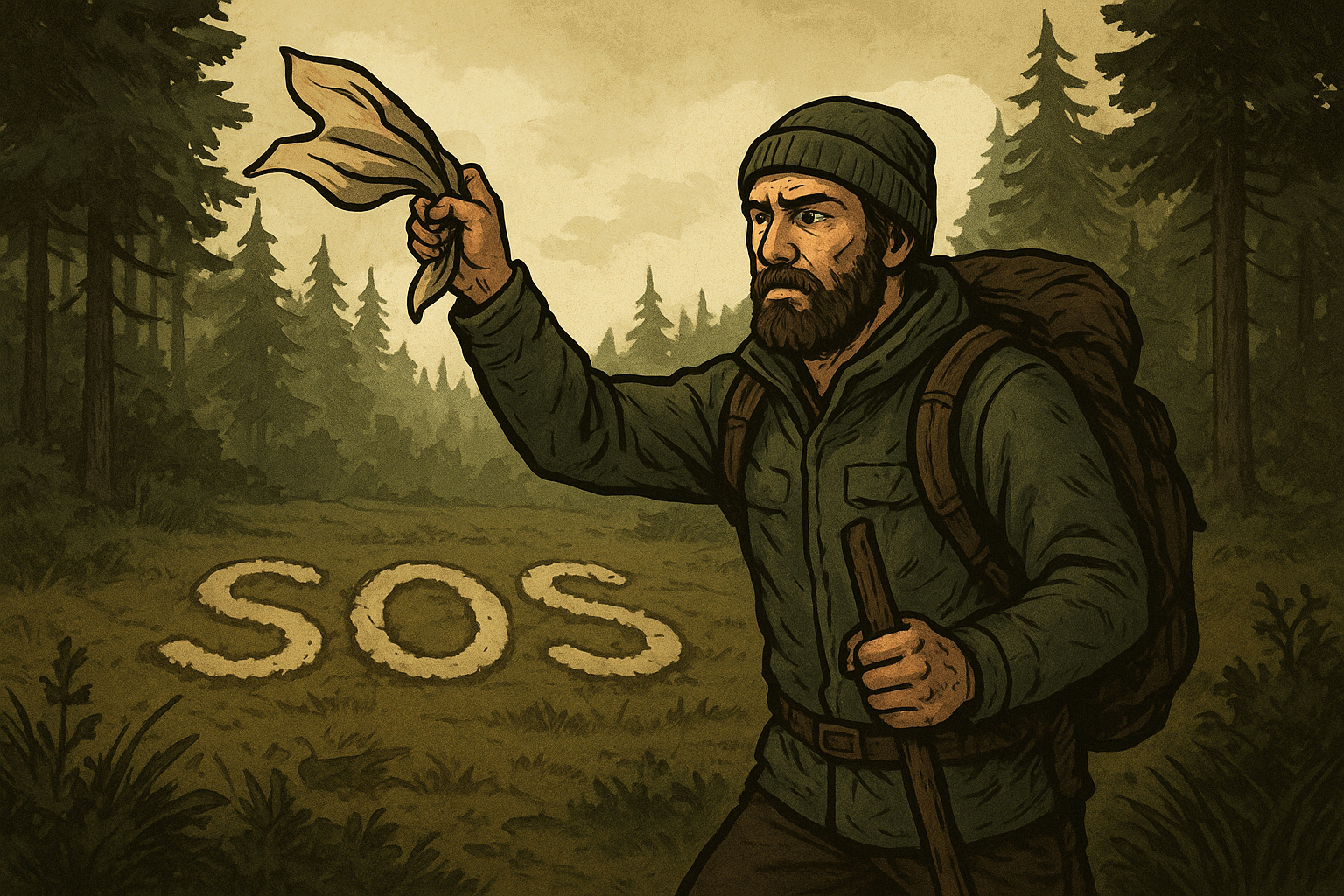

Getting lost in the wilderness can quickly shift from an adventure to a test of endurance. Once you’ve built shelter, found water, and secured warmth, your next mission is clear — survive long enough to be found. This stage is about signaling, conserving energy, and keeping hope alive until help arrives.
🔦 1. Make Yourself Visible
One of the biggest mistakes people make when lost is staying hidden. Nature is full of camouflage — trees, rocks, and shadows easily blend you in. You must stand out to rescuers.
-
Create large signals: Use bright materials like clothing, tarps, or emergency blankets to form large “SOS” or arrows on the ground.
-
Use contrast: The best signals contrast with the environment — dark on light ground, or light on dark soil.
-
Attract attention with movement: Waving branches or reflective surfaces can help spotters notice you.
If you have a mirror or even a smartphone screen, reflect sunlight to distant planes or search parties. A flash of light can be seen for miles.
🔥 2. Master the Art of Signaling
Rescue teams often rely on patterns to identify human-made signals:
-
Three fires in a triangle pattern are an international distress signal.
-
Use whistle blasts or shouts in groups of three — three short bursts, pause, then repeat.
-
At night, flash a light source three times to send a clear SOS message.
If you hear aircraft or helicopters, don’t chase them — stay put and signal from open ground where you can be easily seen.
🍂 3. Conserve Energy and Stay Positive
Panic and overexertion are your biggest threats after the basics are covered. Moving without a plan burns calories, dehydrates you faster, and risks injury.
-
Rest often, especially during the heat of the day.
-
Ration food and water, consuming small, regular amounts.
-
Keep your mind active: talk to yourself, count, pray, or repeat affirmations — anything to stay calm and focused.
Remember: your mindset is your strongest survival tool. People with a positive mental attitude survive longer in extreme conditions — it’s not just about the body, it’s about the will to live.
🌤️ 4. Use Nature to Your Advantage
Nature can both challenge and save you. Pay attention to signs around you:
-
Follow valleys or streams — they often lead to civilization.
-
Mark your path with symbols or objects if you decide to move, so rescuers can track your direction.
-
Collect morning dew from leaves for extra hydration.
🧭 5. Be Patient — Help Takes Time
Rescue operations can take hours or even days depending on terrain and weather. Every action you take should improve your chances of visibility and survival — not waste precious energy.
You’re not just waiting — you’re fighting smartly. Each hour survived increases the likelihood of being found.