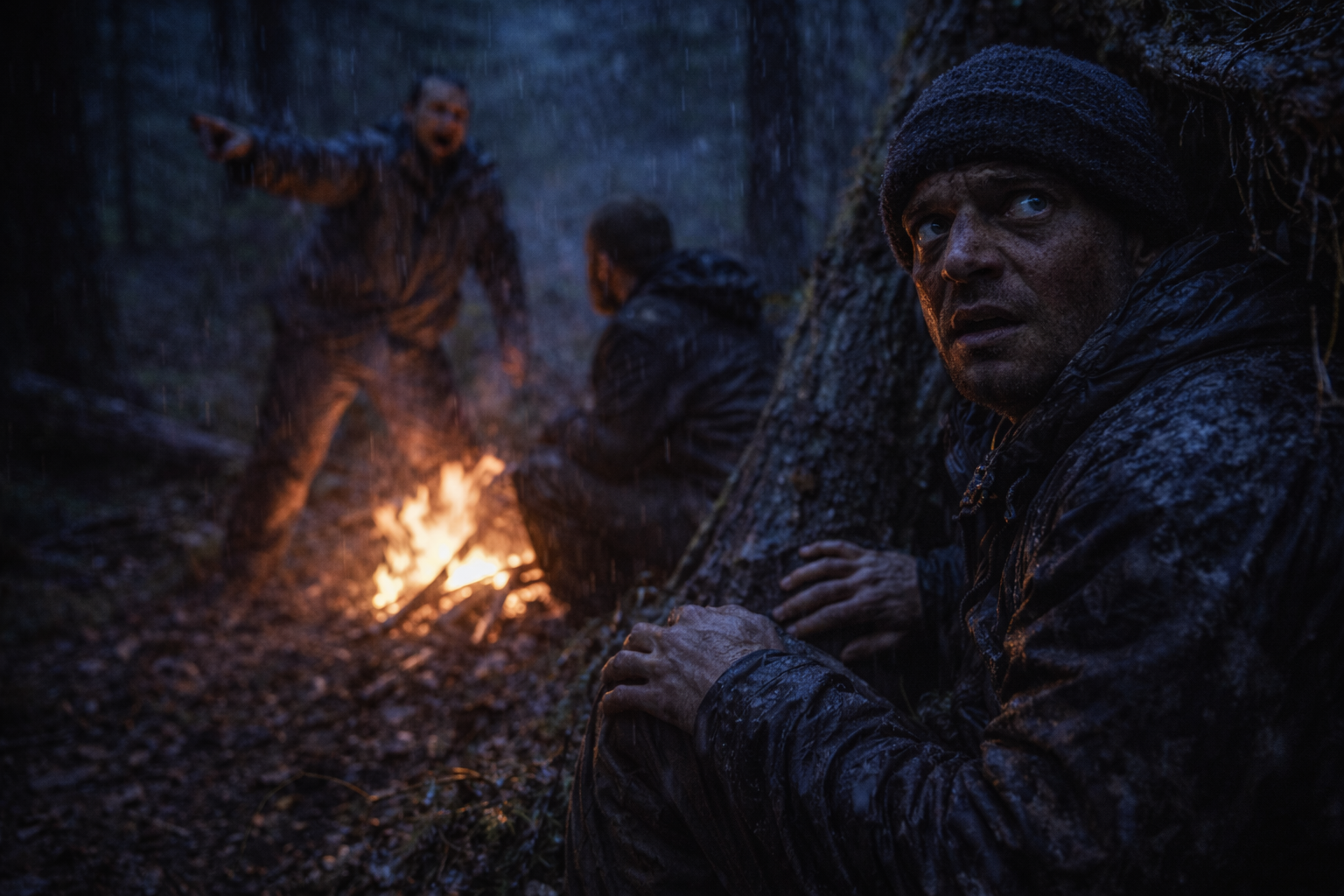

🧠 Instinct #1: “Move Fast or You’ll Die”
Why it fails:
In panic, humans rush—running without direction, burning calories, making noise, and missing critical signs.
What experiments showed:
In controlled survival simulations, participants who stopped moving for the first 30–60 minutes consistently made better decisions:
- Found water sooner
- Chose safer shelter locations
- Avoided injuries
Lesson:
In wilderness survival, speed kills clarity. Stillness creates strategy.
🔥 Instinct #2: “Fire First, Everything Else Later”
Why it fails:
People obsess over fire—even in unsafe locations or bad weather.
What went wrong:
In wet, cold experiments, survivors:
- Exposed themselves trying to start fire
- Wasted calories and tools
- Ignored shelter, leading to hypothermia before fire was achieved
Lesson:
Fire is useless without protection from wind and moisture. Shelter often comes first.
💧 Instinct #3: “Drink Whatever You Find”
Why it fails:
Dehydration triggers impulsive drinking.
Near-fatal outcomes:
Test subjects consumed:
- Stagnant water
- Animal-contaminated sources
- Mineral-heavy runoff
Result: vomiting, weakness, and rapid decline.
Lesson:
Bad water can kill faster than no water. Delay, observe, filter, then drink.
🏃 Instinct #4: “Follow Others — They Must Know Better”
Why it fails:
Humans trust movement and confidence—even when it’s wrong.
What experiments revealed:
Groups often followed:
- The loudest person
- The fastest mover
- The most confident voice
Leading entire groups away from water, downhill routes, or safe terrain.
Lesson:
Confidence ≠ correctness. Nature rewards quiet observation, not leadership volume.
🌙 Instinct #5: “Night Is More Dangerous Than It Is”
Why it fails:
Fear distorts perception.
Observed effects:
- Harmless sounds interpreted as predators
- Survivors abandoning safe shelters
- Unnecessary movement leading to injuries
Lesson:
Most nighttime threats are psychological, not physical. Staying put is often safer than reacting.
🧭 The Core Truth
Human instincts evolved for short-term danger, not prolonged survival.
In modern wilderness scenarios:
- Calm beats courage
- Patience beats action
- Thinking beats reacting
The survivors weren’t the bravest—they were the ones who overrode instinct and slowed down.