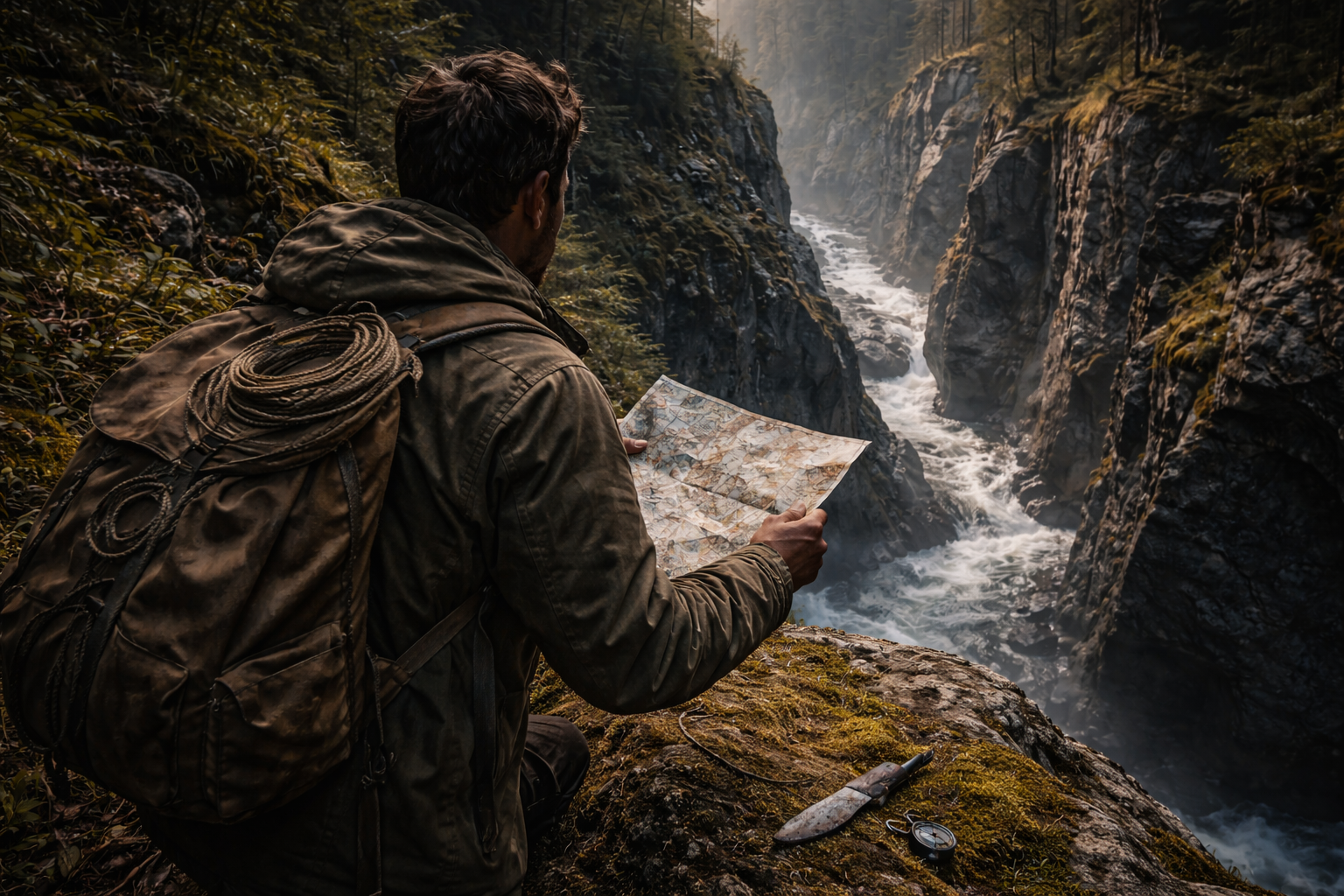

❌ Mistake #1: Trusting a Single Sign
One mossy tree. One animal trail. One stream flowing “the right way.”
Relying on one indicator is one of the fastest ways to get lost.
-
Moss can grow on all sides in humid forests
-
Animal trails can loop endlessly around feeding grounds
-
Streams can lead into canyons, swamps, or cliffs
Survivor rule: Never move on a single clue. Always confirm with at least two or three independent signs.
❌ Mistake #2: Following Water Too Far
“Follow the river” is common advice—but incomplete.
When it works:
-
Rolling terrain
-
Gradual valleys
-
Known populated regions
When it kills:
-
Slot canyons
-
Cold mountain rivers
-
Flood-prone zones
-
Dense jungle waterways
Many survivors get trapped where rivers narrow, drop suddenly, or become impassable.
What pros do instead:
They follow water parallel, staying high enough to retreat, observe, and reroute.
❌ Mistake #3: Walking the Path of Least Resistance
Humans instinctively choose the easiest path—flat ground, open forest, smooth trails.
Nature exploits this instinct.
-
Easy paths often lead away from exits
-
Predators and animals use paths optimized for feeding, not escape
-
Old trails may be abandoned for decades
Survivors choose strategic difficulty—routes that offer visibility, landmarks, and decision points.
❌ Mistake #4: Ignoring Vertical Awareness
Many lost people think only in two dimensions.
They forget:
-
Elevation reveals landmarks
-
High ground exposes rivers, valleys, smoke, roads
-
Slight climbs can reset orientation completely
Staying low feels safe—but it often limits information.
Survivor mindset:
Stop. Climb. Observe. Decide.
❌ Mistake #5: Moving Without a Mental Map
Wandering without tracking your movement is fatal.
Common errors:
-
No reference points
-
No backtracking markers
-
No time/distance awareness
Experienced survivors constantly ask:
-
What landmark did I pass?
-
What direction am I trending?
-
Can I return the same way?
They don’t just move—they navigate consciously.
🧠 How Survivors Avoid Dead Ends
Skilled navigators:
-
Pause often
-
Reassess direction every 30–60 minutes
-
Cross-check terrain, sun, wind, and movement patterns
-
Accept slowing down as a survival advantage
They know the most dangerous thing in the wild isn’t darkness, cold, or hunger—it’s false confidence.
Final Truth
Nature doesn’t lie maliciously—but it doesn’t guide you either.
It offers clues, not guarantees.
Survival navigation is about pattern recognition, patience, and humility. Those who respect uncertainty stay alive. Those who rush toward certainty disappear.