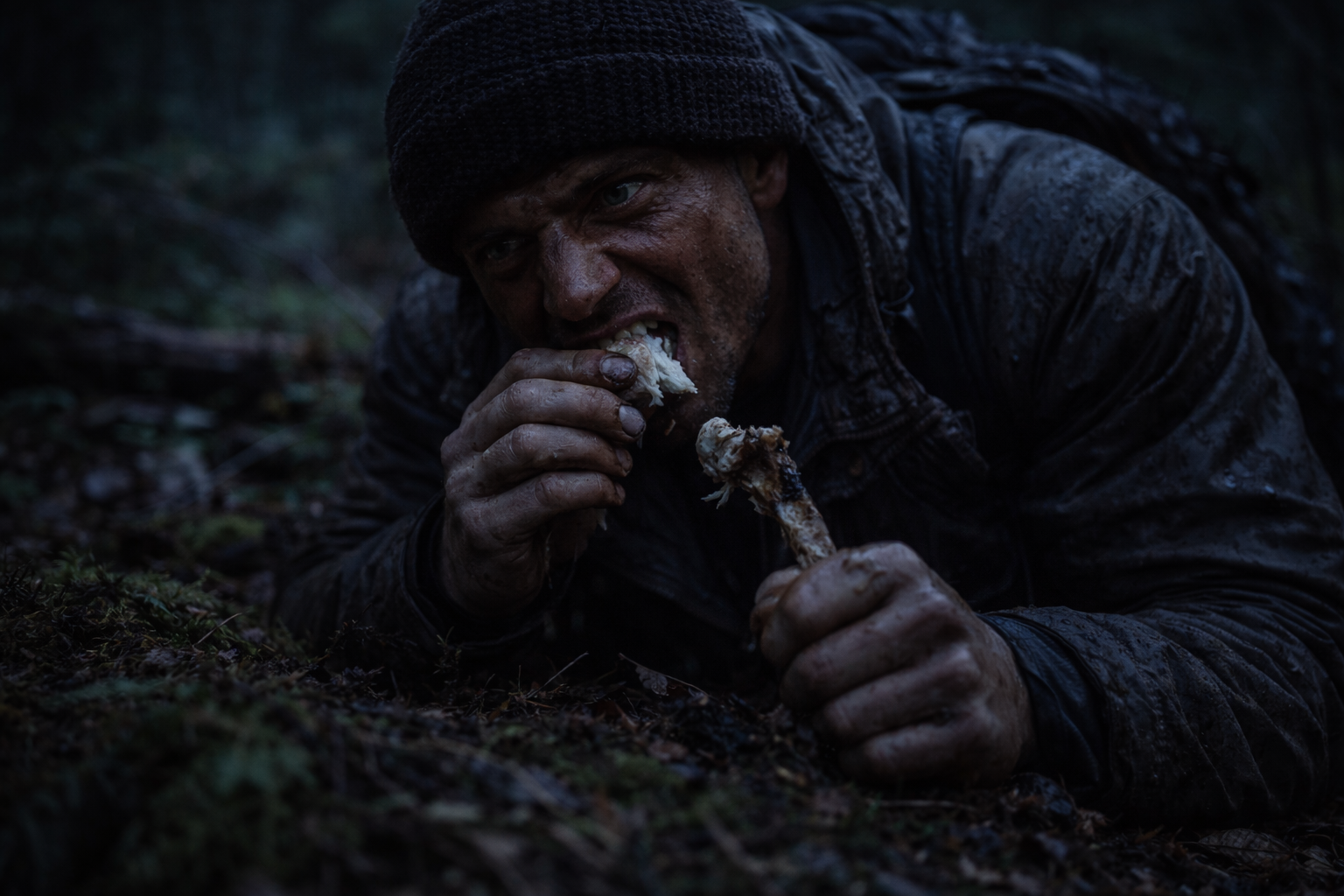

How the Human Body Survives Extreme Calorie Deprivation in the Wild
One of the most dangerous lies in survival is this:
“You need food to keep going.”
History proves the opposite.
People have walked, hunted, navigated, and stayed mentally sharp for days and even weeks on almost no calories at all. Not because they were superhuman — but because the human body is built for movement during scarcity.
Most modern survival failures happen not from starvation, but from panic eating and energy mismanagement.
The Survival Truth Nobody Likes
Hunger does not stop you.
Fear of hunger does.
In real survival scenarios, the body shifts priorities:
- Muscle preservation is paused
- Fat becomes primary fuel
- Digestion slows
- Movement becomes cheaper
The body enters a mode designed for migration, not comfort.
Why Eating Too Much Can Kill You
In cold, wet, or high-stress environments, eating heavily causes problems:
- Blood is pulled to digestion instead of muscles
- Core temperature drops
- Fatigue increases
- Decision-making slows
Many survivors collapsed after eating, not before.
Early humans understood this instinctively:
light intake, controlled movement, delayed feeding.
How Survivors Actually Functioned With Minimal Food
1. Movement Before Meals
Survivors moved first, ate later.
Walking, scouting, and relocating happened while fasted.
Food was reserved for:
- Night
- Shelter time
- Recovery periods
Movement on an empty stomach is more efficient than most people believe.
2. Fat Over Volume
Calories mattered more than fullness.
When food existed, survivors prioritized:
- Nuts
- Animal fat
- Seeds
- Insects
- Marrow
A few bites of fat could fuel hours of travel.
3. Cold Suppresses Hunger
Cold environments naturally reduce appetite.
Survivors used this to their advantage:
- Less focus on food
- More focus on shelter and navigation
- Lower mental stress
Hunger became background noise — not a command.
The Energy Mistake That Ends Lives
The biggest error is constant foraging.
Endless searching for food:
- Burns calories
- Exposes you to injury
- Distracts from shelter and safety
- Creates false urgency
Survivors who lived longest accepted scarcity and planned around it.
Mental Clarity Without Food
Contrary to popular belief:
- Light hunger increases focus
- Reduced digestion sharpens awareness
- The brain switches into conservation mode
Many survivors report clearer thinking during early fasting phases.
Panic returns only when people fight the process.
Survival Is Not About Eating — It’s About Timing
The human body is not fragile.
It is strategic.
Survival happens when you:
- Move efficiently
- Eat deliberately
- Rest intentionally
- Stop reacting emotionally to hunger
Those who respected scarcity survived longer than those who tried to escape it.