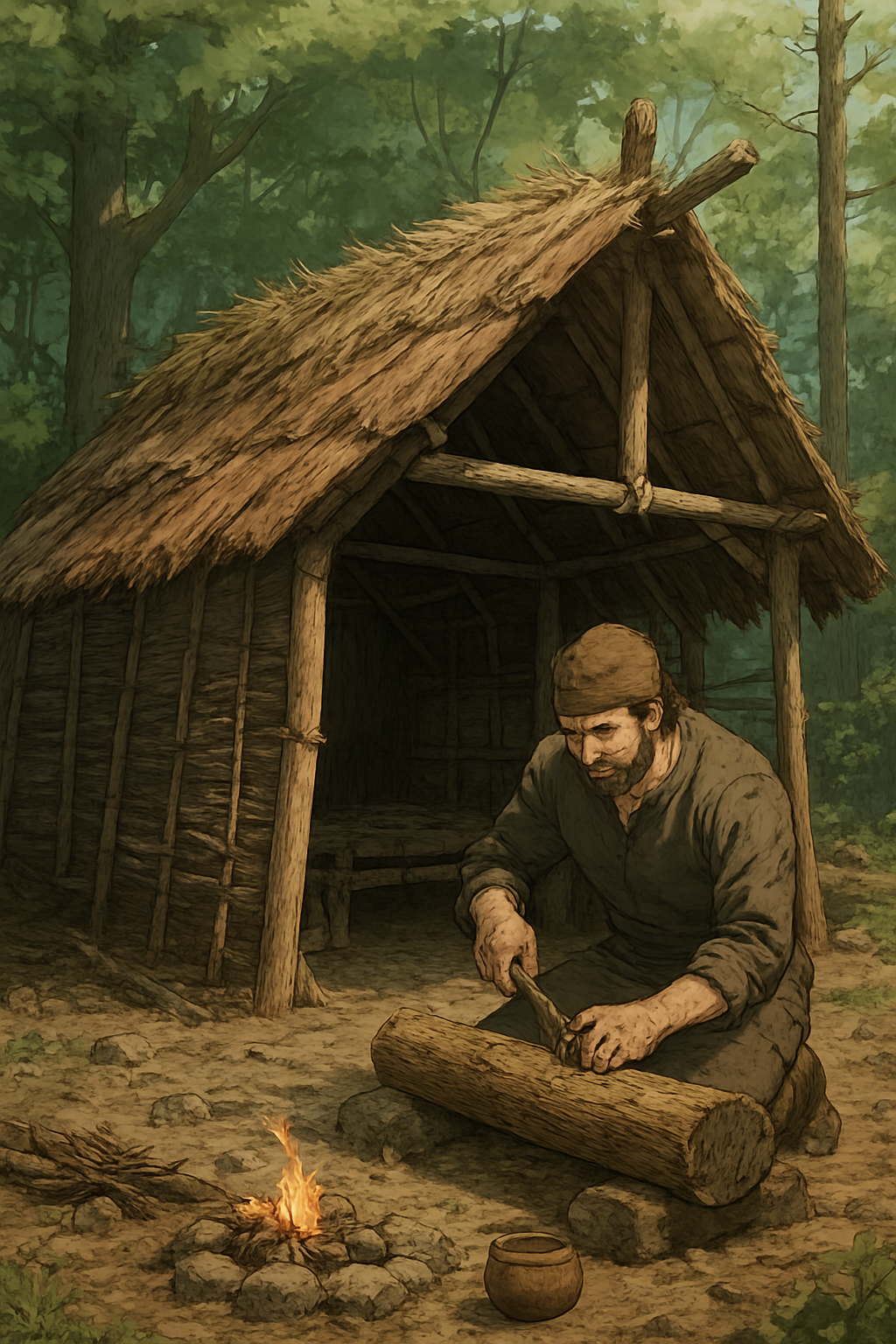

🏕 Step 1 — Choosing the Perfect Location (This Decides Everything)
You can build the best shelter in the world — but if the location is bad, you’ve already lost.
Look for an area that provides:
✔ High ground (avoid flooding)
✔ Wind break from boulders or thick trees
✔ Natural materials nearby (wood, bark, sap, roots)
✔ Sun exposure (south-facing is ideal)
✔ Dry, compact soil for stable posts
✔ No dead trees overhead (widowmakers)
The best primitive shelters use the landscape to their advantage — cliffs, fallen logs, slopes, natural caves, and rock formations.
Step 2 — Building the Skeleton: Frames, Ribs, and Support Structure
This is where your bushcraft carpentry comes in.
Primitive shelters rely on three structural components:
1. Primary Support Beams
These carry the weight of the entire shelter.
Use:
-
Thick hardwood trunks
-
Y-shaped branches
-
Interlocking crossbeams
-
Natural notches carved with stone knives or axes
2. Rib Bones
These form the curved walls and roof.
Choose long but flexible saplings that can bend without breaking.
3. Structural Joints
This is where your skills come together:
-
Cordage to lash beams tightly
-
Resin/pitch glue to strengthen joints
-
Wedged joints carved into wood
-
Staked supports hammered into soil
Your shelter becomes a living structure, flexing with wind and weather without breaking.
🔥 Step 3 — Walls, Roof, and Layering: Natural Insulation Techniques
Primitive homes are warmer than most people realize — if built properly.
Best Natural Insulation Materials
-
Pine boughs
-
Dry leaves
-
Thick bark slabs
-
Mud and clay
-
Grass bundles
-
Moss (amazing for sealing gaps)
-
Reed mats
-
Woven branches
Layering Principle (The Secret to Warmth)
You must build in layers:
-
Structural frame
-
Woven lattice (sticks interlocked like baskets)
-
Insulating materials (grass, leaves, moss)
-
Outer skin (bark, earth, clay, or thick thatch)
This creates:
-
Air pockets
-
Fire resistance
-
Waterproofing
-
Thermal stability
A well-made primitive shelter can stay warm even during winter nights.
🌲 Step 4 — Using Pitch, Resin, and Soil as Primitive Sealants
Now your wild adhesives become crucial.
Use pine resin glue and charcoal pitch to:
-
Seal roof seams
-
Waterproof bark layers
-
Strengthen joints
-
Fill cracks in wood
-
Fix slats in place
Soil, ash, and clay also make incredible binders.
When packed thick around the structure, they create:
✔ Rain protection
✔ Windproof walls
✔ Heat retention
✔ Sound insulation
Think of it as nature’s concrete.
🛠 Step 5 — Interior Engineering: Beds, Fire Pit, Storage, and Tools
A primitive shelter isn’t just a roof — it’s a living system.
Enhance the inside using bushcraft skills:
🔥 Fire Pit
-
Dug into the center
-
Lined with stone
-
Vent-hole or chimney gap
-
Smoke shelf or deflector to avoid buildup
🛏 Primitive Bed
Made from:
-
Raised wooden frame
-
Pine boughs
-
Grass matting
-
Bark padding
Keeps you warm by lifting you off the cold ground.
📦 Storage
Use:
-
Baskets woven from reeds
-
Hanging food shelves
-
Clay pots sealed with pitch
-
Wooden hooks carved from branches
Tool Rack
Attach using resin glue + cordage.
Organization = safety.
🏛 Step 6 — Reinforcement and Long-Term Upgrades
A primitive shelter is never “finished.”
It evolves.
Add upgrades over time:
-
A-frame entrance door
-
Clay stove
-
Smoke hole cover
-
Rainwater catch system
-
Stone foundation
-
Animal-proof food storage
-
Expanded lean-to workspace
-
Windproof fencing
Your home grows with your skills.
🌧 Step 7 — Weather Testing & Survival Stress Testing
Before calling the shelter complete, simulate nature’s chaos:
✔ Shake the frame — does anything shift?
✔ Pour water over the roof — does it leak?
✔ Sit inside during wind — can you feel drafts?
✔ Test joints after drying — are they solid?
Primitive shelters should withstand:
-
Heavy rain
-
Freezing nights
-
Thunderstorms
-
Animal pressure
-
High winds
-
Snowload
When built correctly, they can last months — even years.