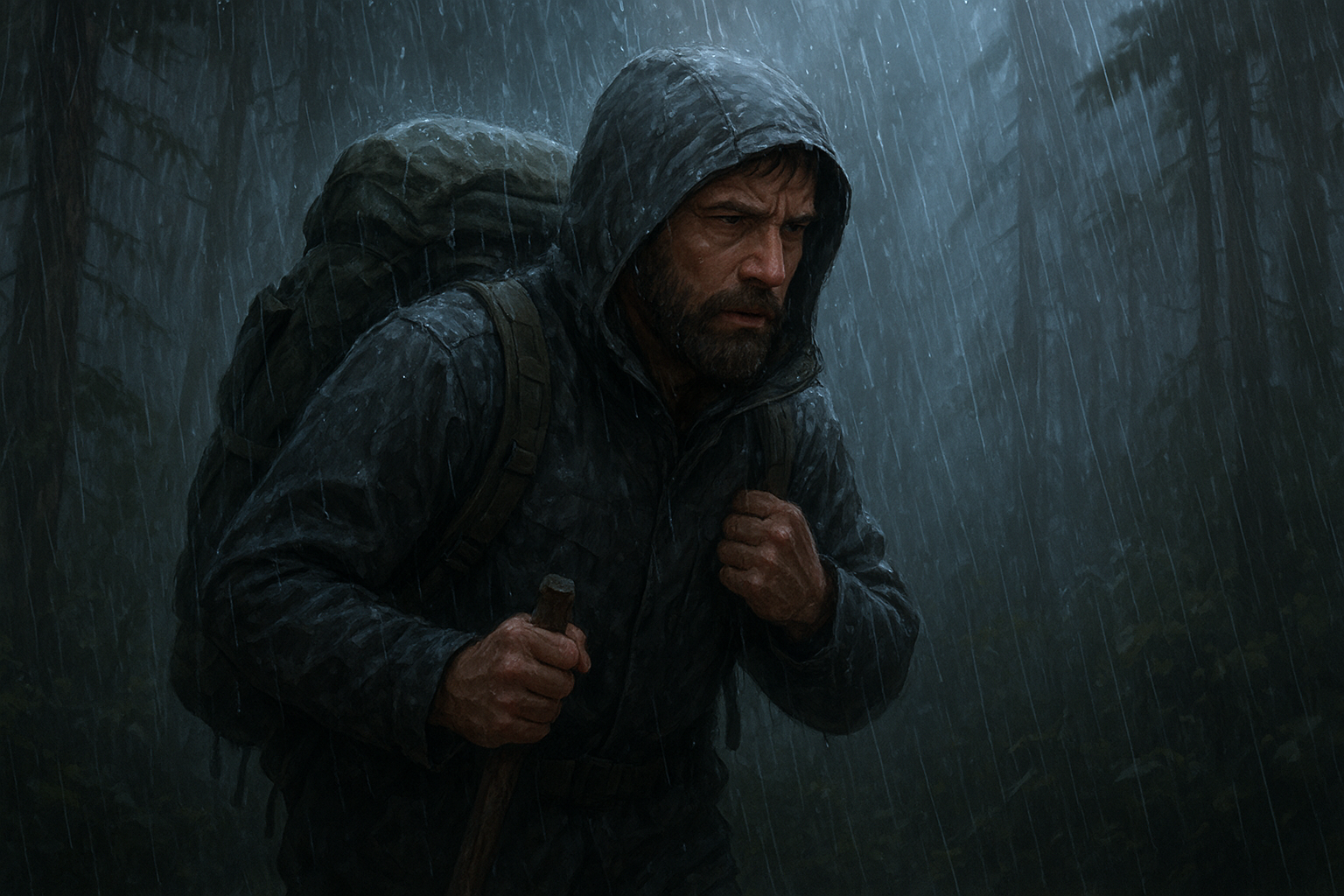

🔥 Why Rain Is One of the Deadliest Weather Conditions
For SEO: rain survival tips, wet weather survival, hypothermia in rain, outdoor rain dangers
Rain is not just discomfort — it is a system-wide threat:
1. Rapid Heat Loss
Wet fabric increases heat loss by up to 25x, pushing your body toward hypothermia even at +10°C.
2. Gear Failure
Water degrades:
-
fire-starting materials
-
paper maps
-
batteries (fast discharge)
-
wooden tools
-
food storage
It also adds weight to clothing and packs.
3. Environment Hazards
Wet terrain becomes:
-
slippery
-
unstable
-
flooded
-
visually deceptive
And streams rise fast.
4. Mental Wear-Down
Constant wetness breaks morale, causing:
-
slower decision making
-
higher error rates
-
lowered motivation
Surviving rain is as psychological as it is physical.
🛡 Core Principle #1: Stay Dry at All Costs
For SEO: how to stay dry in the rain outdoors
Your number one goal is not comfort — it is preserving your body temperature.
Always plan for the rain before it happens.
The Golden Rules:
-
Protect your core first (torso, lower back, chest).
-
Keep one dry layer sealed in a bag at all times.
-
Never rely on cotton.
-
Ventilate your clothing — sweating inside waterproof gear is equally dangerous.
🧥 Core Principle #2: Use the “Three-Layer Wet Survival System”
For SEO: best clothing for rain survival, survival layers in rain
To prevent moisture buildup and keep heat trapped:
1. Base Layer — Moisture Removal
Materials: merino wool, synthetic blends
Purpose:
-
pulls sweat away from skin
-
stays warm even if damp
2. Insulation Layer — Heat Preservation
Materials: fleece, wool, synthetic padded jackets
Purpose:
-
retains warmth even when wet
-
dries quickly over fire
3. Shell Layer — Water & Wind Protection
Materials: nylon, polyester ripstop, waxed cotton
Features to prioritize:
-
pit zips
-
sealed seams
-
adjustable cuffs
-
long back for water runoff
Never trap moisture inside your jacket. Venting is survival.
🏕 Core Principle #3: Build a Rain-Ready Camp
For SEO: rainproof shelter survival, staying dry in wilderness camping
When choosing a camp in rain-prone areas:
-
Avoid low ground (flooding risk).
-
Avoid dead trees (fall hazard).
-
Avoid valleys (cold air collects).
-
Use natural roofs: rock overhangs, thick evergreen branches.
Create a “dry zone” immediately — hang tarps, ponchos, or branches to protect gear.
🔥 Core Principle #4: Fire in the Rain — Always Prepare Backup Ignition
You’ll learn full techniques in Post 3, but here are the basics:
-
Carry 3 different fire ignition tools
(lighter + ferro rod + storm matches) -
Store tinder in waterproof bags
-
Process inner wood for dry shavings
-
Build raised fire beds above wet ground
Fire is life in wet environments.
🎒 Core Principle #5: Protect Your Gear From Water
For SEO: waterproof pack survival, protecting gear from rain
Rain will invade EVERY gap unless you prepare:
-
Double-line your pack with trash bags
-
Store electronics in sealed pouches
-
Keep socks, tinder, and a warm base layer in dry bags
-
Use your tarp as gear protection first — shelter second
In constant rain, organized gear saves hours of misery.
🌧 Conclusion: Rain Survival Starts With Preparation
This post covered the fundamentals. If you master only these principles, your chances of staying warm, dry, and functional will skyrocket.
Next, we go deeper into the gear and clothing systems that allow you not only to survive — but to operate efficiently in days-long rain.