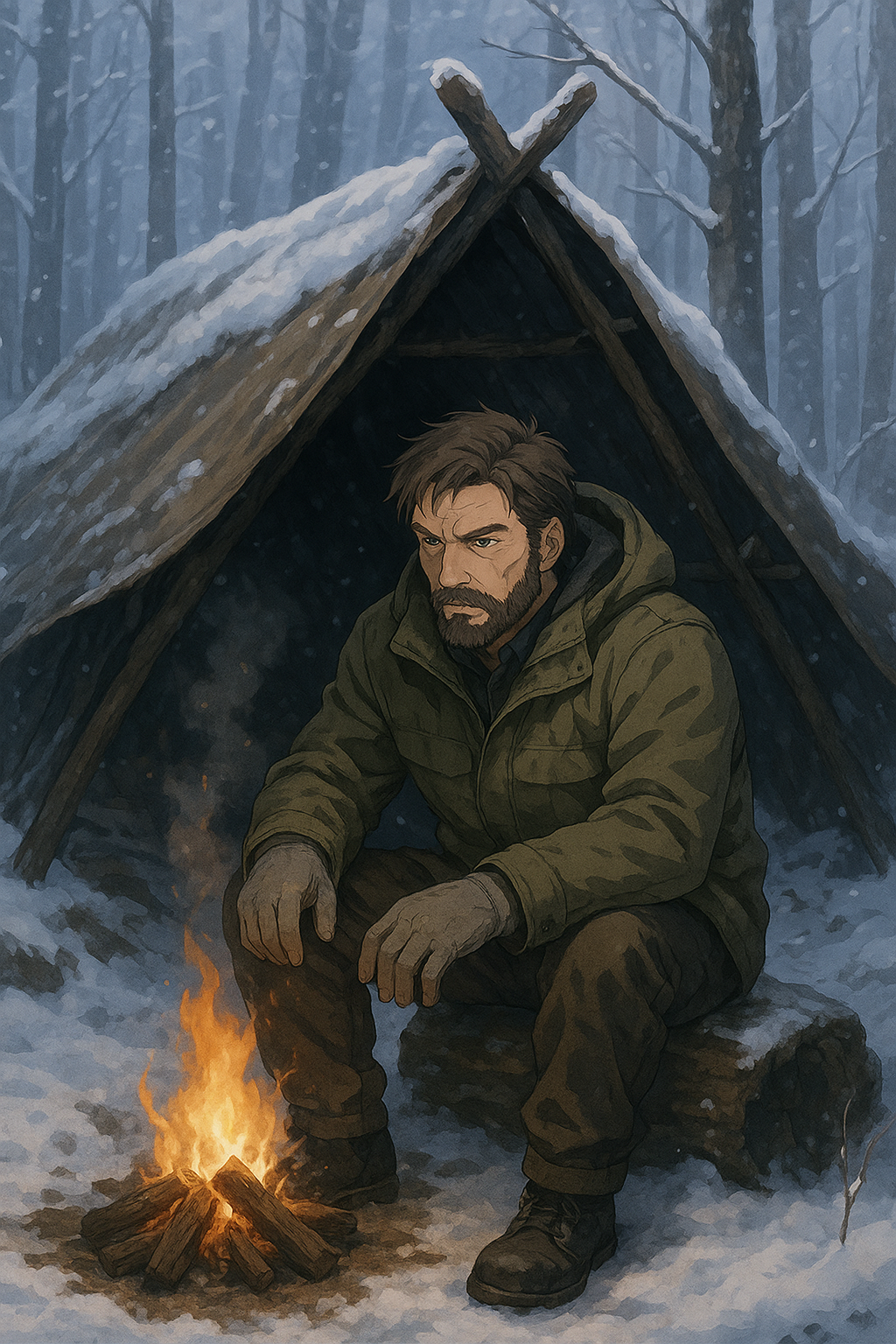

In winter survival, shelter isn’t “a place to sleep.”
Shelter is your fortress, your heater, your shield, your life-support system.
When temperatures collapse, snowstorms erase the world, and the wind howls like a living creature, a winter shelter becomes the only thing standing between you and the cold that never sleeps.
This guide will show you—not the basic, boring stuff—but how experienced survivalists build real winter bases that keep them warm, hidden, and alive even in brutal conditions.
❄️ Why Winter Shelter Is a Battle Against Three Enemies
Winter tries to kill you in three ways:
1. Cold Air (Steals your body heat fast)
Even a mild breeze can drop your core temperature.
2. Moisture (Sweat, melting snow, breath)
Moisture + cold = hypothermia.
3. Wind (The silent killer)
Wind turns survivable temperatures into lethal ones.
Your shelter must defend against all three.
❄️ Step 1: Choosing the Perfect Winter Shelter Location
A good winter base begins long before you hammer the first branch into place. Location decides everything.
✔ Look for:
-
Natural windbreaks (fallen logs, large rocks, dense trees)
-
Slight elevation — low areas collect cold air
-
Dry ground with no signs of meltwater
-
Easy access to firewood
✘ Avoid:
-
Hilltops (too windy)
-
Valleys (cold air sinks)
-
Open fields (no protection)
-
Under heavy snow-loaded branches (they WILL fall)
Choosing wrong = losing heat faster than you can produce it.
❄️ Step 2: The Three Winter Shelters That Actually Work
Forget tent reviews and “Top 10 Cozy Cabins.”
In real survival, only three shelters matter:
🔥 1. The Lean-To + Reflector Wall (Fast, warm, efficient)
This is the classic winter survival base.
Why it’s powerful:
-
Easy to build
-
Blocks wind
-
Reflects heat back inside
-
Works perfectly with a long fire
Add a thick bed of pine branches or dry grass — cold ground drains heat 30x faster than cold air.
🔥 2. The A-Frame Lodge (For heavy snow & multi-day survival)
Built from two angled walls packed with branches and snow.
Why it’s elite:
-
Snow becomes insulation
-
Triangular shape sheds snow naturally
-
Creates a warm microclimate inside
Add a small fire pit outside with a reflector, and you have a nighttime heater that works even during blizzards.
🔥 3. The Snow Cave (The warmest shelter in the coldest conditions)
People fear it… until they try it.
Snow traps heat.
Inside a well-built snow cave, it can be 0°C inside when it’s −25°C outside.
Key rules:
-
Make a raised sleeping platform
-
Create a fist-sized ventilation hole
-
Smooth the ceiling to avoid dripping
-
Never block the entrance completely
This is the shelter that has saved countless mountaineers.
❄️ Step 3: Insulation — The Secret to Not Freezing to Death
A shelter is useless without proper insulation.
Use nature’s best insulators:
-
Pine boughs
-
Dry grass
-
Bark
-
Evergreen branches
-
Snow packs
-
Leaves (under a tarp)
You need at least 15–20 cm of ground insulation under you.
Otherwise, the ground will steal your heat until you shiver yourself awake every hour.
❄️ Step 4: Heating Your Winter Base the Right Way
There are three survival heat strategies:
🔥 1. The Long Fire
Perfect for lean-tos and open shelters.
Benefits:
-
Burns for hours
-
Radiates huge amounts of heat
-
Warms your entire body, not just your hands
Build log-thick pieces for slow, steady burning.
🔥 2. The Dakota Fire Hole
A hidden heater perfect for stealth survival.
Advantages:
-
Conceals flame and smoke
-
Burns hotter with less wood
-
Wind-proof design
Ideal when you don’t want to signal your location.
🔥 3. The Rock Heating Method
Heat rocks in your fire, then place them inside your shelter.
This gives:
-
Slow, consistent warmth
-
No open flame inside
-
Perfect for snow caves and closed shelters
Just never use river rocks — they can explode.
❄️ Step 5: Winter Night Routine — Survive Until Sunrise
Night is when winter is most dangerous.
A proper routine can double your chances of survival.
✔ Stoke the fire with long-burning logs
✔ Check shelter walls for gaps
✔ Shake off snow buildup
✔ Keep your socks and gloves dry
✔ Insulate your water bottle so it doesn’t freeze
✔ Keep your fire-starting tools inside your jacket
Everything is harder when you’re shivering.
Prepare before temperature drops.
❄️ The Truth About Winter Survival
Shelter and heat are not about comfort.
They’re about control — controlling your environment, your temperature, your chances.