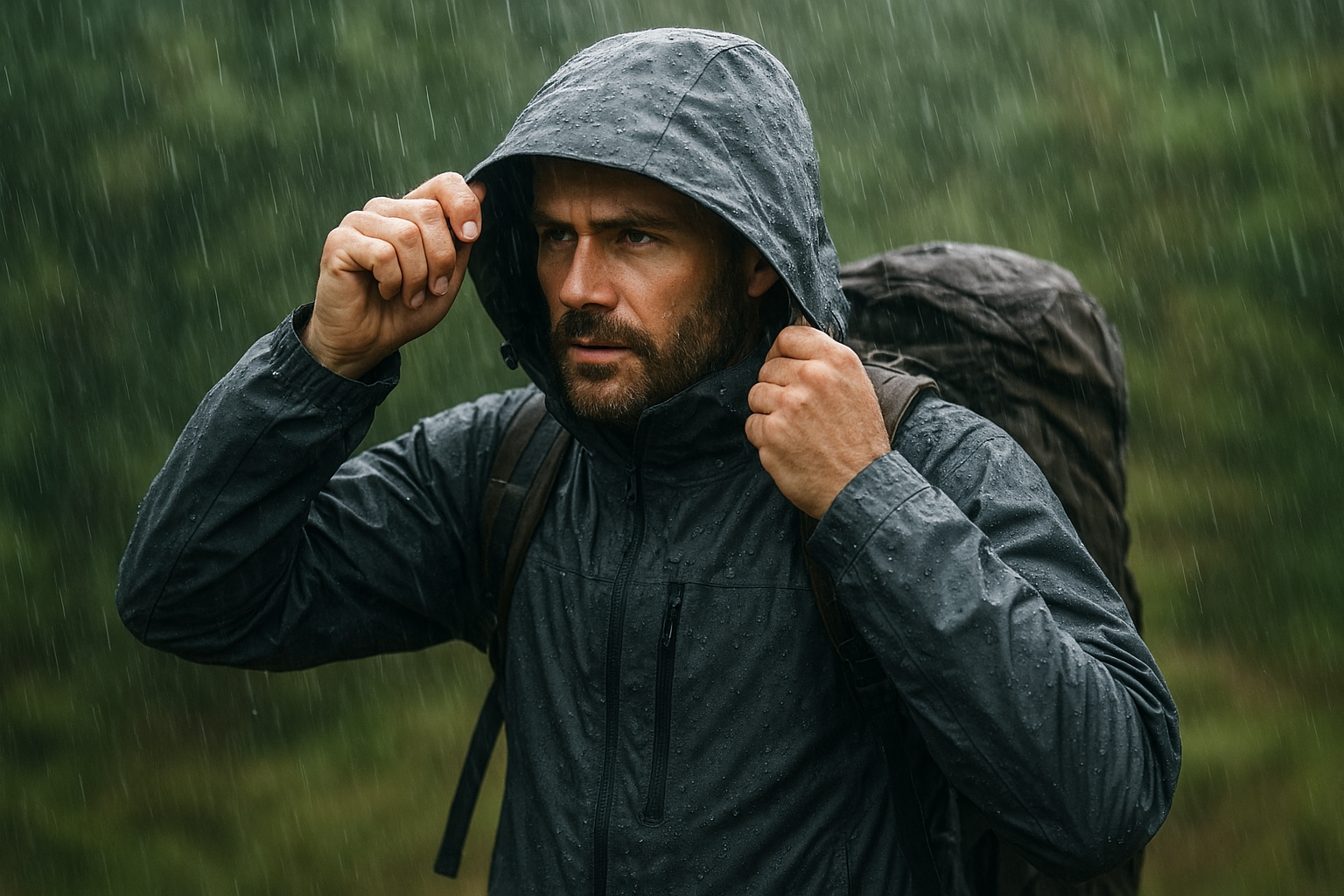

🌧️ 1. The Golden Rule of Wet Survival: Stay Dry, Not Warm
Most beginners think “warmth first,” and that’s how they end up in trouble.
In rain, dryness matters more than insulation.
A wet wool sweater still insulates, yes — but it weighs a ton, steals your mobility, and drains heat through evaporation. Wet cotton? It might as well be ice cubes strapped to your body.
In survival rain environments:
-
Your rain layer is your life.
-
Your insulation is useless if it gets soaked.
-
Every drop you keep out extends your survival window.
🧥 2. The Essential Three-Layer Rain System (That Actually Works)
Forget fashion-layering. Wet survival uses a functional system:
1️⃣ Base Layer — Moisture Removal
Must be:
-
synthetic (polyester)
-
or fine merino wool
Purpose:
-
pulls sweat off your skin
-
keeps your body from flash-cooling
-
prevents clammy chill
Never use:
❌ cotton (the “death fabric”)
2️⃣ Mid Layer — Heat That Still Works When Damp
Best choices:
-
merino wool
-
fleece
-
polartec grid
These continue warming even when moisture sneaks in — which always happens in long rain events.
Avoid:
-
bulky puffy jackets (they collapse when wet)
3️⃣ Outer Layer — Your Personal Rain Shield
This is your armor. It must be:
-
waterproof
-
windproof
-
breathable
-
durable
The three best categories:
✔ Hard Shell
Gore-Tex, eVent, similar membranes.
Great for heavy storms but needs maintenance.
✔ Soft Shell
Water-resistant, breathable, good for movement.
Better for constant drizzle than full storms.
✔ Waxed Canvas (Traditional Bushcraft)
Silent, tough, repairable with a stick of wax.
Perfect for slow movement in the woods.
Bad choices:
❌ cheap “waterproof” plastics (sweat builds → you get soaked from inside)
❌ insulated coats (one soak and they’re useless)
🌧️ 3. The Most Overlooked Rain Gear: What Pros Never Forget
These items make the difference between “wet but fine” and “miserable and freezing.”
✔ Wide-Brim Hat or Hood Bill
Keeps water out of your eyes — crucial for navigation and morale.
✔ Rain Gaiters
Stops water from entering your boots from above (the most common failure point).
✔ Quick-Dry Pants
Denim = disaster.
Synthetic trekking pants = life saver.
✔ Waterproof Gloves
Cold wet hands remove your ability to use tools, start fires, or tie knots.
✔ Emergency Poncho
The cheapest life saver you can carry.
💧 4. The Smart Way to Hike in Rain: Don’t Overheat
Most beginners suffocate themselves inside 3 layers and get soaked from sweat.
A true survivalist ventilates like crazy:
-
open pit zips
-
loosen cuffs
-
unzip chest area
-
shed layers before overheating
If you sweat too much, your insulation becomes as soaked as rain would make it.
🌡️ 5. How to Dry Clothes in the Wild (Even in Wet Weather)
Wet clothes kill. But these techniques save you:
✔ “Inside the Jacket” Body-Dry Method
Put damp items between your base layer and jacket.
Your body heat dries them slowly while you move.
✔ Secure Clothes Near the Fire (But Not Too Close)
Steam-dry them without burning holes.
✔ Use Hot Rocks
Place warm (not scorching!) stones inside your boots or wrapped in fabric.
✔ Wind + Cover Combo
A tarp with good airflow dries clothes far faster than heat alone.
🌧️ 6. The Mindset That Survives Rain
Rain survival isn’t just about gear — it’s about rhythm:
-
move deliberately
-
minimize sweat
-
fix wet spots early
-
guard your heat
-
stay dry above all
To rain, you’re just another animal — but an animal with the right strategy wins.