
When you’re deep in the wild, your knife, rope, and fire won’t always be enough.
Sometimes you need something far more primitive—adhesives strong enough to hold wood, stone, bone, and leather together, even in wet or freezing environments.
Before synthetic glues existed, humans built weapons, shelters, boats, traps, and tools using wild adhesives crafted directly from nature.
And here’s the surprising part: these natural glues are incredibly strong—sometimes even rivaling modern products.
Today, you’ll learn how to create the three most reliable bushcraft adhesives:
✔ Pine Resin Glue
✔ Charcoal-Reinforced Pitch
✔ Plant-Based Natural Binders & Pastes
Ideal for survival, repairs, bushcraft construction, trapping, and securing gear.
🌲 What Makes Primitive Glue So Valuable in Survival?
Wild adhesives allow you to:
-
Repair broken tools, handles, and gear
-
Make arrowheads, spear tips, and fishing equipment
-
Seal containers, bowls, and water vessels
-
Strengthen wooden frames, traps, and shelters
-
Craft long-lasting bindings for furniture or structures
-
Waterproof seams and cracks
In a long-term survival scenario, glue becomes as essential as knives or rope.
🔥 Adhesive #1: Pine Resin Glue — Fast, Sticky, and Shockingly Strong
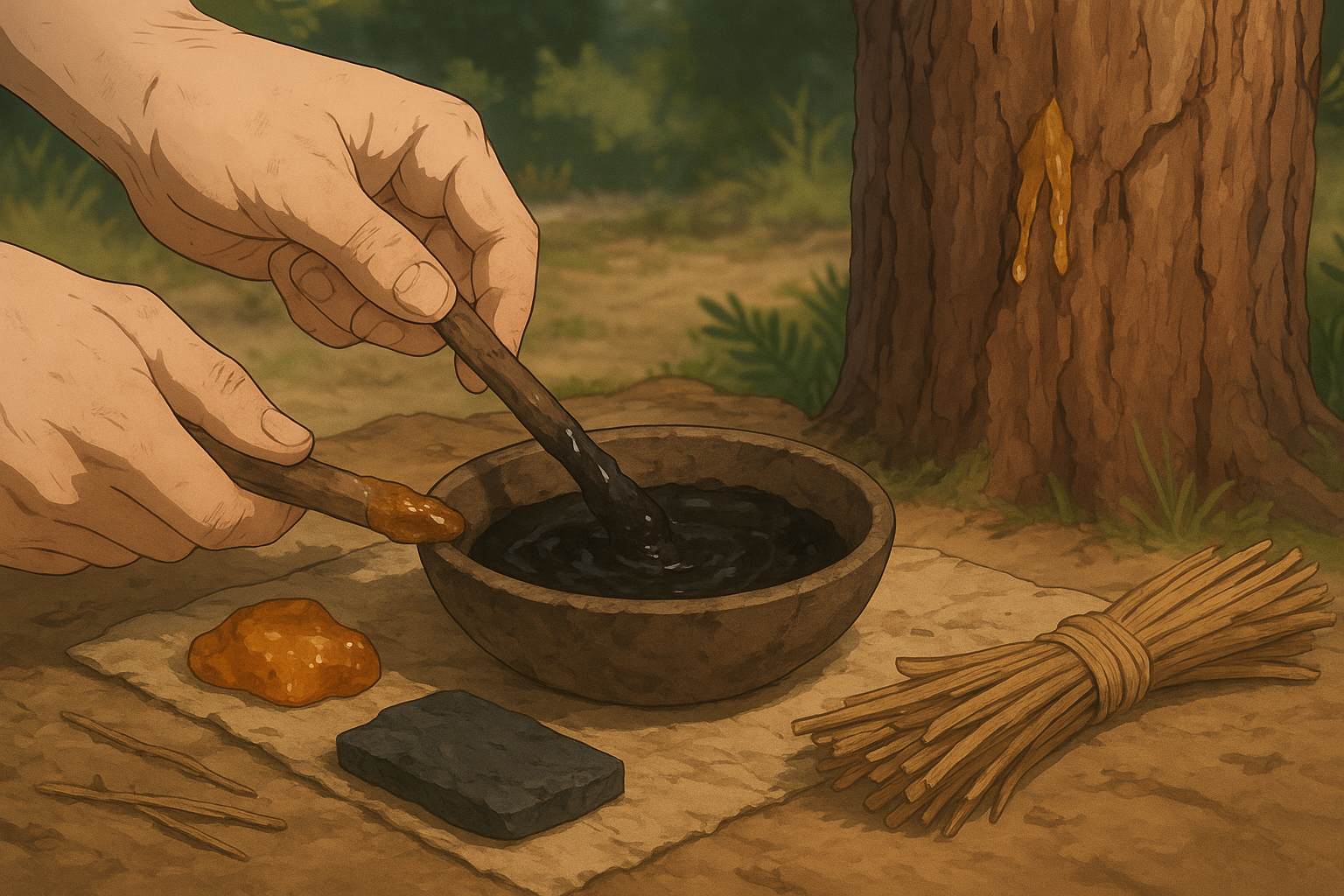
Pine resin (sap) is the king of natural adhesives.
It’s incredibly sticky, waterproof, and easy to harvest.
How to Collect Resin
Look for:
-
Cuts or damage on pine trees
-
Amber-colored hardened sap
-
Soft, sticky “gum” that oozes from wounds
Scrape it into a tin, shell, or flat rock.
How to Make Pine Glue
You’ll need:
-
Pine resin
-
Fine charcoal powder
-
A small stick for stirring
-
A flat stone or metal can for heating
Steps:
-
Melt resin over low heat until it becomes liquid.
-
Add charcoal powder (strengthens the glue).
-
Add a bit of dry plant fiber like shredded bark (improves flexibility).
-
Stir until it becomes thick and smooth.
-
Apply quickly — it hardens fast.
Best Uses
-
Attaching arrowheads
-
Waterproofing seams
-
Securing knife handles
-
Strengthening bindings
This glue becomes rock-hard when it cools.
🔥 Adhesive #2: Charcoal-Reinforced Pitch — The Survival Superglue
Pitch glue is an upgraded version of pine resin glue.
It’s:
-
Harder
-
More heat-resistant
-
More durable
Perfect for heavy-duty bushcraft carpentry.
Ingredients
-
Pine or spruce resin
-
Charcoal powder
-
Dry ash
-
Plant fibers or crushed grass
How to Make Survival Pitch
-
Heat and melt resin.
-
Mix in equal parts charcoal powder.
-
Add a pinch of ash to increase stiffness.
-
Add shredded plant fiber.
-
Heat and mix until it becomes thick like tar.
Then shape it into solid sticks you can reheat later.
Best Uses
-
Heavy binding points on shelters
-
Repairing ceramic or wooden containers
-
Fixing handles, bindings, and tool joints
-
Primitive carpentry involving stress loads
🌿 Adhesive #3: Plant-Based Pastes — Bark, Roots, and Starch
Not all glues need fire.
Plant-based adhesives are perfect for:
-
Temporary repairs
-
Lightweight crafts
-
Bookbinding
-
Emergency gear fixes
-
Indoor or low-tension joints
Strongest Natural Plant Glues
⭐ Birch bark glue — thick, tar-like, water-resistant
⭐ Root paste (chewed or pounded) — extremely fibrous
⭐ Starch glue (from cattails or wild potatoes) — strong and flexible
⭐ Aloe & agave sap — sticky and fast-drying
Simple Starch Glue Recipe
-
Grind cattail roots or tubers.
-
Mix with hot water.
-
Boil until it thickens like paste.
-
Apply warm.
Surprisingly strong for:
-
Paper
-
Leather
-
Lightweight woodwork
Best Bushcraft Uses for Natural Glue
Here’s where wild adhesives shine:
Weaponry
-
Arrowheads
-
Spear tips
-
Atlatls
-
Fishing hooks
Toolmaking
-
Axe heads
-
Hammer handles
-
Bone knives
Construction
-
Shelter joints
-
Furniture joints
-
Basketry and containers
Repairs
-
Cracked wood
-
Damaged gear
-
Seal leaks
It’s sustainable, renewable, and available almost anywhere on Earth.