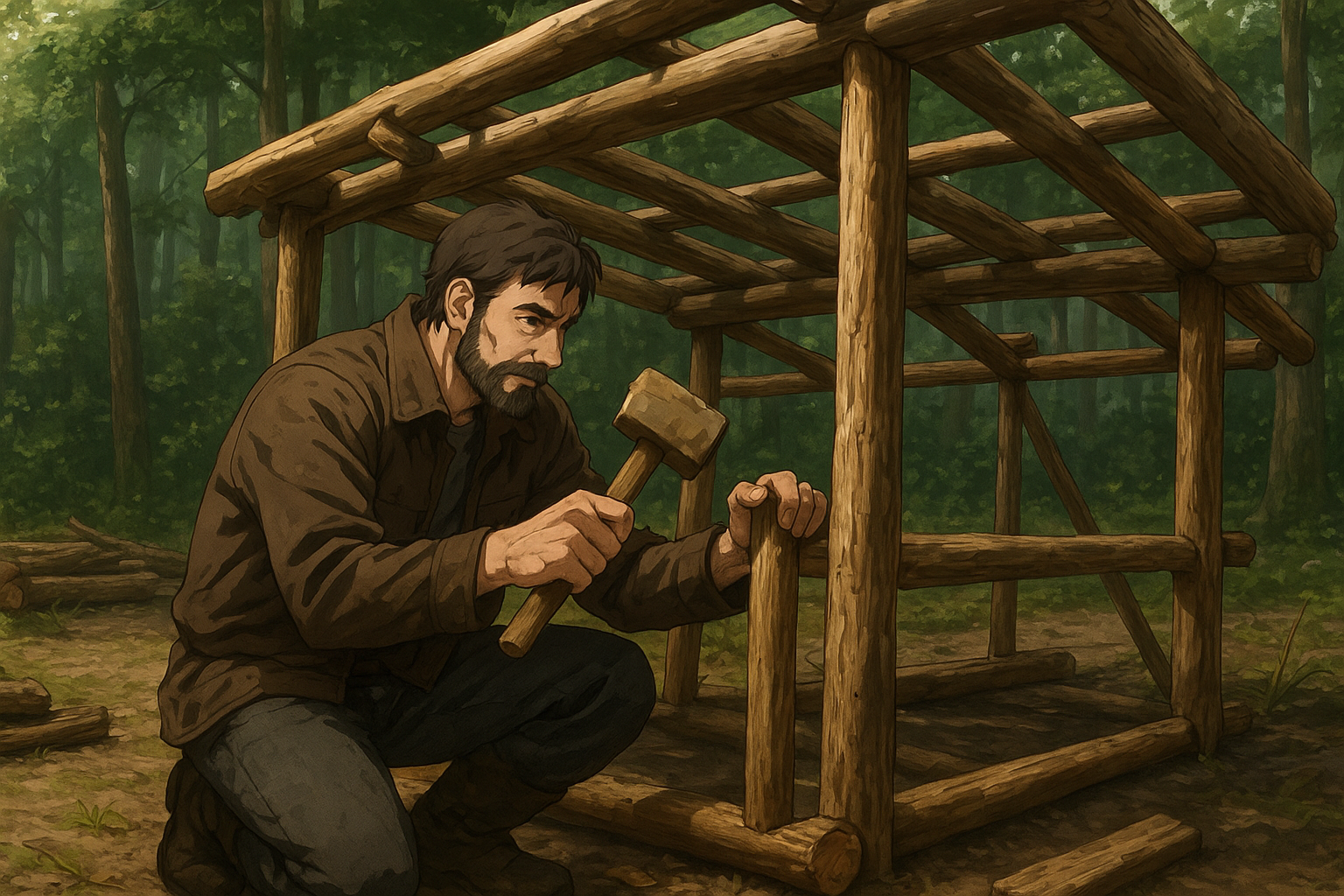

Mastering bushcraft carpentry is one of the most valuable skills for anyone interested in wilderness survival, off-grid living, or long-term outdoor expeditions. It goes far beyond simple shelter building — it’s the craft of shaping raw wood into functional, durable structures using only primitive hand tools, natural materials, and traditional techniques. With enough practice, you can build anything from a simple lean-to to fully functional bushcraft furniture and semi-permanent woodland camps.
What Makes Bushcraft Carpentry Essential
Bushcraft carpentry is a combination of engineering, survival skill, and craftsmanship. It teaches you how to use fallen trees, branches, roots, and natural cordage to create strong, reliable constructions without nails, screws, or modern hardware.
Survivalists rely on it for:
-
Rainproof shelters that can stand for months
-
Elevated sleeping platforms that keep you off wet ground
-
Camp kitchens, tables, and benches for daily use
-
Stable frameworks for smokehouses, drying racks, and fire-reflectors
-
Long-term cabins and semi-permanent structures
Whether you’re deep in the forest, preparing for an emergency, or building a long-term bushcraft base, these skills ensure comfort, safety, and efficiency.
Core Techniques of Bushcraft Carpentry
1. Precision Wood Selection
Choosing the right wood type is critical:
-
Hardwoods (oak, birch, maple) for frames and load-bearing beams
-
Softwoods (pine, spruce) for walls, roofing, and lightweight elements
-
Green wood for bending and flexible joints
-
Dead-standing dry wood for stability and long-lasting components
Knowing how to identify proper wood saves time and prevents structural failure.
2. Notching & Joinery Without Nails
Traditional bushcraft construction relies on friction, pressure, and geometry instead of metal fasteners.
Most used joints include:
-
V-notch for secure frame locking
-
Saddle notch for horizontal beams
-
Mortise-and-tenon style fits for furniture
-
Locking cross-joints for overhead structures
These techniques let you build extremely strong constructions that can withstand wind, rain, and long-term use.
3. Shaping Tools From Nature
Bushcrafters often make their own supporting tools, such as:
-
Wooden mallets
-
Carving wedges
-
Simple clamps
-
Pegs and stakes
-
Batons for controlled striking
These improvised tools reduce wear on metal blades and allow efficient crafting in the field.
4. Essential Structures You Can Build
With proper carpentry skills, you can create:
• Camp Frames & Structural Supports
A-frames, ridgepoles, arch supports, wall posts, and roof beams — the skeleton of any reliable shelter.
• Field-Craft Furniture
Tables, chairs, racks, bushcraft beds, porch-style benches — all made from interlocking joints and strong cordage.
• Survival Utility Systems
Firewood storage, tool hangers, long-term drying racks, pot hangers, counter-weight systems, and fully functional camp kitchens.
• Semi-Permanent Shelters
With advanced skills, you can build:
-
Debris huts with wooden frameworks
-
Log shelters
-
Lean-to-cabins
-
Raised platform huts
-
Bushcraft longhouses
All using nothing but wood, stone tools, and natural rope.
Why Bushcraft Carpentry Matters in Survival
Learning these skills gives you:
-
Self-reliance — build anything you need with your hands
-
Off-grid security — create durable, stable living spaces
-
Efficiency — conserve calories by building smarter, not harder
-
Comfort — furniture and organized camp systems transform survival into sustainable living
-
Long-term resilience — your camp becomes safer, stronger, and more useful over time
Bushcraft carpentry turns raw forest materials into structured, reliable systems that support your entire camp.